The National Testing Agency has informed the Supreme Court that sweeping reforms have been introduced to overhaul the NEET examination system after repeated controversies over alleged paper leaks and irregularities over the past two years.
In a detailed affidavit submitted before the apex court, the NTA said it has strengthened question paper security, candidate verification, digital surveillance, transportation protocols, and examination monitoring mechanisms to ensure that future NEET examinations are conducted in a “secure, transparent, and accountable” manner.

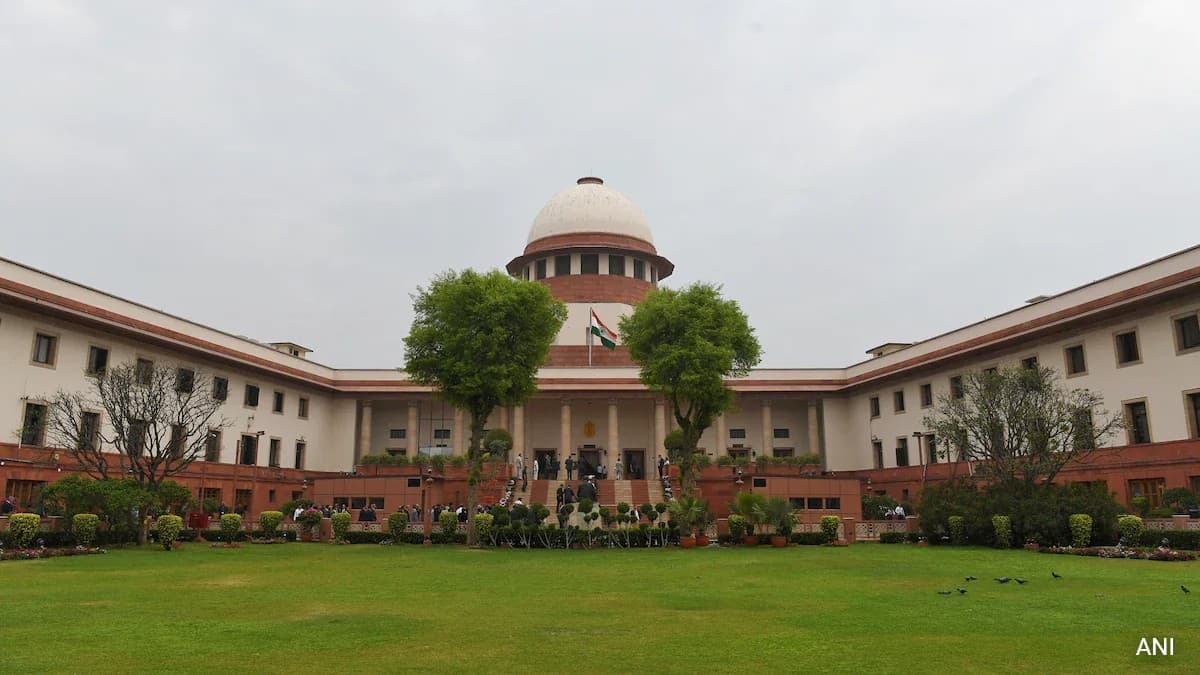
The affidavit was filed in connection with petitions seeking reforms in NEET examinations and questioning the functioning of the NTA following the NEET UG 2026 paper leak controversy.
The agency also told the court that NEET-UG remains the only major examination conducted by the NTA in pen-and-paper test mode, mainly due to the framework prescribed by the Ministry of Health and Family Welfare and the National Medical Commission.
“All other major NTA examinations are already being conducted in Computer-Based Test (CBT) mode,” the affidavit stated.
According to the NTA, the High-Powered Committee constituted following Supreme Court directions has now recommended that NEET-UG should gradually move from the current pen-and-paper format to a Computer-Based Test system.
The committee has also proposed multi-session and multi-stage testing to improve security and reduce vulnerabilities.
The agency informed the court that the transition would be implemented from the next examination cycle in consultation with the concerned ministries.
The reforms come after NEET UG 2026, conducted on May 3 for nearly 23 lakh candidates across 551 Indian cities and 14 overseas centers, was canceled following allegations that questions similar to those in the paper had circulated before the examination. The controversy triggered nationwide outrage, protests by students and parents, and a CBI investigation.
The NTA told the court that recommendations made after the 2024 and 2026 controversies have now been "institutionalized" across the examination system.
Among the major changes highlighted by the agency is a complete redesign of question paper handling and security mechanisms. Multiple sets of question papers, including backup sets, are now being prepared.
Traditional labels such as A, B, C, and D have been replaced with lengthy coded identifiers, while answer-option sequences have also been altered to reduce chances of copying and paper leaks.
The agency said question paper printing is now conducted under strict CCTV monitoring and supervision by designated senior officers, with a complete ban on electronic devices during the printing process.
Question papers are also being stored in encrypted digital form using cryptographic protection systems.
The NTA said question paper setters are isolated in secure facilities without internet or mobile phone access, and all rough work generated during paper setting is shredded daily. Transportation protocols have also been significantly tightened.
According to the affidavit, question paper trunks are now transported through India Post under a chain-of-custody mechanism. Central Armed Police Forces escort the trunks from printing presses to nodal hubs, after which local police teams escort them to examination centers.
The NTA said the trunks remain sealed in CCTV-monitored custody and can only be opened 45 minutes before the examination begins.
On candidate verification, the agency informed the court that Aadhaar-based biometric authentication has been introduced for NEET UG 2026.
Under the new system, QR codes on admit cards are scanned at examination centers while live photographs and thumb impressions of candidates are captured in real time. Authentication is conducted through UIDAI systems.
The agency said any mismatch in facial recognition or Aadhaar verification immediately generates an alert at the NTA control room, after which the candidate is detained for further checks.
The affidavit also stated that face authentication now begins during the registration stage itself.
To curb unfair practices, a multi-layer frisking system has been introduced. State police personnel conduct checks outside examination centers, while NTA staff carry out frisking on the premises. More than 22,000 handheld metal detectors have been deployed across centers nationwide.
The agency further informed the court that mobile jammers have been installed at all 5,432 NEET UG 2026 examination centers with support from Bharat Electronics Limited and Electronics Corporation of India Limited.
Surveillance infrastructure has also been expanded extensively. According to the NTA, nearly 1.85 lakh CCTV cameras have been installed across centers, with live feeds monitored centrally and shared with district administrations and the Ministry of Education.
Artificial Intelligence tools are also being used to analyze CCTV footage and detect suspicious movements or unfair practices during examinations. The affidavit additionally highlighted major administrative restructuring within the NTA.
The agency said 16 new senior-level posts, including Director and Joint Director positions, have been created.
Two Joint Secretary-level officers have been appointed as Additional Director Generals to supervise technology operations and examination security, while a Secretary-level officer was appointed as NTA Director General in March 2026.
The NTA also said experts from IITs, UGC, CBSE, KVS, IGNOU, and other institutions are now involved in strengthening examination systems and oversight mechanisms.
To improve coordination at the ground level, the agency formed State-Level Coordination Committees and District-Level Coordination Committees across the country.
According to the affidavit, 18 state-level committees and 621 district-level committees had been operationalized before the May 3 examination.
These committees included officials from police departments, intelligence agencies, district administrations, the National Informatics Centre, and NTA.
The high-powered committee headed by former ISRO chairman Dr K Radhakrishnan has submitted 101 recommendations aimed at strengthening examination governance and security.
Of these, 60 were short-term recommendations specifically meant for implementation during the 2025-26 examination cycle.
Appearing before the court, Dr Radhakrishnan said most recommendations had already been implemented while others were in progress. “Our target is reform,” he told the bench.
When questioned by the court on how the paper leak occurred despite safeguards, Dr Radhakrishnan said vulnerabilities existed during the question paper setting stage.
“The issue was with the setting of the question paper. Now, the setting of papers is also being strengthened,” he said.
He assured the bench that vulnerabilities had been addressed and maintained that such incidents would not recur during the June 21 re-examination.
The Supreme Court, however, repeatedly stressed that reforms alone would not solve the issue unless accountability was clearly fixed. “The real problem won't stop till actual accountability arises,” the bench observed.
The court noted that while collective responsibility existed, institutions must clearly define who would ultimately be held accountable when failures occur.
The judges also emphasized that examination reforms should not remain dependent on temporary measures and said the system required “institutional memory” and permanent structural safeguards.
“Ad hoc measures create problems,” the bench observed.
During the hearing, Justice P S Narasimha compared NEET with the UPSC examination system and questioned why such breaches had not occurred in India’s civil services examinations.
The court also acknowledged the emotional toll on students and families affected by the controversy.
“It is traumatic for the students and families. There is investment of so much emotion and years of study. We must rectify this,” the bench observed.
Solicitor General Tushar Mehta, appearing for the Centre and NTA, informed the court that the investigation into the paper leak was ongoing and that new security mechanisms were being introduced before the June 21 NEET re-examination.
He also said the issue was being monitored at the “highest executive level” and informed the court that Prime Minister Narendra Modi was personally supervising the matter.
The Supreme Court has now directed the Union government to file a detailed affidavit explaining how examinations would be conducted securely and accountably year after year.
The Ministry of Education has been asked to outline long-term plans regarding institutional expertise, domain specialists, and permanent examination management systems.
The bench also said it would continue monitoring the investigation “for some time” and listed the matter for hearing in the second week of July.
The petitions before the court include pleas filed by the Federation of All India Medical Association and United Doctors Front seeking restructuring of the NTA over what they described as a “systemic failure” in maintaining the integrity of one of the country’s largest entrance examinations.