


Alumni and family members of Jamia’s founders have urged dialogue, while students reject the administration’s assurances, continue hunger strikes and demand a fixed election timeline and written commitments.
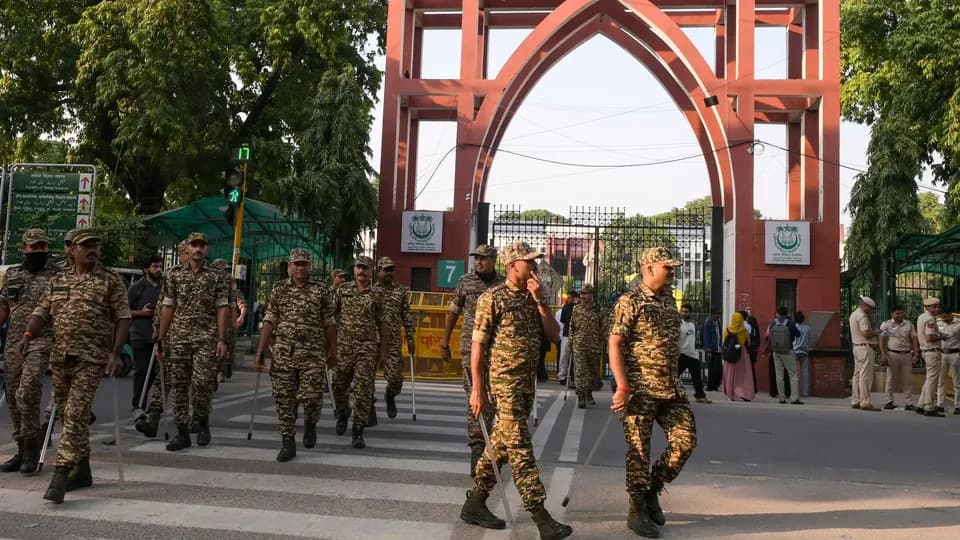
Jamia Millia Islamia has issued a final warning to protesting students, directing them to immediately vacate the Gulistan-e-Ghalib Building and Ghalib Lawn on the university’s North Campus, and warned of disciplinary and legal action if they fail to comply.
The university administration said the students’ continued presence in the building, which houses the departments of Political Science and Economics, was unlawful and disrupting academic activities. The notice, which was shared by the protesters, instructed them to leave the premises immediately.

The administration has also announced that classes for all courses will be conducted online until further notice. The decision comes as the university continues to face protests over demands for the restoration of its elected students’ union, which was dissolved in 2006.
The latest warning has come despite an announcement by the administration on October 26 that elections to the students’ union would be held within 15 days of the approval of the union’s constitution. The announcement was part of a series of measures intended to address the ongoing dispute.
The university had also revoked suspension orders and show-cause notices issued to students during the protests. It further announced the formation of a committee to investigate the conduct of security personnel during the agitation.
According to the university’s order, the students had agreed to issue a public apology for alleged defamatory statements against the administration and remove related posts from social media. However, the protesting students disputed the administration’s account of the agreement and maintained that their demands had not been fully addressed.
The students said their 14-day agitation would continue until all their demands were met. Those participating in the hunger strike also indicated that they would continue their protest.
The demonstrators argued that the administration’s announcement did not establish a definite timeline for approving the students’ union constitution or conducting elections. They also reiterated their demand for the resignation of the Proctor and Security Adviser, maintaining that the dispute could be resolved only through clear, written commitments from the university.
Jamia alumni, founders’ family members extend support to protesters
Amid the continuing standoff, alumni of Jamia Millia Islamia and family members of the university’s founders expressed support for the protesting students on Monday. At a press conference, they urged the administration to listen to the students and resolve the dispute through dialogue rather than disciplinary action.
The press conference was attended by Syeda Hameed, Siddiqur Rahman Kidwai and Samina Mishra. Student representatives Aamir Haider of the Students’ Federation of India (SFI) and Zeeshan of the National Students’ Union of India (NSUI) were also present.
The speakers expressed concern over reports of disciplinary action against students participating in the agitation and allegations of restrictions on campus. They emphasized that students should have a formal platform to raise their concerns, represent their interests and participate in decisions affecting university life.
The speakers also invoked Jamia’s founding principles and historical legacy, arguing that the demand for an elected students’ union was connected to the institution’s broader commitment to student participation and democratic representation.
Alumni invoke Jamia’s founding vision and democratic legacy
Syeda Hameed discussed the vision of Jamia’s founders and their contributions to the development of the institution. She said Dr. Ansari had envisioned a university for Jamia along the lines of Aligarh, while her father had played an important role in developing the concept of the institution.
Referring to prominent figures associated with Jamia, including Dr. Zakir Hussain, Dr. Ansari and Dr. Shafi-ur-Rahman Kidwai, Hameed said they would be watching the current developments at the university.
She said the students had stepped forward to carry forward the vision of Dr. Zakir Hussain and argued that their demand for a students’ union formed part of that effort.
Hameed’s remarks placed the ongoing agitation within the historical context of Jamia’s establishment and its founding ideals. The speakers maintained that the students’ demand for representation should be considered in light of the institution’s legacy and the role students have played in shaping university life.
Siddiqur Rahman Kidwai also highlighted the historical role of students from Jamia and Aligarh in major student movements across the country. He said students from the two institutions had contributed to several important movements and had been part of broader efforts to bring about change.
Expressing concern over reports that students were facing expulsion for demanding a students’ union, Kidwai argued that such a body was necessary in an independent India. His remarks reflected concerns among the university’s alumni and supporters about the reported disciplinary consequences of the ongoing agitation.
The speakers called for the administration to recognize the importance of student representation and provide students with an opportunity to participate in discussions about matters affecting their academic and campus experiences.
Former Jamia student urges administration to open dialogue
Samina Mishra, a former student of Jamia Millia Islamia, also voiced support for the protesters and called on the university administration to create space for dialogue.
Mishra said the administration needed to ensure that students’ concerns were heard rather than allowing the dispute to deepen. She argued that the current approach to handling the protests was wrong and stressed that listening to young people was essential to resolving the situation.
She also said the university community had a responsibility to ensure that students could express their views and engage with the administration on issues affecting them.
Her remarks reinforced the appeal made by other speakers at the press conference, who said that communication between the administration and the protesting students was necessary to resolve the impasse.
The speakers maintained that students should be able to raise concerns about university policies and campus conditions without the dispute being reduced to disciplinary proceedings. They urged the administration to treat the demand for an elected union as an issue requiring discussion and a clear resolution.
SFI representative alleges restrictions on campus facilities
Sanam, an SFI representative, described the ongoing agitation as part of a longer struggle for democracy at Jamia. She thanked individuals who had extended support to the protesting students and said their backing had given the demonstrators strength to continue their campaign.
Sanam alleged that conditions on campus had become increasingly restrictive and claimed that students were being denied basic facilities, including electricity and water. She also alleged that the students’ tents had been dismantled even as the administration approached them for talks.
According to Sanam, walls on the campus were being plastered over and gates were being welded shut. She questioned why such measures were being taken against students whose central demand was the restoration of an elected students’ union.
The SFI representative further alleged that police personnel were contacting students at their homes. She claimed that students’ phone numbers and home addresses were being shared between the university administration and the police.
Sanam also claimed that students had been asked to sign a document the previous day that did not reflect their views. She raised concerns about the circumstances in which the document was presented and its contents.
These allegations were made by the student representative during the press conference and could not be independently verified from the information available. The claims were presented as part of the protesters’ account of the developments on campus.
The allegations add to the concerns raised by the students over the administration’s handling of the agitation. The protesters have maintained that the reported restrictions and the possibility of disciplinary action have increased tensions between the student community and university authorities.
Elected students’ union remains at the center of the dispute
The restoration of an elected students’ union remains the principal demand driving the protests at Jamia Millia Islamia. Students argue that an elected body would provide a formal mechanism for raising grievances, negotiating with the administration and participating in decisions affecting academic and campus life.
The union was dissolved in 2006, and the current agitation seeks its restoration after years without the elected representative body demanded by the protesters. Students have continued to press for a constitution that would establish the framework for holding elections and determining how the union would function.
The administration’s Oct 26 announcement that elections would be held within 15 days of the constitution’s approval offered a potential route toward addressing the demand. However, the protesters have argued that the announcement does not provide sufficient certainty because it does not establish a definite date for approval of the constitution or the elections themselves.
The students have also called for the resignation of the Proctor and Security Adviser. They have insisted that written assurances covering their demands are necessary before the dispute can be resolved.
The administration’s decision to revoke suspension and show-cause notices issued during the protests, along with its announcement of a committee to investigate the conduct of security personnel, formed part of the measures announced on Oct 26. The university also stated that the students had agreed to apologize publicly for alleged defamatory statements and remove related social media posts.
However, the students rejected the administration’s account of the agreement and said the agitation would continue until their demands were met. Those participating in the hunger strike also remained committed to continuing their protest, according to the protesters.
The subsequent final warning directing students to vacate the Gulistan-e-Ghalib Building and Ghalib Lawn has added another point of contention. The administration has described the students’ presence in the building as unlawful and disruptive to academic activities, while the protesters continue to challenge the university’s handling of their demands.
The move to conduct classes for all courses online until further notice has also altered the immediate academic arrangements at the university. The decision was announced as the administration sought to address the situation on campus and the protests continued.
Speakers call for negotiations to resolve the standoff
At recent press conference, alumni, representatives of the founders’ families and student representatives urged the university administration to engage with the protesters instead of relying on disciplinary measures.
They argued that dialogue would provide a way to address the demand for an elected union, clarify the process for approving its constitution and establish a timeline for elections. They also stressed the importance of ensuring that students could express their concerns and participate in decisions affecting university life.
The speakers maintained that the dispute required a response that recognized students’ demands for representation and addressed concerns about the treatment of protesters. Their appeal came as the administration’s final warning and the students’ decision to continue the agitation indicated that the disagreement remained unresolved.
The press conference concluded with a renewed call for the university to recognize the demand for student representation and create an opportunity for negotiations. The speakers reiterated that meaningful dialogue was necessary to bridge the gap between the administration and the protesting students.
With the students insisting on clear, written commitments and the administration directing them to vacate the occupied premises, the immediate dispute remains centered on the restoration of the elected students’ union, the approval of its constitution and the conditions under which the protests can be resolved.

The objective should be to make education investable without making learning transactional
UGC-NET 2026: Candidate alleges denial of extra exam time, disability commissioner seeks NTA explanation

ISRO URSC Recruitment 2026: Applications open for 61 posts, check eligibility

Gold Prices Fall by Rs 646 to Rs 1.43 Lakh per 10 Grams Amid Weak Demand
Jamia Millia Islamia alleges overnight vandalism as students’ union protest enters day 16
The objective should be to make education investable without making learning transactional
UGC-NET 2026: Candidate alleges denial of extra exam time, disability commissioner seeks NTA explanation
Gold Prices Fall by Rs 646 to Rs 1.43 Lakh per 10 Grams Amid Weak Demand

Cyclone Arnab Explained: Landfall, Affected States, Wind Speed and How It Formed
South Africa study finds university mentors boost school pupils’ confidence

The objective should be to make education investable without making learning transactional
UGC-NET 2026: Candidate alleges denial of extra exam time, disability commissioner seeks NTA explanation
ISRO URSC Recruitment 2026: Applications open for 61 posts, check eligibility
Gold Prices Fall by Rs 646 to Rs 1.43 Lakh per 10 Grams Amid Weak Demand
Jamia Millia Islamia alleges overnight vandalism as students’ union protest enters day 16
The objective should be to make education investable without making learning transactional
UGC-NET 2026: Candidate alleges denial of extra exam time, disability commissioner seeks NTA explanation
Gold Prices Fall by Rs 646 to Rs 1.43 Lakh per 10 Grams Amid Weak Demand
Cyclone Arnab Explained: Landfall, Affected States, Wind Speed and How It Formed
South Africa study finds university mentors boost school pupils’ confidence
Copyright© educationpost.in 2026 All Rights Reserved.