


In this interview with Education Post, Toprankers Co-founder and CEO Gaurav Goel discusses career discovery, early counselling, personalised EdTech, AI-enabled mentorship and the need to move beyond conventional career pathways.
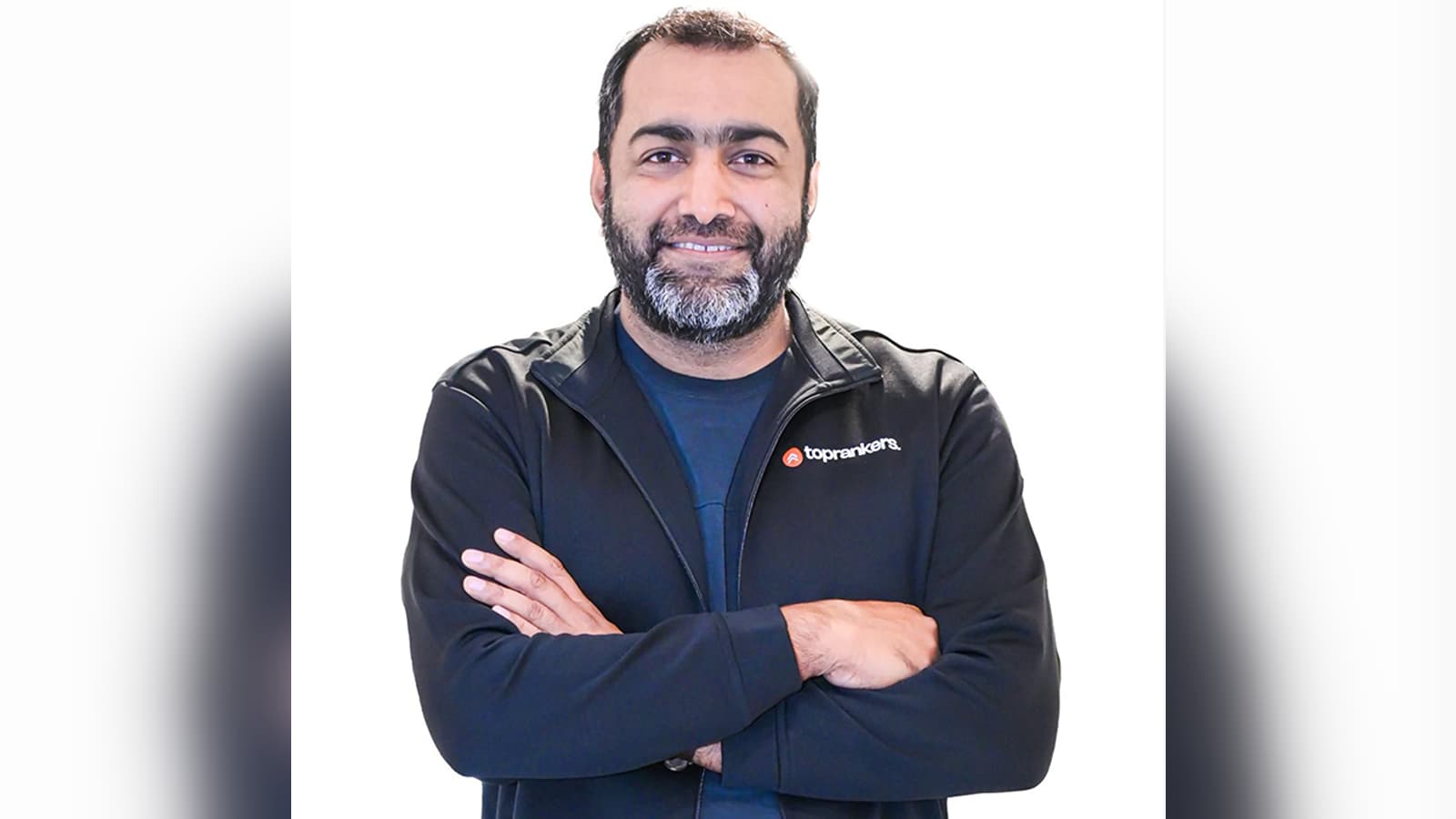
Gaurav Goel, Co-founder and CEO of Toprankers, discusses career choices, counselling and EdTech with Education Post
For years, India’s education system has treated engineering and medicine as default destinations, often before students have had the opportunity to understand what else is possible. In this conversation, Gaurav Goel, Co-founder & CEO, Toprankers, examines the gap between academic performance and informed career choice, and why that gap continues to shape the decisions of students and parents.
In this interview with Education Post’s Prabhav Anand, Goel traces Toprankers’ evolution from a coaching marketplace into a broader career-focused platform spanning law, judiciary, management, design and school-level counselling. He discusses the growing visibility of alternative career pathways, the changing expectations of parents, and the need for schools to introduce career conversations much earlier. The conversation also looks at how technology and AI can make personalised learning more precise without replacing human mentorship, and why outcomes, rather than sign-ups or scale alone, must define the next phase of EdTech.
Looking ahead, Goel identifies timing, geography, evaluation and parental awareness as the key gaps India’s career-preparation ecosystem must address. At the heart of his argument is a simple proposition: a student’s postcode, academic marks or lack of exposure should not determine the limits of their ambition.
1. To begin, could you briefly introduce your vision for Toprankers and the gap in India’s education ecosystem you set out to address?
I became an engineer because I didn't know I could become anything else. I grew up in Muzaffarnagar, in western Uttar Pradesh, where the careers people around me could describe came down to exactly two: engineering and medicine. I graduated in 2008 and only then began working out what I actually wanted to do with my life. That sequence is backwards, and it is still the default for lakhs of students in this country. They don't choose engineering; they arrive at it, because nobody told them what else existed.
Toprankers began in 2016, in Bangalore, as a marketplace connecting students to coaching institutes. Four years of that taught me what actually needed to be built: there was no single platform covering careers beyond engineering and medicine — one that took a student through discovery, counselling and preparation. So, in 2020, Karan, Harsh and I came together to build it ourselves and moved the company to Bhopal. That choice gets questioned often — an edtech company headquartered in a Tier 2 city rather than Bangalore or Gurgaon. But that is where our students are. Building where they are was never a compromise.
Everyone else in the market picked a student up only after the decision had been made: you had decided to study law, so somebody would coach you for CLAT. Nobody was working on what comes before that — the discovery and the honest conversation about which career actually suits a particular student. We chose to begin there and to carry the student through the entrance and into the right college, with the same quality whether they walk into one of our classrooms or log in from a town of 50,000 people.
Six years on, that has become our House of Brands — LegalEdge and LegalEdge After College for law, Judiciary Gold for judiciary services, SuperGrads for management entrances, CreativeEdge for design and architecture, and Udaan for school-level career counselling. Between them, we've worked with over 3 lakh students through 60+ centres across 35 cities, with a full-time team of over 600. All of it rests on one belief: a student's postcode shouldn't decide the ceiling of their ambition.
2. India is witnessing growing interest in careers beyond engineering and medicine. What is driving this shift among students and parents?
There are three things. First, the success stories are now visible and repeatable. A student clears a state judiciary exam and becomes a judge in their twenties. Another cracks IPMAT and enters an IIM several years earlier than through the conventional CAT route. These are no longer stories a family hears second-hand — they're happening at scale, and social media has made them visible in a way they weren't a decade ago. In law and management, where we have been active the longest, LegalEdge and SuperGrads account for the highest number of verified selections of any brand in the country across CLAT UG, CLAT PG and management undergraduate entrance exams; CreativeEdge and Judiciary Gold are on the same trajectory in design, architecture and state judiciary exams. And when younger students see what happened to someone from their own school, an entire school's sense of what is possible changes in a single year.
Second, parents have re-priced these careers. Law, judiciary, management and design are now understood to offer both stability and standing, which is what most Indian parents are optimising for. That shift has been the single biggest unlock.
Third, access has caught up with aspiration. Five years ago, a student in a Tier 3 city may not have known what CLAT or IPMAT was, let alone had a serious way to prepare for it. Today, around 60% of our students come from outside the top eight cities.
3. How can schools and educators better prepare students to make informed career choices beyond conventional pathways?
Four things, none of which cost very much. Assess aptitude, not just academics. A student with strong verbal reasoning and an instinct for argument may be far better suited to law than to engineering, and marks will never surface that.
Invest in the counsellor, not just the counselling. Most schools have one counsellor for several hundred students, and that person has rarely been trained on what a career in judicial services or industrial design actually involves — the entrance, the timeline, the earnings curve.
Bring alumni back. Nothing moves a Class 9 student like meeting someone from their own school who is now at an NLU or a design studio.
And bring parents in early, because in India, the career decision is a household decision.
We built Udaan for exactly this — career counselling from Class 8 onward, now delivered to over 75,000 students across 24 states, much of it through CSR partnerships that reach schools where no career guidance existed at all. The goal at that age isn't to force a decision. It's exposure first; the decision comes later, and comes better.
4. You have earlier highlighted technology’s role in making learning more accessible and engaging. What should the next phase of education technology focus on?
Phase one of Indian EdTech was about access. Phase two has to be about precision. Delivering content is a solved problem — anyone can put a video online. The harder problem is understanding a student well enough to tell them exactly what to do next: which topic to revise this week, where they are leaking marks relative to someone who converted last year, whether their preparation curve is actually tracking towards a selection. That is a fundamentally different promise from "watch this lecture." It also means simulating the exam rather than only teaching the syllabus — realistic mocks, answer-writing evaluation for judiciary aspirants, portfolio review that mirrors how a design school actually assesses a candidate.
But the point I'd stress most: technology should make human mentorship sharper, not replace it. In our Lighthouse programme, AI gives a mentor a detailed picture of a student before the conversation begins — so the twenty minutes they spend together is spent on the right thing. If phase one was reach, phase two is relevance.
5. Personalised learning is increasingly being seen as the future of EdTech. How can technology make personalisation meaningful rather than simply data-driven?
Data tells you what a student got wrong. It takes something more to tell you why. Take two students with the same score on the same mock. One has a conceptual gap in a specific topic. The other knows the concept perfectly but panics in the last fifteen minutes and rushes a whole section. Identical scores, completely different problems. Send both the same revision module and you've helped neither — one needs teaching, the other needs a change in exam strategy and, honestly, some reassurance.
That's why our model pairs analytics with a human mentor and a monthly conversation with the parent. A student's aptitude, anxiety, pace and confidence matter as much as their accuracy percentage. Personalisation becomes meaningful the moment it stops recommending content and starts understanding a student well enough to know what they need to hear next.
6. The EdTech sector has moved beyond its pandemic-era boom. What do you believe will separate sustainable education platforms from those focused primarily on rapid growth?
The three of us came together in 2020 — precisely when the tailwind arrived. The easy thing then was to chase online sign-ups, raise on those numbers and worry about economics later. We put the money into faculty and physical centres instead, which looked slow at the time and looks rather different now.
That discipline shows up in the numbers. Top-rankers crossed ₹100 crore in revenue in FY26 while staying EBITDA-positive, as we were in FY25 — a second consecutive year of profitable growth rather than a one-off. In Indian EdTech that combination is still unusual. Much of the sector grew by spending ahead of revenue, and the correction of the last few years was, at its heart, a correction of that model.
The second differentiator is depth over breadth. We deliberately do not teach JEE or NEET. We would rather be the most credible name in law, judiciary, management and design than the twentieth name in engineering.
The third is where growth comes from. A large share of our enrolments come from students and parents referred by someone who studied with us — a student gets the rank they were working towards, and their cousin, their neighbour and their school follow. That keeps our acquisition costs far below what a discovery-led model requires, and it means our growth is a lagging indicator of our results rather than of our ad budget.
Sign-ups were the metric of the boom years. Selections are the metric now.
7. Looking ahead, what are the biggest gaps in India’s career-preparation ecosystem that the education sector must address to become more outcome-oriented?
Four, and they compound. Most students decide their stream in Class 9 or 10 with almost no visibility into law, judiciary, design or management, because structured guidance in schools begins too late, if at all. This isn't about adding more options at Class 12; it's about starting the conversation three years earlier.
Quality preparation for these careers has historically sat in a handful of metros. That's why we run a hybrid model — 60+ company-owned and franchised centres across 35 cities, with the same faculty standards and material as our metro classrooms. A student's postcode still plays far too large a role in determining their opportunity.
Academic performance alone tells you very little about whether a particular career suits a student. Aptitude, temperament and interest matter just as much, and most of the ecosystem isn't built to assess them early.
Career decisions here are made jointly with parents. If a parent doesn't understand how these paths play out — the timelines, the outcomes, the stability — the student defaults back to the familiar choice regardless of their own aptitude. Parents aren't an obstacle; they're the most under-served stakeholder in the system.
That's also where we're taking Toprankers next. We began in test preparation and we're becoming a career management company — from Class 8 discovery and counselling, through entrance preparation and college, and up to the first job. Preparation is one chapter of that journey. It was never meant to be the whole book.
And this is still personal. The seventeen-year-old I was had nobody to tell him what else existed, and defaulted into a career the way most students in small towns still do. That's the gap, and closing it is the only thing this company has ever been trying to do.

Hunter of Underwater Threats: Why INS Mangrol Is Important for the Indian Navy

Delhi Protests Renew Debate Over Constitutional Right to Peaceful Assembly

Household Inflation Rises to 5.54% in September as Price Pressures Spread

Delhi High Court Allows Urgent Hearing on Protest Site Guidelines

India Rejects China’s Objection to Standardised Names of Places in Ladakh
Karnataka student elections return after 37 years: Why political restrictions and university polls remain contentious
Global education is shifting from simply going abroad to creating more flexible routes to opportunity

Delhi Police files FIR against Congress MP Bimol Akoijam over JNU sexual harassment allegations

Utkal University tightens security after late-night explosions ahead of student polls

IET India Scholarship Award 2026: DTU’s Kush Garg wins top honor for AI device for neurodivergent children

Hunter of Underwater Threats: Why INS Mangrol Is Important for the Indian Navy
Delhi Protests Renew Debate Over Constitutional Right to Peaceful Assembly
Household Inflation Rises to 5.54% in September as Price Pressures Spread
Delhi High Court Allows Urgent Hearing on Protest Site Guidelines
India Rejects China’s Objection to Standardised Names of Places in Ladakh
Karnataka student elections return after 37 years: Why political restrictions and university polls remain contentious
Global education is shifting from simply going abroad to creating more flexible routes to opportunity
Delhi Police files FIR against Congress MP Bimol Akoijam over JNU sexual harassment allegations
Utkal University tightens security after late-night explosions ahead of student polls
IET India Scholarship Award 2026: DTU’s Kush Garg wins top honor for AI device for neurodivergent children
Copyright© educationpost.in 2026 All Rights Reserved.
