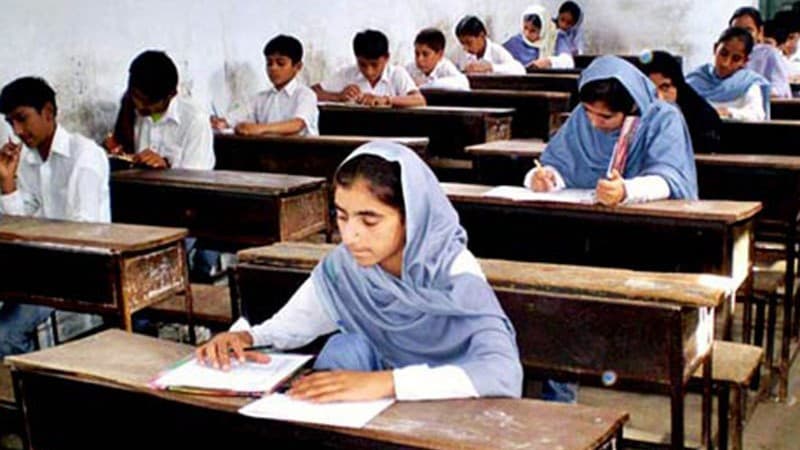
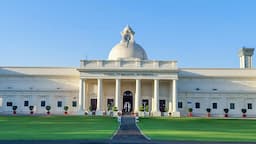
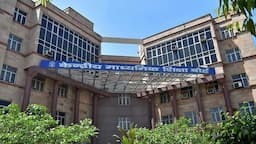
Indore’s Baxibagh Government Higher Secondary School, once established to provide Urdu-medium education, is witnessing a slow transformation as more Hindi teachers are appointed and students move away from Urdu.
Retired teacher Nagma Rehman fears that the institution may soon stop functioning in its original medium. “Parents just don’t want their children to learn or study in Urdu anymore,” she said, adding that many now consider the language “outdated.”

Rehman, who taught physics and mathematics at the school for more than three decades, developed her personal bond with Urdu at home.
“Regardless of my education, I learned to read, write, and speak Urdu as a usual practice at home. My family used to speak Urdu, read Urdu newspapers and women’s magazines, and read Urdu literature such as Ghalib,” she recalled.
She believes her children should also learn the language, though she is critical of Bollywood’s mispronunciation of Urdu in popular songs.
The decline of Urdu in classrooms, teachers say, has been worsened by a shortage of trained staff and textbooks.
While schools receive government funds for infrastructure, very few qualified teachers are proficient in both Urdu and advanced subjects such as science and commerce.
“We rely on Google Translate to explain concepts to children in Urdu,” said Seema Pathak, a teacher at the school. She added that students, many of whom lack internet access at home, depend on translated material prepared inside the classroom.
The struggle at Baxibagh is part of a larger debate about the status of Urdu in India. Once called Hindustani, Urdu evolved from Delhi’s bazaars and Mughal courts into a refined language of poetry, administration, and culture.
“The tragedy of Urdu is that it was made to carry the burden of identity politics, when in truth it was always a language of inclusion,” said Anwar Pasha, a retired professor from Jawaharlal Nehru University.
Efforts to preserve Urdu have seen mixed results. Institutions like Jamia Millia Islamia, Aligarh Muslim University, and the Maulana Azad National Urdu University have expanded programs and research, while states such as Karnataka and Himachal Pradesh have introduced Urdu in schools to increase access.
Delhi’s Urdu Academy has started new courses, including calligraphy and online classes, while some women’s colleges in Kolkata have opened their doors to Urdu-medium students.
At the same time, policies in states like Rajasthan and decisions by central boards have dealt setbacks. Urdu was removed as a third language option in some schools and excluded from admission forms in others, sparking criticism of neglect.
Educators argue that the National Education Policy 2020 failed to acknowledge Urdu, leaving questions about its place in India’s educational future.
Employment remains another challenge. “The market has jobs; there is demand as well, but government opportunities are fewer and sometimes as few as one or two Urdu posts, compared to ten percent of what is available for English or Hindi,” said Dr Sajid, guest lecturer at Jamia’s Department of Urdu.
Still, experts stress that Urdu is not without prospects. “Urdu bekar nahi hai,” said Professor Mohamed Quamrul Hooda Faridi of Aligarh Muslim University, pointing to careers in media, translation, teaching, and cultural institutions.
He noted that AMU has consistently increased faculty and research opportunities, showing Urdu’s continued relevance.
Beyond academia, younger voices are also reviving Urdu in creative spaces. Social media pages, workshops, and literary festivals are introducing classic poets such as Ghalib, Faiz, and Jaun Elia to new audiences.
Content creators like Mujtaba Khan, who runs an Instagram page dedicated to spoken Urdu, see themselves as bridges between older traditions and younger learners.
For many, Urdu’s survival depends not only on government policy but also on individual passion.
As Prof Quamrul reflected, small personal gestures, such as choosing the right word in a letter, show how the language continues to thrive in emotional and cultural spaces.
While schools like Baxibagh may face an uncertain future, across India and beyond, Urdu endures as a language of literature, identity, and everyday life.