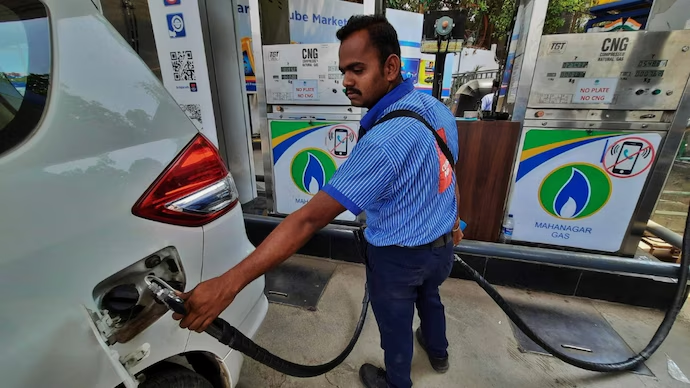
State-run gas distributor Mahanagar Gas Limited (MGL) has increased the price of compressed natural gas (CNG) by ₹2 per kilogram across the Mumbai Metropolitan Region (MMR), with the revised rates coming into effect immediately.
Following the latest revision, CNG will now cost ₹86 per kg in Mumbai, Thane, Navi Mumbai and adjoining areas. The increase marks the second hike in less than a month, after a similar ₹2 per kg revision on May 14.

The cumulative ₹4 per kg increase is expected to put additional pressure on daily commuters, taxi drivers and commercial vehicle operators who depend heavily on CNG for their livelihoods. MGL has not yet announced the reasons behind the latest price revision.
The increase comes days after CNG prices in Delhi were raised by ₹2 per kg on May 26, taking the retail price in the national capital to ₹83.09 per kg. The latest revision was the fourth increase within 11 days, pushing cumulative CNG prices in Delhi up by ₹7 per kg since May 15.
The upward trend began with a ₹2 per kg hike on May 15, followed by two separate increases of ₹1 per kg each over the following week. Despite the repeated revisions in CNG rates, prices of piped natural gas (PNG) for households and domestic LPG cylinders have remained unchanged.
Industry experts attribute the recent fuel price hikes to sustained pressure from rising global crude oil prices. Concerns over possible disruptions in the Strait of Hormuz, a vital corridor for global oil shipments, have intensified amid escalating tensions between the United States and Iran.
Analysts warn that the continued increase in CNG prices could raise transportation and logistics costs, potentially leading to higher prices for essential goods and food items in the coming weeks.
Government officials, however, maintain that the revisions are necessary to offset rising import costs and ensure uninterrupted fuel supplies during a period of geopolitical uncertainty.
With India importing nearly 85% of its crude oil requirements, domestic fuel prices remain highly sensitive to fluctuations in international energy markets.