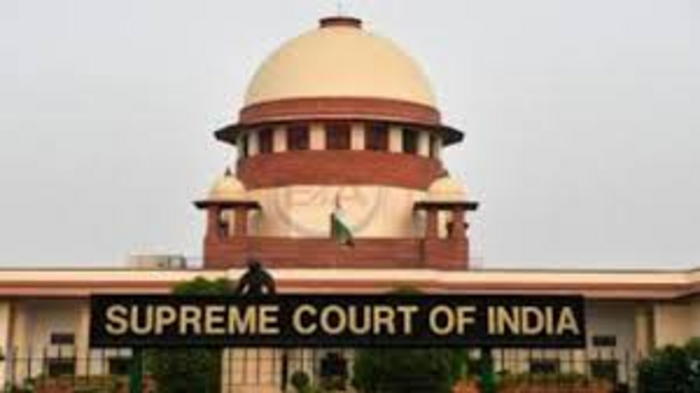
Apex court calls for expert inputs on transparency, accountability, and safeguards in deployment of Artificial Intelligence tools

The Supreme Court of India has sought expert recommendations on framing guidelines for the ethical and responsible use of Artificial Intelligence (AI) in judicial administration and case management. The move comes amid increasing adoption of digital tools within the judiciary to improve efficiency and reduce pendency.
Currently, AI-based tools are being used in limited capacities such as transcription of court proceedings, translation of judgments, and digital case management support. However, the Court emphasised the need to ensure transparency and algorithmic accountability as AI systems become more integrated into judicial processes.

The Bench expressed concerns regarding potential bias in algorithms, data privacy risks, and the possibility of opaque decision-making mechanisms. It underscored that while AI can assist judicial functioning, it cannot replace judicial reasoning or compromise constitutional safeguards such as due process and equality before law.
The initiative reflects the judiciary’s recognition of technology’s growing role in governance while highlighting the need for clear ethical standards. The issue is significant in the context of e-governance reforms and digital transformation of courts, balancing efficiency with fundamental rights and judicial independence.
The development marks an important step toward integrating technology in the justice system while ensuring adherence to constitutional principles and public trust.


UPI charges debate grows as rising costs put payment ecosystem under pressure

US Supreme Court rejects Trump mail ballot restrictions ahead of midterms

India-Vietnam ties broaden as defence, critical minerals and trade take centre stage

From SHGs to social security, how Pension Sakhis could take pensions deeper into rural India

NTA looks beyond India as DG Singh highlights BRICS cooperation and China’s Gaokao

NTA looks beyond India as DG Singh highlights BRICS cooperation and China’s Gaokao

NEET-UG May Go Online Soon: NTA Chief Signals Shift From OMR To Computer-Based Exam

IIM Jammu's Nalanda Library goes digital, puts 2.5 lakh books online

MP school students to receive Aadhaar-style APAAR ID, 78.5% IDs generated so far
.webp&w=256&q=75)
DU defends Honours priority in one-year PG admissions, says preference is academically justified

UPI charges debate grows as rising costs put payment ecosystem under pressure

US Supreme Court rejects Trump mail ballot restrictions ahead of midterms

India-Vietnam ties broaden as defence, critical minerals and trade take centre stage

From SHGs to social security, how Pension Sakhis could take pensions deeper into rural India

NTA looks beyond India as DG Singh highlights BRICS cooperation and China’s Gaokao

NTA looks beyond India as DG Singh highlights BRICS cooperation and China’s Gaokao

NEET-UG May Go Online Soon: NTA Chief Signals Shift From OMR To Computer-Based Exam

IIM Jammu's Nalanda Library goes digital, puts 2.5 lakh books online

MP school students to receive Aadhaar-style APAAR ID, 78.5% IDs generated so far
.webp&w=256&q=75)
DU defends Honours priority in one-year PG admissions, says preference is academically justified
Copyright© educationpost.in 2024 All Rights Reserved.
Designed and Developed by @Pyndertech