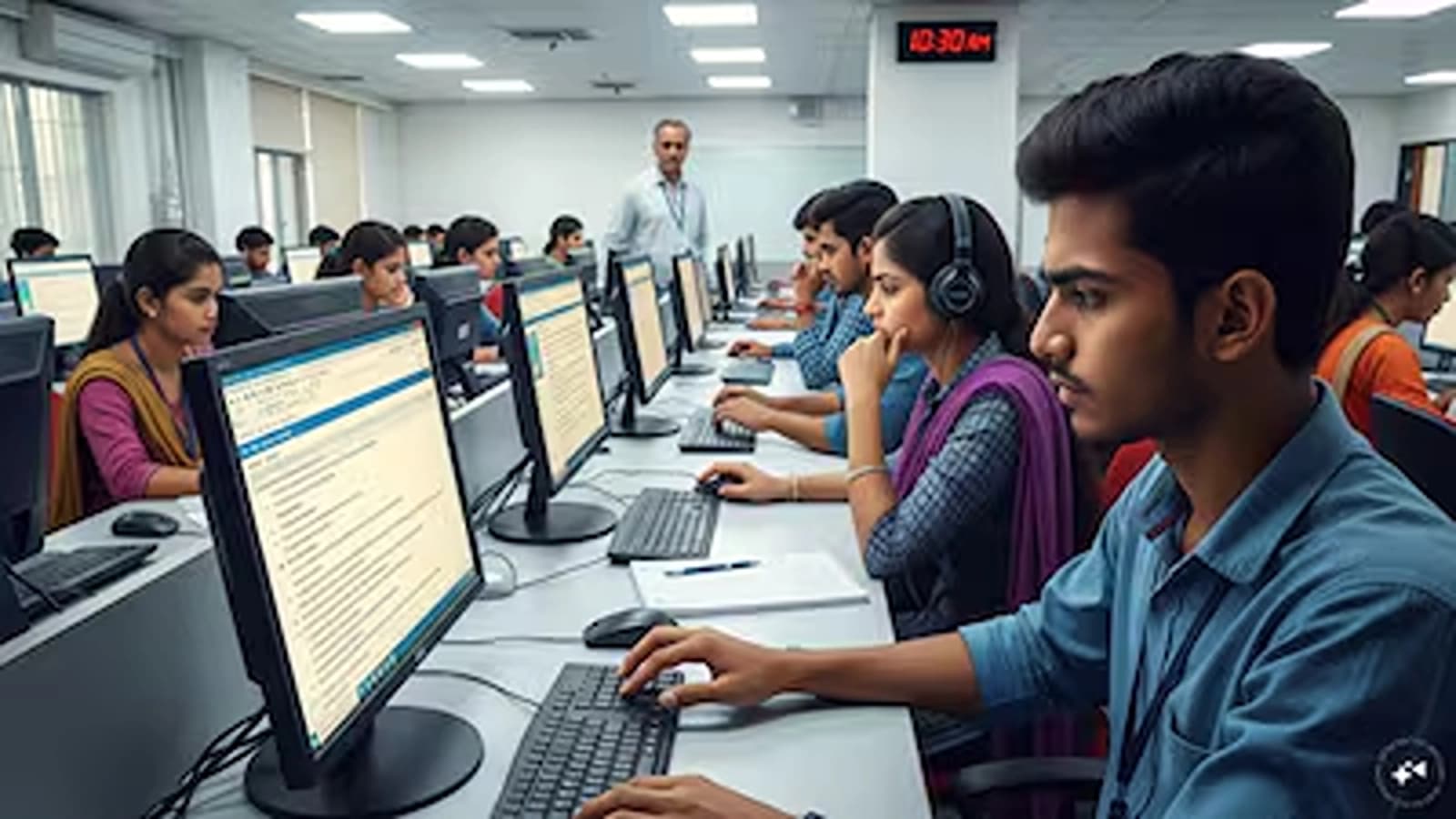
The National Testing Agency (NTA) is preparing for a major change in the way India’s medical entrance examination is conducted, with NEET-UG expected to move from its existing pen-and-paper format to Computer-Based Testing (CBT).
NTA Director General Abhishek Singh said the agency is working towards shifting NEET-UG online, describing computer-based testing as the future of large-scale examinations. His remarks, reported by ANI during the BRICS summit in Delhi, provide the clearest indication so far that a digital NEET-UG is being actively considered.

“On NEET also, we will be moving to CBT very soon,” Singh said, according to ANI. He noted that most of the NTA’s other major examinations are already conducted through computer-based systems.
The proposed change would mark a significant departure for NEET-UG, which continues to be conducted using question papers and OMR answer sheets. The 2026 NEET-UG examination was conducted in pen-and-paper mode across hundreds of cities, with more than 22.79 lakh candidates registered for the May 3 examination.
Why NTA is considering CBT for NEET-UG
The move comes amid a wider push to modernise India's public examination system and strengthen safeguards around high-stakes entrance tests.
NTA already conducts several major examinations in CBT mode, including JEE Main, CUET and UGC-NET. The agency's current tender records also show active procurement and service arrangements related to Computer-Based Tests, examination monitoring and technology-based security measures.
Also Read: DU defends Honours priority in one-year PG admissions, says preference is academically justified
For NEET-UG, however, the scale presents a substantially larger logistical challenge. More than 22 lakh candidates appeared or registered for the 2026 examination, requiring thousands of examination centres and a nationwide administrative network. NTA said before the 2026 exam that the test was scheduled across 551 cities in India and 14 cities abroad, with more than 5,400 centres involved.
A shift to CBT would therefore require the expansion of testing infrastructure, adequate computer capacity and stronger systems to handle simultaneous or multiple examination sessions.
Nilekani-led task force examining wider exam reforms
The proposed NEET-UG transition is taking place alongside a broader government exercise to overhaul India's public examination system.
Prime Minister Narendra Modi announced in July that a high-powered task force on examination reforms had been constituted under the leadership of Infosys co-founder Nandan Nilekani.
In a subsequent official release, the Ministry of Personnel, Public Grievances and Pensions said the task force would examine reforms covering the conduct, security, design and governance of public examinations, including examinations conducted by the NTA.
The government's written statement specifically identifies technology deployment, examination infrastructure, examination integrity and security, accessibility and inclusion among the areas being examined. The stated objective is to develop a public examination system that is secure, transparent, equitable and future-ready.
The task force also invited suggestions from stakeholders, including students, parents, teachers, educational institutions and examination and technology professionals.
What changes could NEET candidates see?
A move to CBT would mean that candidates would answer questions on computers rather than marking responses on an OMR sheet. Depending on the final model adopted by NTA, the examination could require multiple shifts or examination days to accommodate the exceptionally large candidate pool.
Such a system would also bring new questions around standardisation, computer availability, technical reliability and the treatment of candidates appearing in different shifts.
These issues are particularly important for NEET-UG because the examination determines admission to undergraduate medical programmes and is taken by candidates from across the country, including students from regions with differing levels of access to digital infrastructure.
No official NEET-UG CBT notification yet
Despite the NTA chief's latest statement, candidates should not assume that the NEET-UG CBT transition has already been formally notified.
The official NEET-UG portal currently lists the 2026 examination and its associated notices, while NTA's published material confirms that the 2026 examination was conducted in pen-and-paper mode. No official NTA notification located so far specifies a final date, year, shift pattern or detailed operational framework for the proposed CBT transition.
The development, therefore, represents a clear policy direction rather than a completed rollout.
For medical aspirants, the immediate takeaway is that NEET-UG could soon join the country's other major national entrance examinations on a computer-based platform. The exact timeline, examination structure and safeguards will depend on NTA's infrastructure preparations and the recommendations emerging from the broader examination-reform process.




%20Region%20Director%20at%20Logitech%3B%20Madhura%20DasGupta%20Sinha%2C%20Founder%20and%20CEO%2C%20Aspi.webp&w=256&q=75)


.webp&w=256&q=75)
.webp&w=256&q=75)