Court says no parent should be treated as a “visitor” in a child’s life and stresses that the child’s welfare must remain the priority

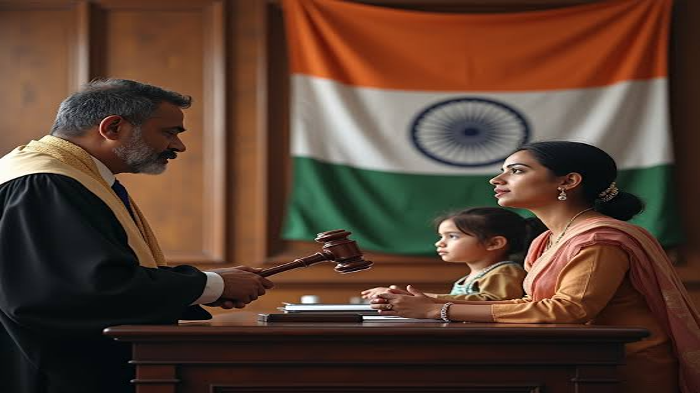
The Karnataka High Court has directed family courts and tribunals across the state to use the term “parenting time” instead of “visitation” when referring to the time a non-custodial parent spends with their child.
The direction was issued by Justice Lalitha Kanneganti in an order dated September 29. The court observed that the language used in child custody proceedings can influence how children understand their relationship with their parents.

The court noted that the term “visitation” may create an impression that the non-custodial parent is merely a guest who visits the child for a limited period. Instead, the expression “parenting time” better reflects the continuing parental relationship.
The High Court has asked its registry to issue administrative directions so that future applications in custody matters use the term “parenting time” rather than “visitation”.
The court clarified that changing the terminology would not determine the question of custody or automatically grant greater access to a non-custodial parent. However, it said that using more compassionate language is important when courts impose restrictions on a parent’s access to their child.
The bench emphasised that family courts exercise parens patriae jurisdiction, under which the welfare and best interests of the child remain paramount. It observed that custody disputes involve complex emotional and family circumstances and cannot be decided through a rigid formula.
According to the court, children fundamentally need the affection and involvement of both parents, even when their parents are involved in matrimonial disputes.
The ruling therefore seeks to shift the focus of custody proceedings from the idea of a parent merely “visiting” a child towards recognising the continuing role and responsibility of both parents in the child’s life.


India’s Blue Economy Push Seeks to Balance Growth and Ocean Conservation

Supreme Court Seeks Panel to Curb Unethical Pharma Marketing Practices

NMC Tightens Rules on Doctors’ Digital Advertising and AI Use

Anthropic Launches Claude Haiku 5.5 as Its Fastest and Cheapest AI Model

Karnataka HC Replaces ‘Visitation’ with ‘Parenting Time’ in Child Custody Cases

Canadian author Anne Carson wins 2026 Nobel Prize in Literature for reshaping contemporary literary forms

AMU students’ protest enters third week as union election demand widens

DPDP Act Explained: What is India’s Digital Personal Data Protection Law and Why is it in the News?

IIT Bombay puts stricter cheating rules on hold, drafts new procedure for exam misconduct

Gujarat launches PARAKH Cell to shift school assessments toward competency-based learning

India’s Blue Economy Push Seeks to Balance Growth and Ocean Conservation

Supreme Court Seeks Panel to Curb Unethical Pharma Marketing Practices

NMC Tightens Rules on Doctors’ Digital Advertising and AI Use

Anthropic Launches Claude Haiku 5.5 as Its Fastest and Cheapest AI Model

Karnataka HC Replaces ‘Visitation’ with ‘Parenting Time’ in Child Custody Cases

Canadian author Anne Carson wins 2026 Nobel Prize in Literature for reshaping contemporary literary forms

AMU students’ protest enters third week as union election demand widens

DPDP Act Explained: What is India’s Digital Personal Data Protection Law and Why is it in the News?

IIT Bombay puts stricter cheating rules on hold, drafts new procedure for exam misconduct

Gujarat launches PARAKH Cell to shift school assessments toward competency-based learning
Copyright© educationpost.in 2024 All Rights Reserved.
Designed and Developed by @Pyndertech