Canadian author Anne Carson wins 2026 Nobel Prize in Literature for reshaping contemporary literary forms
Her work draws on ancient Greek literature and mythology while combining poetry, prose, translation, essays and performance, earning recognition for its unconventional forms and perspectives.
Pragya Kumari08 October 2026 12:39
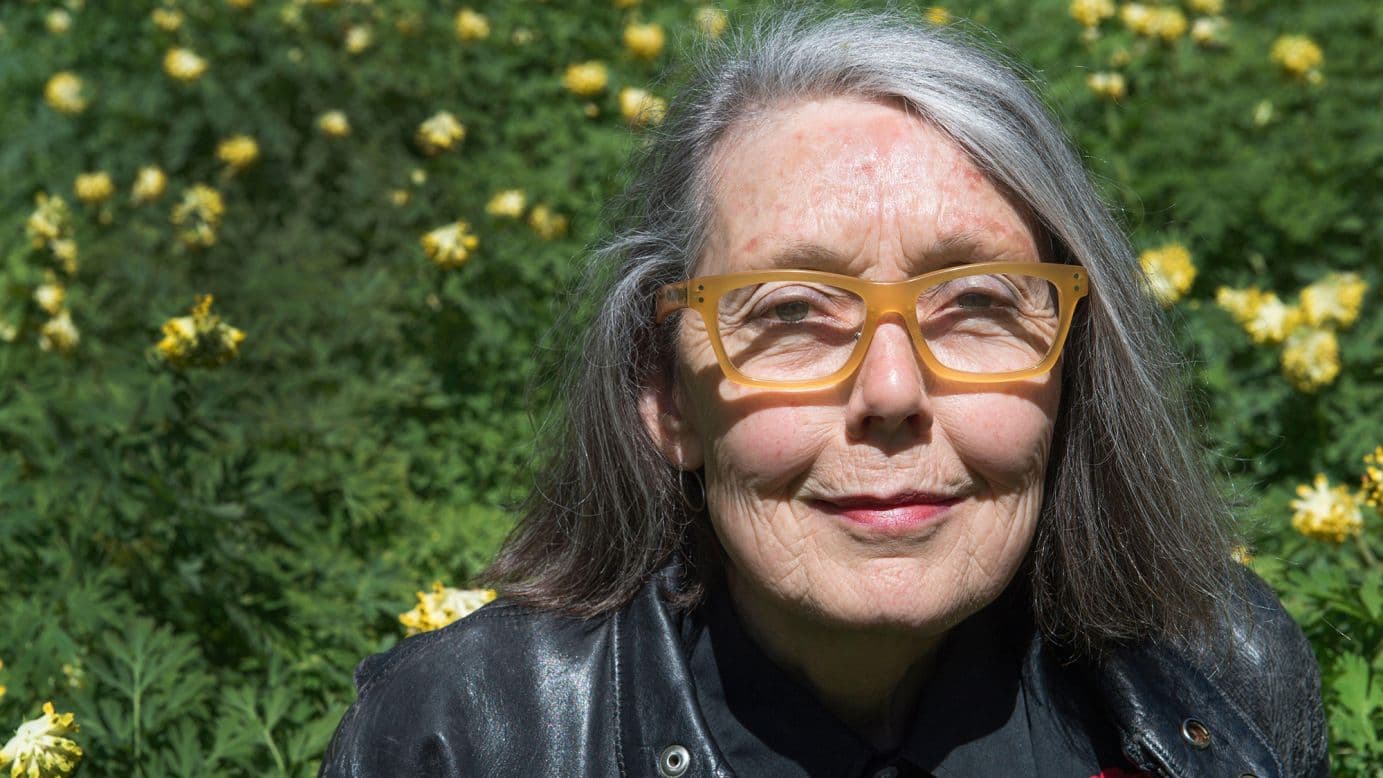
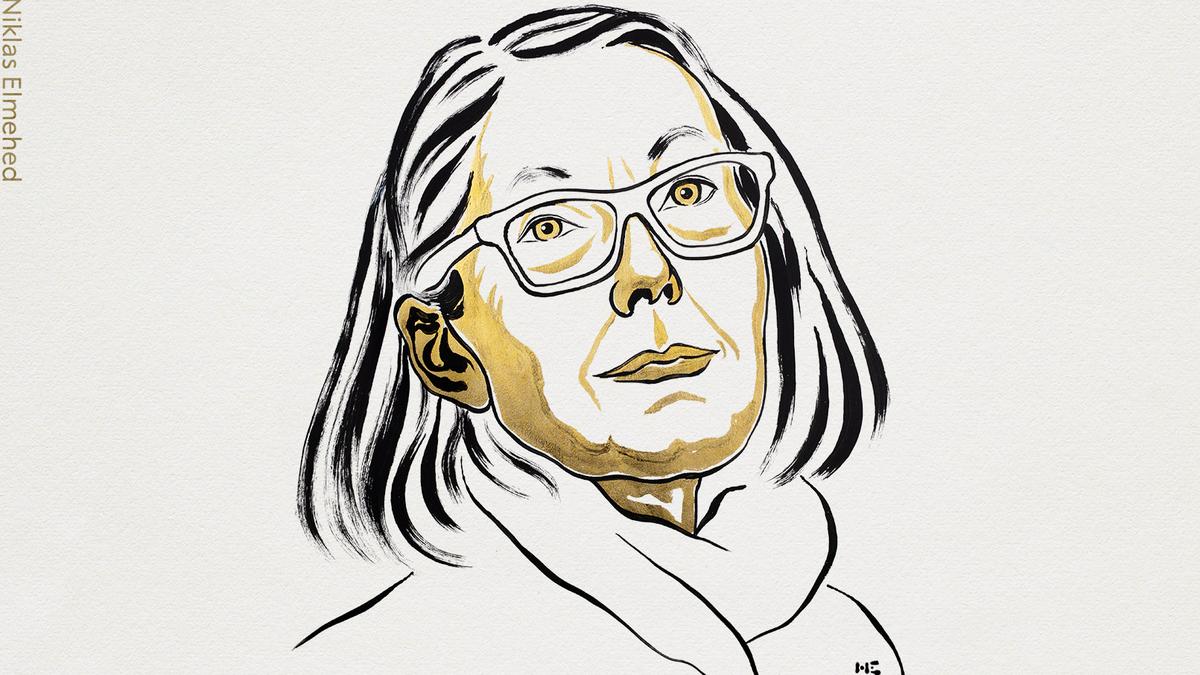
Canadian author and poet Anne Carson has won the 2026 Nobel Prize in Literature for her distinctive body of work that combines poetry, prose, translation and classical literature, the Swedish Academy announced on Oct 8.
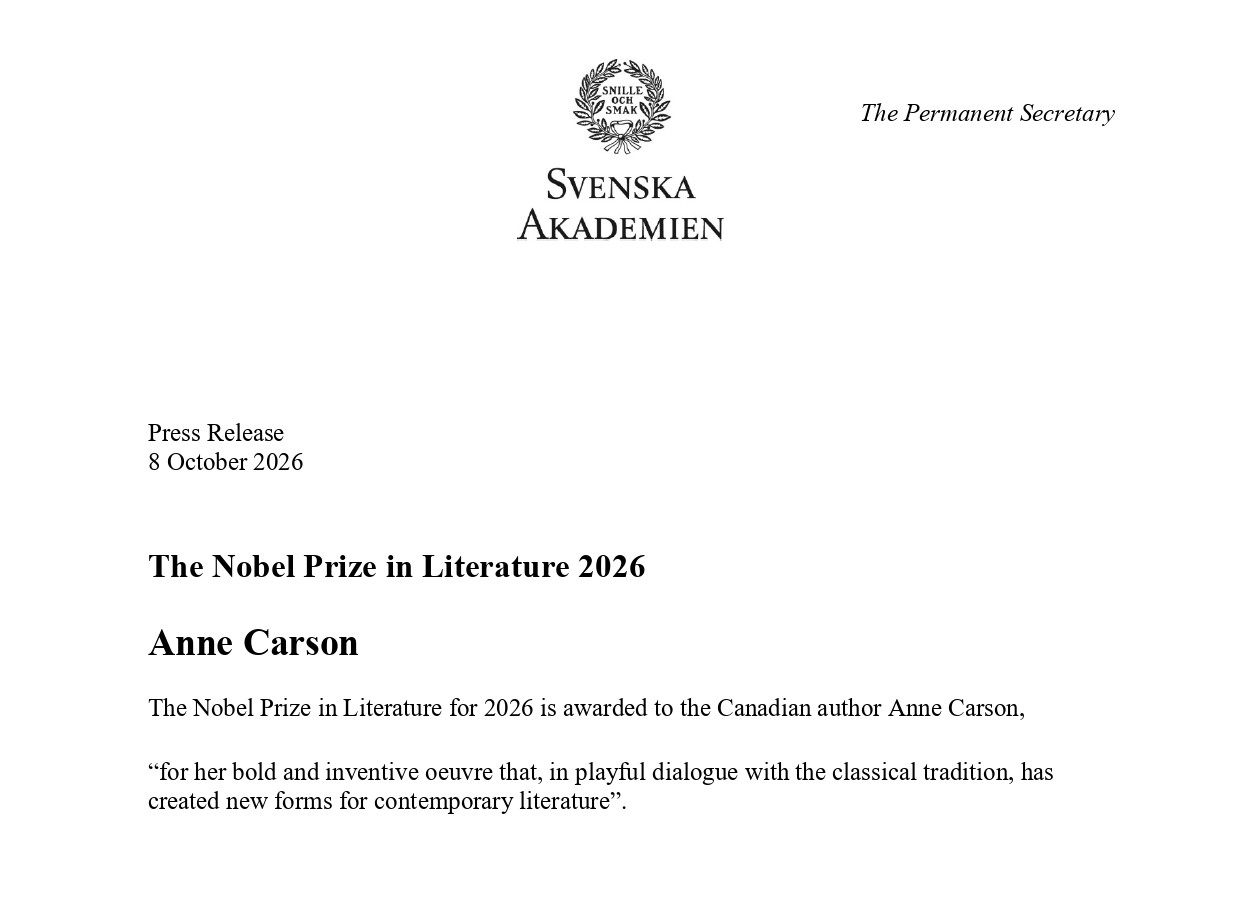
The Swedish Academy honored Carson “for her bold and inventive oeuvre that, in playful dialogue with the classical tradition, has created new forms for contemporary literature.”
Born in 1950 in Toronto, Canada, Carson has built a literary career around the intersection of classical scholarship and contemporary writing. Her work frequently draws on ancient Greek literature and mythology while moving across poetry, prose, translation, essays, performance and other forms.
The 76-year-old author has also combined writing with translation and teaching at universities throughout her career. She published her doctoral thesis in Classics, Odi et Amo Ergo Sum, in 1981.
Much of her work explores the relationship between the philologist’s attention to words and the poet’s search for new meanings. Carson has described the etymology of words as a starting point for her writing.
Her translations from Classical Greek have also been regarded as literary works in their own right. These include If Not, Winter (2002), her interpretation of fragments by the Greek poet Sappho, as well as translations of Sophocles’ Electra (2001), Antigone (2015) and Euripides’ Bakkhai (2015).
Eros the Bittersweet
Carson’s first major book, Eros the Bittersweet, was published in 1986. The long essay examines desire and its relationship with ancient Greek poetry, drawing on a compound adjective associated with Sappho that describes Eros as a combination of pain and sweetness.
The book examines the distance between the lover and the beloved and how that distance drives desire and poetry. Carson’s approach involves bringing different voices and perspectives into conversation.
In Eros the Bittersweet, she describes a “stereoscopic vision” that allows her to “hold in equipoise two perspectives at once.”
This method became a recurring feature of her work. In Economy of the Unlost (1999), Carson places the sixth-century BC Greek poet Simonides of Keos alongside Paul Celan. In Men in the Off Hours (2000), she brings the Greek historian Thucydides into dialogue with Virginia Woolf.
The Swedish Academy said Carson’s unexpected literary combinations have helped her move beyond lyrical poetry centered on the narrative self and have contributed to new forms of contemporary literature.
Her writing frequently crosses the boundaries between classical and modern poetry, as well as between different genres and art forms.
Autobiography of Red
Among Carson’s best-known works is Autobiography of Red: A Novel in Verse, published in 1998. The book draws on fragments by sixth-century BC Greek poet Stesichorus concerning Geryon, a winged red monster killed by Heracles in Greek mythology.
Carson transforms the myth into a contemporary coming-of-age story. Geryon becomes a young, sensitive protagonist devoted to his mother who falls in love with Heracles. The story also explores trauma, sexuality, heartbreak and desire.
The work has been described as a modern Bildungsroman and is widely regarded as one of Carson’s most significant literary achievements. Her ability to reinterpret classical material through contemporary experiences has become a defining feature of her writing.
Her work from the 1990s also included The Glass Essay, published in Glass, Irony, and God in 1995. The long poem blends poetry, narrative and literary criticism while exploring grief and unrequited love.
The poem follows a woman who has been left by her husband and travels to visit her mother in the moorlands. She takes the work of Emily Brontë with her, and Brontë’s landscapes and inner world become intertwined with the narrator’s experience.
The Swedish Academy highlighted the work as an example of Carson’s ability to blur genre boundaries. The poem combines a personal story with a reading of Brontë and uses shifts in scene and perspective to create a hybrid literary form.
Other major works
Carson’s The Beauty of the Husband: A Fictional Essay in 29 Tangos, published in 2001, explores the breakdown of a relationship through 29 episodes. Each section opens with lines from the romantic poet John Keats, creating a contrast between idealized ideas of beauty and the reality of a troubled marriage.
In 2001, Carson became the first woman to win the T.S. Eliot Prize for the collection. She has also received Guggenheim and MacArthur fellowships.
Her work has drawn praise from other major writers. Susan Sontag once said: “She is one of the few writers writing in English that I would read anything she wrote. If there’s a magazine that has something of hers in it, I buy it automatically.”
Carson’s Men in the Off Hours combined verse essays, poems, epitaphs and prose focused on artists and historical figures. The collection won the inaugural Griffin Poetry Prize in 2001.
Another eclectic work, Decreation, brought together poetry, essays and an opera, further demonstrating Carson’s willingness to work across literary and artistic forms.
Nox and her experimental approach
Nox, published in 2010, is among Carson’s most distinctive works. She created it in memory of her brother Michael, who had been absent before his death in Denmark in 2000.
Rather than appearing as a conventional book, Nox takes the form of an accordion-fold box containing reproductions of photographs, letters and other texts. The work functions as both a literary creation and a physical memorial to her brother.
The book also incorporates the Roman poet Catullus and his famous elegy 101, written in memory of his own brother who died abroad. Carson includes her own translation of the poem, adding another historical and literary layer to the work.
The Swedish Academy described Nox as “an unforgettable work” and highlighted its sculptural as well as literary qualities.
Carson’s later works have continued to challenge conventional ideas about literary form. Float, published in 2016, consists of 22 chapbooks on different subjects that can be read in any order.
Her 2019 performance piece Norma Jeane Baker of Troy brings together the story of Helen of Troy from Euripides’ Helen and the life of Marilyn Monroe.
Her later work also includes Red Doc and Wrong Norma, published in 2024. Wrong Norma combines different types of texts and has a strong performative element, reflecting Carson’s continued movement between literary and academic disciplines.
Her collaborations have extended beyond writing to visual artists, choreographers, opera directors and theater practitioners. The Swedish Academy said this freedom from conventional literary expectations has contributed to the importance of her work to the international art and literature scene since the 1990s.
Carson’s awards and recognition
Carson became the first woman to receive the T.S. Eliot Prize in 2001 for The Beauty of the Husband. She has also received Guggenheim and MacArthur fellowships and the inaugural Griffin Poetry Prize.
She has been discussed as a potential Nobel laureate for several years and now joins the ranks of major writers recognized by the Swedish Academy, including Alexander Solzhenitsyn, Alice Munro and Ernest Hemingway.
The Swedish Academy said Carson’s work demonstrates how literary forms can be reshaped through unexpected combinations of classical texts, contemporary experiences, translation and multiple genres.
Carson reacts to Nobel announcement
The Swedish Academy’s Permanent Secretary Ingrid Carlberg said she briefly spoke with Carson after the announcement.
“We didn’t have so much time to speak. All she had time to tell me was that she is for the moment in Iceland, where she’s listening to the wind. She was taken by surprise but was very happy. I could hear that in her voice,” said Carlberg.
Nobel Prize and ceremony
The Nobel Prize in Literature has now been awarded 119 times since 1901. Carson follows Hungarian writer László Krasznahorkai, who received the 2025 Nobel Prize in Literature for what the Swedish Academy described as his “compelling and visionary oeuvre that, in the midst of apocalyptic terror, reaffirms the power of art."
Recent literature laureates have included Annie Ernaux, Bob Dylan, Abdulrazak Gurnah, Louise Glück, Peter Handke, Olga Tokarczuk and Han Kang.
The 2024 Nobel Prize in Literature was awarded to South Korean author Han Kang for her “intense poetic prose that confronts historical traumas and exposes the fragility of human life." Norwegian writer Jon Fosse received the 2023 prize for his “innovative plays and prose which give voice to the unsayable."
Carson will formally receive the Nobel medal and diploma at a ceremony in Stockholm in December.
The Nobel laureates will receive a cash award of 12 million Swedish kronor, approximately $1.2 million. The award ceremony will take place on Dec 10, Nobel Prize Day, which also marks the death anniversary of Swedish inventor and Nobel Prize founder Alfred Nobel.
Nobel’s will established the prizes for those who, during the preceding year, had “conferred the greatest benefit to humankind."