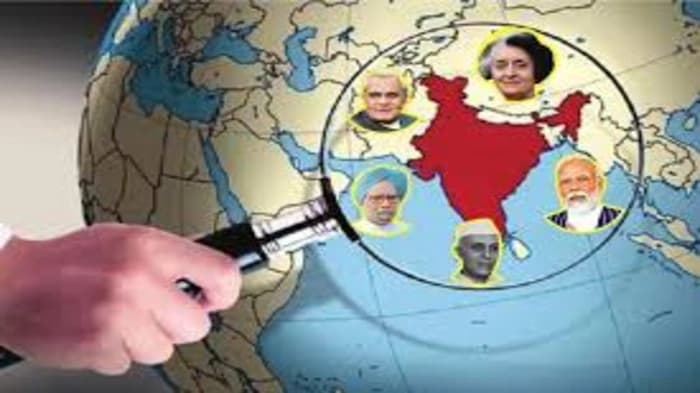
Strategic Autonomy: Concept and Relevance
The ability of a state to chart foreign policy free from external compulsion or undue dependence.

In the 21st century, constrained autonomy arises due to economic interdependence, security alliances, and global power dynamics.
Recent Developments
India and Australia prepared to sign a joint defence and security cooperation declaration, deepening ties in the Indo-Pacific.
India continues to emphasize multi‑alignments rather than aligning with a single bloc.
Policy deliberations over a proposed Nuclear Bill reflect challenges of balancing non‑proliferation norms with strategic imperatives.
Challenges to Autonomy
Economic dependencies: trade imbalances, foreign investment links, and supply chain vulnerabilities.
Geopolitical pressures: expectations from major powers (USA, China, Russia) to join their strategic camps.
Institutional constraints: domestic politics, bureaucracy, and capacity limits can force reactive choices.
Security dilemmas: territorial pressures, alliance dynamics, and defence commitments shape constraints.
Strategies to Enhance Autonomy
Diversify partnerships: expand ties beyond traditional powers (Africa, Latin America, small nations).
Develop internal capacities: defence, technology, energy — to reduce external dependencies.
Diplomatic agility: calibrated engagement, issue‑based alliances rather than rigid blocs.
Institutional strengthening: think tanks, strategic foresight, inter‑ministerial coordination.
Case Examples
Engagement with ASEAN, Quad, BRICS without exclusive alignment.
India's vaccine diplomacy during COVID as an instance of calculated projection without overdependence.
Energy partnerships with multiple fuel suppliers to avoid overreliance.
Conclusion
In a world of growing power contests, strategic autonomy is not isolation but informed choice. India’s challenge is not just to balance but to lead with dignity, retaining freedom to act even while deepening relations.