India can turn its vast agricultural waste and low-cost green hydrogen into sustainable aviation fuel (SAF) through a power-and-biomass-to-liquids industry, according to a report co-authored by India Energy and Climate Centre, the UC Berkeley Goldman School of Public Policy, and the Energy Innovation Policy and Technology.
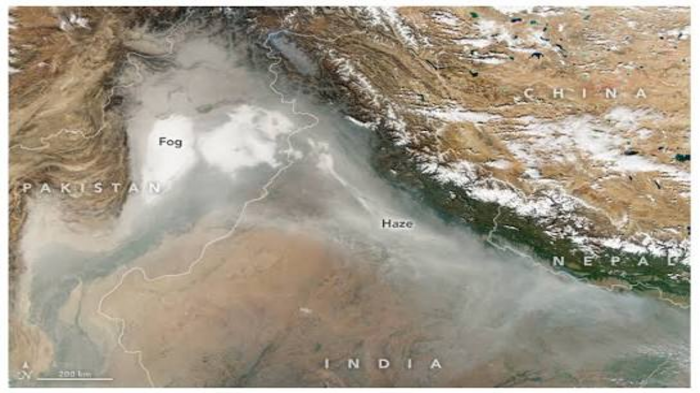
India faces several threats from its rapid development, including increasing reliance on imported crude oil, worsening air pollution from agricultural residue fires, and rising greenhouse gas emissions from its aviation sector. However, India also has emerging advantages in its world-leading low-cost green hydrogen and development of large-scale agricultural residue supply chains, the report states.

The Power-and-Biomass-to-Liquids ((PBtL) pathway gasifies surplus crop waste, like rice and wheat straw, and combines it with green hydrogen, converting the synthesis gas into liquid jet fuel via the Fischer-Tropsch process.
The report states that India’s PBtL route can produce SAF at costs up to roughly 40 per cent below global SAF benchmarks, driven by record-low green hydrogen prices and low agricultural residue costs.
Its results suggest that until Indian PBtL SAF can compete directly with fossil jet fuel, it can economically serve rising international SAF demand while hedging against crude oil price spikes.
The report also states that PBtL SAF has an enormous market size and could feasibly satisfy all of India’s 2050 aviation demand; that PBtL SAF production costs can fall below fossil jet fuel prices in the 2030s or earlier depending on market conditions and policy developments; and that domestic PBtL SAF has less monetary risk exposure than fossil jet fuel.
It provides a vision for how India can leverage these advantages to develop a power-and-biomass-to-liquids (PBtL) sustainable aviation fuel (SAF) industry that can deliver a domestic cost-competitive drop-in alternative to imported crude oil-dependent fossil jet fuel, create value from agricultural residue that is currently burned, and decarbonize India’s aviation sector.
The report states that PBtL is ready for commercial demonstration and growth, outcompetes other SAF technologies on cost, carbon intensity, and resource efficiency, and delivers a range of co-benefits such as avoiding premature deaths from local air pollution.
It provides a spatially detailed, district-level assessment showing that surplus agricultural residue availability and low green hydrogen costs align in the areas surrounding the Delhi, Pune, and Mumbai airports, suggesting they may be best suited for supporting the PBtL industry’s near-term growth.
The report concludes that if India can drive early investment and use smart policy to overcome first-of-a-kind deployment barriers and protect against unintended consequences, it can unlock a virtuous cycle of scale and cost reduction that boosts India’s self-reliance, public health, and global climate leadership.