


Super El Niño 2026: Extreme Warming May Affect India and Global Food Security
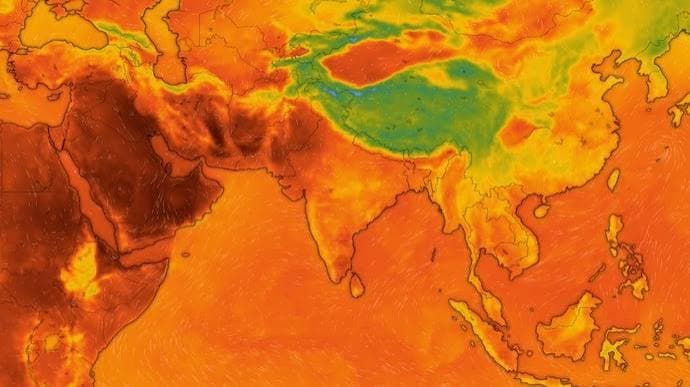
The ongoing El Niño phenomenon is expected to intensify towards the end of 2026, with forecasts suggesting unprecedented warming in the Pacific Ocean. According to the World Meteorological Organization (WMO), its effects could continue into 2027, increasing the risk of extreme temperatures, droughts, floods and food insecurity across several regions.
El Niño is the abnormal warming of surface waters in the Pacific Ocean. It influences global weather patterns and can weaken India’s monsoon while increasing temperatures in many parts of the world.

The phenomenon emerged in June 2026, with its effects becoming noticeable over the oceans surrounding India after a delay of around 40–45 days. As El Niño strengthened, India’s southwest monsoon weakened in late August. The southwest monsoon accounts for approximately 70 per cent of the country’s annual rainfall.
August rainfall was 83 per cent of the long-period average, while September recorded 92 per cent. The monsoon season ended at 87 per cent of the long-period average, making it the fourth driest since 2001 and the 13th driest since 1901. However, the northeast monsoon is expected to be normal over southern India.
El Niño may also contribute to warmer-than-usual conditions during October, November and December.
El Niño is part of the El Niño Southern Oscillation (ENSO), a climate pattern with three phases: El Niño, neutral conditions and La Niña. Scientists assess its intensity by measuring sea surface temperature anomalies in the equatorial Pacific, particularly the Niño 3.4 region.
The current event has intensified rapidly, with the July–September Relative Ocean Niño Index recording warming of 2–2.8 degrees Celsius. The WMO expects temperatures at the phenomenon’s epicentre to reach around 3.8 degrees Celsius above normal during October–December, potentially exceeding previous records.
The impacts are expected to extend across Africa, Asia, Europe, Australia and the Americas. Several regions could face extreme heat, while others may experience droughts, floods and cyclones.
Africa is expected to be particularly vulnerable. According to the UN humanitarian affairs chief, around 50 million people could face increased hunger. The African Development Bank estimates that the phenomenon could cost African countries $10–20 billion and reduce their GDP by 1–2 per cent.
El Niño could also threaten agricultural production and water availability while raising food, fuel and fertiliser prices. These effects may continue into 2027, placing additional pressure on economies already affected by geopolitical conflicts and resource shortages.

NCERT Develops Introductory AI Module for Classes 9–12, Focuses on Digital Safety

Virus Linked to Infected Animals and Midge Bites

Chinese Troop Movements and Territorial Claims Fuel Tensions
El Niño Weakens India’s Monsoon and Raises Winter Temperature Concerns

Court Rejects Defence Plea Over Delayed Witness Statements

Canada announces $813 million research boost to back 450-plus researchers

Abu Dhabi aims to bring 2,000 Emirati teachers into private schools within five years

Australian schools record thousands of student sexual misconduct reports as child safety concerns grow

Egypt insists international schools include Arabic, history in final scores

China’s Chery unveils AI companion robot designed to ease loneliness

NCERT Develops Introductory AI Module for Classes 9–12, Focuses on Digital Safety
Virus Linked to Infected Animals and Midge Bites
Chinese Troop Movements and Territorial Claims Fuel Tensions
El Niño Weakens India’s Monsoon and Raises Winter Temperature Concerns
Court Rejects Defence Plea Over Delayed Witness Statements
Canada announces $813 million research boost to back 450-plus researchers
Abu Dhabi aims to bring 2,000 Emirati teachers into private schools within five years
Australian schools record thousands of student sexual misconduct reports as child safety concerns grow
Egypt insists international schools include Arabic, history in final scores
China’s Chery unveils AI companion robot designed to ease loneliness
Copyright© educationpost.in 2026 All Rights Reserved.