


Cyclone Arnab: How El Niño Contributed to Its Rapid Intensification Along India’s East Coast
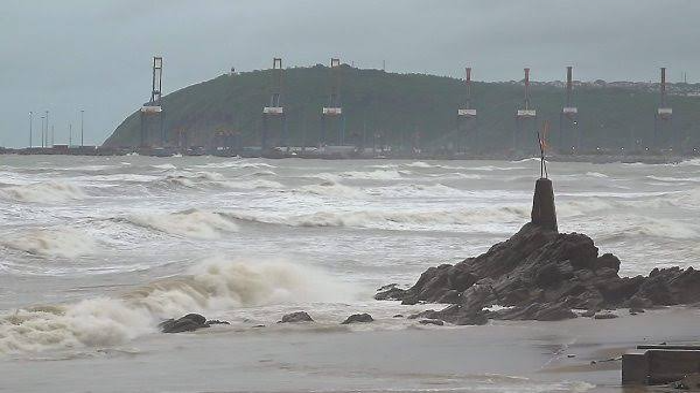
Cyclone Arnab made landfall along India’s eastern coast on October 28, 2026, crossing the Andhra Pradesh and Yanam coasts. The storm, which had intensified into a very severe cyclonic storm, weakened to a severe cyclonic storm after moving over land. It uprooted trees and electricity poles, causing power outages across several areas. More than 1.8 lakh people were evacuated in Andhra Pradesh and Odisha ahead of the cyclone.
According to the India Meteorological Department (IMD), the landfall process was completed after the system moved entirely over land. Arnab developed from a low-pressure system over the southeast Bay of Bengal on October 23 and intensified into a cyclone by October 26. It subsequently strengthened into a very severe cyclonic storm, with sustained wind speeds of 125–135 kmph and gusts reaching 140 kmph.

The cyclone’s movement towards the coast was faster than initially forecast. Its landfall began around 1 am on Wednesday, between Bapatla and Visakhapatnam. Unlike many cyclones that weaken relatively quickly after reaching land, Arnab maintained its intensity for nearly six hours. Its movement slowed near Narsapur in Andhra Pradesh and Yanam, delaying the completion of landfall.
Heavy rainfall affected several coastal districts. Visakhapatnam recorded 217 mm of rainfall, followed by Kalingapatam at 147 mm, Tuni at 123 mm and Kakinada at 118 mm.
El Niño, a climate phenomenon characterised by the abnormal warming of surface waters in the central and equatorial Pacific Ocean, can influence global atmospheric circulation, rainfall patterns and temperatures. In 2026, the phenomenon has been intensifying, potentially affecting weather conditions over the North Indian Ocean.
Warmer ocean waters provide the heat and moisture required for tropical cyclone development. Sea surface temperatures of around 26°C or higher, along with favourable conditions extending below the surface, can support cyclone formation and intensification. However, cyclone development also depends on factors such as wind shear, atmospheric convection, upper-ocean circulation and interactions between the ocean and atmosphere.
El Niño can alter wind patterns and influence where cyclones form and travel. According to the IMD, tropical cyclones during El Niño years may develop closer to the equator, increasing the likelihood of systems moving towards the Andhra Pradesh and Tamil Nadu coasts rather than Odisha and West Bengal. Cyclone Hudhud, which struck Andhra Pradesh in 2014, is another example of a major cyclone affecting the region during an El Niño year.
The IMD forecast continued heavy rainfall across northern Andhra Pradesh and southern Odisha, with red alerts issued for the affected regions and an orange alert for Chhattisgarh. As the weakened system moves northwards, heavy to very heavy rainfall is expected in parts of Telangana, Jharkhand, Bihar, Gangetic West Bengal, eastern Madhya Pradesh and eastern Uttar Pradesh.
Cyclone Arnab highlights the importance of accurate forecasting, timely evacuation and disaster preparedness. It also demonstrates how ocean temperatures and large-scale climate phenomena can influence cyclone behaviour, although El Niño alone cannot explain the intensity or trajectory of an individual storm.

Why Were the Meeting Records Made Public?

Significance of the Fifth Plenum

Major Security Breaches and the Role of Artificial Intelligence

Legal Provisions and Guardian Liability

The Role of Satellite Networks in Ukraine’s War

Will AI Become Compulsory in Indian Schools? What NCERT’s New Curriculum Means

McMaster University researcher wins $250,000 fellowship to advance bone implant research

Vande Bharat Sleeper Train: Varanasi–New Delhi Route Approved, Check Route, Timings and Stops

DA Hike 2026: Centre Approves 3% Increase, Allowance Rises to 63%

Haryana Listed 500 CHEERAG Seats at School After Recognition Withdrawal, Records Show

Why Were the Meeting Records Made Public?
Significance of the Fifth Plenum
Major Security Breaches and the Role of Artificial Intelligence
Legal Provisions and Guardian Liability
The Role of Satellite Networks in Ukraine’s War
Will AI Become Compulsory in Indian Schools? What NCERT’s New Curriculum Means
McMaster University researcher wins $250,000 fellowship to advance bone implant research
Vande Bharat Sleeper Train: Varanasi–New Delhi Route Approved, Check Route, Timings and Stops
DA Hike 2026: Centre Approves 3% Increase, Allowance Rises to 63%
Haryana Listed 500 CHEERAG Seats at School After Recognition Withdrawal, Records Show
Copyright© educationpost.in 2026 All Rights Reserved.