


Supreme Court directs strict enforcement to improve sanitation and environmental protection
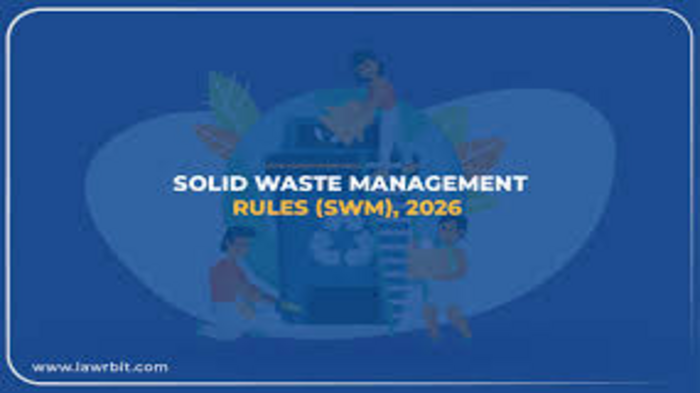
The Supreme Court of India has directed central and state authorities to ensure effective implementation of the Solid Waste Management Rules, 2026, which will come into force from April 1, 2026. The Court emphasized that improper waste management poses serious threats to public health, environmental sustainability, and urban living conditions. The directive highlights the urgent need for authorities to adopt efficient waste collection, processing, and disposal systems across cities and towns.
The Solid Waste Management Rules, 2026 aim to strengthen waste segregation, scientific processing, recycling, and safe disposal of municipal solid waste. A key focus of the rules is segregation of waste at the source into biodegradable, recyclable, and hazardous categories. This helps improve recycling efficiency and reduces the burden on landfills. The rules also promote modern waste processing technologies such as composting, biomethanation, and waste-to-energy conversion to minimize environmental damage.

Urban Local Bodies are responsible for implementing these rules and ensuring proper waste management infrastructure. The Court stressed that failure to comply with these regulations can result in environmental degradation, air and water pollution, and health hazards for citizens. Effective waste management is essential for preventing the spread of diseases and maintaining clean urban environments.
The implementation of these rules is significant for improving urban sanitation and promoting sustainable development. Proper waste management reduces pollution, conserves natural resources, and supports environmental protection. It also contributes to national initiatives such as the Swachh Bharat Mission, which aims to improve cleanliness and sanitation across the country.
Overall, the Supreme Court’s directive reinforces the importance of responsible waste management and accountability of authorities. Effective implementation of the Solid Waste Management Rules, 2026 will help create cleaner cities, protect the environment, and ensure better public health and sustainable urban development for the future.

NIOS October Exam 2026: Class 10, 12 Theory Hall Tickets Released; Download Link Here

Haryana Open School Exams 2027: BSEH Extends Application Deadline to October 31
Gauhati University Places Six Faculty Members in World’s Top 2% Scientists List 2026
DU VC asks DUSU leaders to lead drug-free campus campaign, proposes wellness centers

Russia seeks to curb multiple university applications with upfront payment rule
.jpg&w=256&q=75)
From Class 8 to hospital owner: Rajasthan Police expose alleged fake doctor registration

Who will lead Keralam's universities? Government begins steps to appoint permanent VCs
%20(1)%20(1).jpeg&w=256&q=75)
Why does cracking JEE Advanced depend on coaching? IIT Kanpur Director calls for a revamp
.jpg&w=256&q=75)
NEET-PG 2026 answer key row: Supreme Court seeks NBEMS response on missing question papers
.png&w=256&q=75)
42 Iraqi universities feature in QS Arab Region University Rankings 2027

NIOS October Exam 2026: Class 10, 12 Theory Hall Tickets Released; Download Link Here
Haryana Open School Exams 2027: BSEH Extends Application Deadline to October 31
Gauhati University Places Six Faculty Members in World’s Top 2% Scientists List 2026
DU VC asks DUSU leaders to lead drug-free campus campaign, proposes wellness centers
Russia seeks to curb multiple university applications with upfront payment rule
From Class 8 to hospital owner: Rajasthan Police expose alleged fake doctor registration
Who will lead Keralam's universities? Government begins steps to appoint permanent VCs
Why does cracking JEE Advanced depend on coaching? IIT Kanpur Director calls for a revamp
NEET-PG 2026 answer key row: Supreme Court seeks NBEMS response on missing question papers
42 Iraqi universities feature in QS Arab Region University Rankings 2027
Copyright© educationpost.in 2026 All Rights Reserved.