


Strengthening the Fight Against Urban Air Pollution
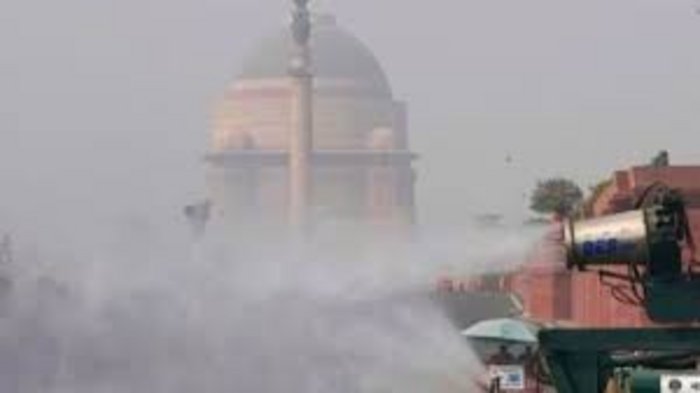
The Government has launched the second phase of the National Clean Air Programme (NCAP 2.0) to accelerate efforts toward reducing urban air pollution. The upgraded framework places greater emphasis on real-time air quality monitoring, electric mobility promotion, stricter industrial and vehicular emission norms, and data-driven policy interventions in non-attainment cities.
Under NCAP 2.0, continuous ambient air quality monitoring stations (CAAQMS) will be expanded across urban centres to provide real-time data for better enforcement and public awareness. Cities failing to meet National Ambient Air Quality Standards (NAAQS) will face enhanced compliance requirements and targeted action plans.

The programme promotes electric mobility, clean public transport systems, and the phasing out of old polluting vehicles, in coordination with initiatives like FAME (Faster Adoption and Manufacturing of Electric Vehicles). It also focuses on controlling dust pollution, improving waste management, regulating construction activities, and enforcing stricter emission standards for industries.
A performance-linked funding mechanism encourages States and Urban Local Bodies (ULBs) to meet pollution reduction targets. Capacity building, technological integration, and citizen participation are central to the programme’s implementation.
NCAP 2.0 aligns with India’s commitments under the Paris Agreement and broader climate action strategies, while also addressing Sustainable Development Goals (SDGs), particularly SDG 3 (Good Health and Well-being) and SDG 11 (Sustainable Cities and Communities).
Significance
The launch of NCAP 2.0 addresses critical public health concerns arising from air pollution and strengthens India’s climate mitigation efforts. By integrating technology, governance reforms, and clean mobility, the initiative promotes sustainable urban development and environmental resilience.

NIOS October Exam 2026: Class 10, 12 Theory Hall Tickets Released; Download Link Here

Haryana Open School Exams 2027: BSEH Extends Application Deadline to October 31

Gauhati University Places Six Faculty Members in World’s Top 2% Scientists List 2026
DU VC asks DUSU leaders to lead drug-free campus campaign, proposes wellness centers

Russia seeks to curb multiple university applications with upfront payment rule
.jpg&w=256&q=75)
From Class 8 to hospital owner: Rajasthan Police expose alleged fake doctor registration

Who will lead Keralam's universities? Government begins steps to appoint permanent VCs
%20(1)%20(1).jpeg&w=256&q=75)
Why does cracking JEE Advanced depend on coaching? IIT Kanpur Director calls for a revamp
.jpg&w=256&q=75)
NEET-PG 2026 answer key row: Supreme Court seeks NBEMS response on missing question papers
.png&w=256&q=75)
42 Iraqi universities feature in QS Arab Region University Rankings 2027

NIOS October Exam 2026: Class 10, 12 Theory Hall Tickets Released; Download Link Here
Haryana Open School Exams 2027: BSEH Extends Application Deadline to October 31
Gauhati University Places Six Faculty Members in World’s Top 2% Scientists List 2026
DU VC asks DUSU leaders to lead drug-free campus campaign, proposes wellness centers
Russia seeks to curb multiple university applications with upfront payment rule
From Class 8 to hospital owner: Rajasthan Police expose alleged fake doctor registration
Who will lead Keralam's universities? Government begins steps to appoint permanent VCs
Why does cracking JEE Advanced depend on coaching? IIT Kanpur Director calls for a revamp
NEET-PG 2026 answer key row: Supreme Court seeks NBEMS response on missing question papers
42 Iraqi universities feature in QS Arab Region University Rankings 2027
Copyright© educationpost.in 2026 All Rights Reserved.