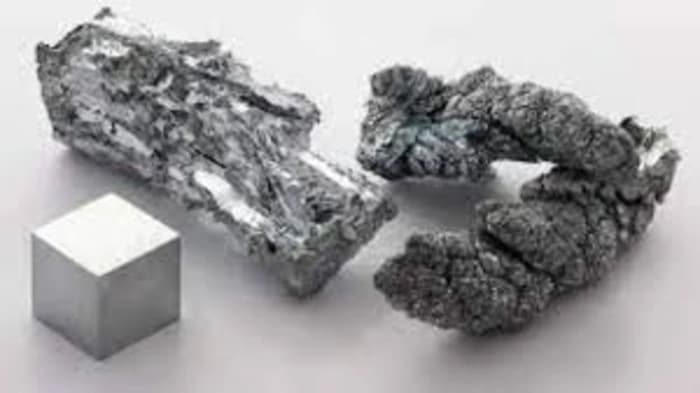
The Union government has recently taken steps to rationalise royalty rates on critical minerals including graphite, caesium, rubidium, and zirconium. These minerals are considered essential for India’s strategic supply chains due to their applications in advanced technologies, defence, electronics, aerospace, and renewable energy sectors. For instance, graphite is a key component in lithium-ion batteries, crucial for electric vehicles and energy storage; caesium and rubidium are vital in precision instrumentation and atomic clocks; while zirconium is extensively used in nuclear reactors and aerospace materials. By focusing on these minerals, India aims to reduce reliance on imports and strengthen domestic production capacity in sectors critical to national security and technological advancement.
What the Rationalisation Entails & Government’s Objective
Under the new policy, royalty rates for these minerals have been recalibrated to make domestic mining economically viable and competitive. The rationalisation involves lowering or standardising royalties in line with production costs, global prices, and potential investment requirements. The government’s objective is twofold: first, to incentivise private sector investment in exploration and extraction; and second, to ensure that India can secure a steady, affordable supply of minerals that are strategic for industry and defence. The move aligns with the broader National Critical Minerals Policy, which seeks to create an integrated ecosystem for exploration, processing, and utilisation of minerals in a sustainable and economically efficient manner.

Implications for Mining, Industry and Import Dependence
The rationalisation is expected to boost domestic mining activity and attract investment in critical mineral projects. By reducing royalties, the government hopes to make domestic production more competitive against imports, thereby gradually decreasing India’s dependency on foreign suppliers. This could also pave the way for the development of downstream industries, such as battery manufacturing, electronics components, and high-tech alloys.
However, challenges remain, including the need for technological expertise in extraction and processing, environmental compliance, and infrastructure development. The policy also underscores the importance of balancing economic incentives with sustainable mining practices.
In the long term, by making domestic production viable and strategically promoting critical minerals, India is positioning itself to meet growing industrial demand, support technological self-reliance, and secure supply chains that are vital for national security and emerging high-tech industries.