Accelerated solar and wind initiatives support climate goals, reduce emissions, and strengthen sustainable economic growth

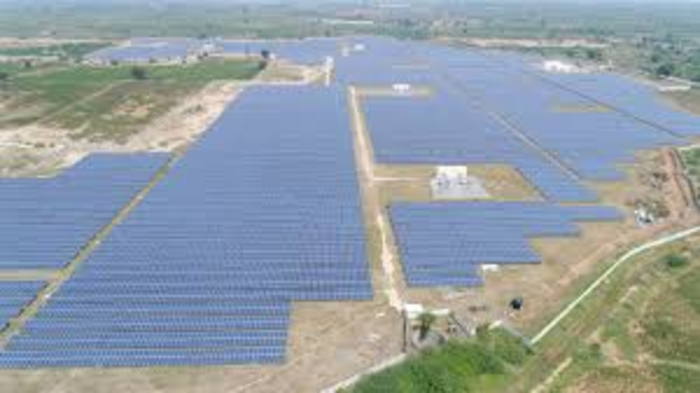
The Government of India has accelerated the expansion of renewable energy projects, with a strong focus on solar and wind power. This initiative is part of India’s broader strategy to achieve 500 GW of renewable energy capacity by 2030 and transition towards a cleaner and more sustainable energy system.
The government is promoting the development of large-scale solar parks, wind energy farms, and hybrid renewable energy projects across various states. These projects are supported through financial incentives, policy reforms, and infrastructure development aimed at attracting private investment and enhancing clean energy production. The expansion also includes strengthening power grid infrastructure to efficiently integrate renewable energy into the national electricity network.

Renewable energy plays a crucial role in reducing carbon emissions and addressing climate change. By replacing fossil fuels with clean energy sources, India can significantly lower its greenhouse gas emissions and improve environmental sustainability. These efforts also align with India’s international climate commitments and its goal of achieving net-zero emissions by 2070.
The expansion of renewable energy projects is significant for promoting sustainable development and ensuring long-term energy security. It reduces dependence on imported fossil fuels, strengthens energy independence, and supports economic growth by creating employment opportunities in the clean energy sector.
Additionally, renewable energy supports rural development by providing reliable electricity and encouraging green industrial growth. Overall, the accelerated expansion of renewable energy projects reflects India’s commitment to environmental protection, sustainable economic development, and a secure energy future.


UPI charges debate grows as rising costs put payment ecosystem under pressure

US Supreme Court rejects Trump mail ballot restrictions ahead of midterms

India-Vietnam ties broaden as defence, critical minerals and trade take centre stage

From SHGs to social security, how Pension Sakhis could take pensions deeper into rural India

NTA looks beyond India as DG Singh highlights BRICS cooperation and China’s Gaokao

NTA looks beyond India as DG Singh highlights BRICS cooperation and China’s Gaokao

NEET-UG May Go Online Soon: NTA Chief Signals Shift From OMR To Computer-Based Exam

IIM Jammu's Nalanda Library goes digital, puts 2.5 lakh books online

MP school students to receive Aadhaar-style APAAR ID, 78.5% IDs generated so far
.webp&w=256&q=75)
DU defends Honours priority in one-year PG admissions, says preference is academically justified

UPI charges debate grows as rising costs put payment ecosystem under pressure

US Supreme Court rejects Trump mail ballot restrictions ahead of midterms

India-Vietnam ties broaden as defence, critical minerals and trade take centre stage

From SHGs to social security, how Pension Sakhis could take pensions deeper into rural India

NTA looks beyond India as DG Singh highlights BRICS cooperation and China’s Gaokao

NTA looks beyond India as DG Singh highlights BRICS cooperation and China’s Gaokao

NEET-UG May Go Online Soon: NTA Chief Signals Shift From OMR To Computer-Based Exam

IIM Jammu's Nalanda Library goes digital, puts 2.5 lakh books online

MP school students to receive Aadhaar-style APAAR ID, 78.5% IDs generated so far
.webp&w=256&q=75)
DU defends Honours priority in one-year PG admissions, says preference is academically justified
Copyright© educationpost.in 2024 All Rights Reserved.
Designed and Developed by @Pyndertech