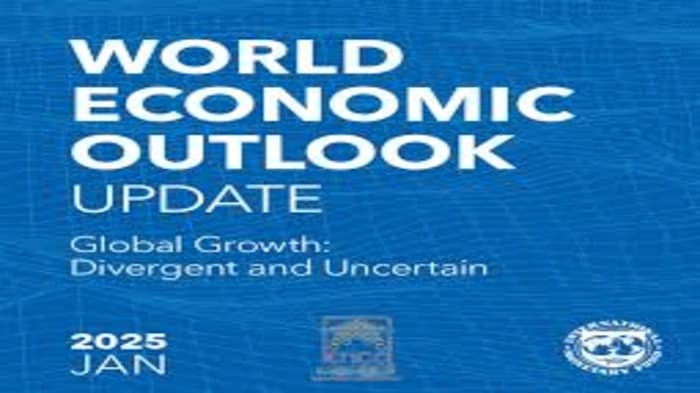
Global economic outlook reports released around January 2025 projected a phase of moderate growth for the world economy, accompanied by persistent inflationary pressures and heightened geopolitical uncertainty. While fears of a deep global recession have receded, risks to sustained recovery remain significant, particularly for emerging and developing economies.
Advanced economies continue to grapple with sticky inflation, driven by elevated energy prices, tight labour markets, and supply-side constraints. As a result, major central banks have maintained restrictive monetary policies, keeping interest rates higher for longer. This has tightened global financial conditions, increased borrowing costs, and dampened investment and consumption across regions. Developing economies face added pressures from debt servicing and constrained fiscal space.

Geopolitical tensions—including conflicts, trade fragmentation, and strategic competition—have further complicated the global outlook. Disruptions to shipping routes, sanctions, and reshoring trends are affecting global trade flows and supply chains, increasing costs and reducing efficiency. These developments undermine the multilateral trading system and contribute to economic uncertainty.
For India, the global slowdown has direct and indirect implications. Weak external demand can affect merchandise and services exports, while volatile capital flows may exert pressure on the rupee and foreign exchange reserves. Higher global interest rates also limit the scope for aggressive domestic monetary easing. At the same time, supply-side shocks can feed into imported inflation, impacting macroeconomic stability.
These challenges reinforce the importance of strengthening domestic demand-led growth. Public capital expenditure, private investment revival, and consumption support through employment generation and income growth can act as buffers against external shocks. Structural reforms in manufacturing, logistics, and ease of doing business can enhance India’s export competitiveness even in a subdued global environment.
The way forward also involves diversifying trade partners, deepening regional value chains, and strengthening financial resilience through prudent macroeconomic management. In conclusion, while global economic conditions in 2025 remain uncertain, a focus on internal growth drivers and policy stability can help India navigate external headwinds and sustain long-term growth.