


Chief Economic Adviser V Anantha Nageswaran said artificial intelligence could pose a major challenge to management education over the next two to three decades by automating routine and analytical tasks traditionally performed by entry-level professionals. Speaking at the 16th Indian Management Conclave in Noida, he said management institutions need to focus beyond AI courses and develop students’ judgement, decision-making abilities and critical thinking through cases and practical exercises.
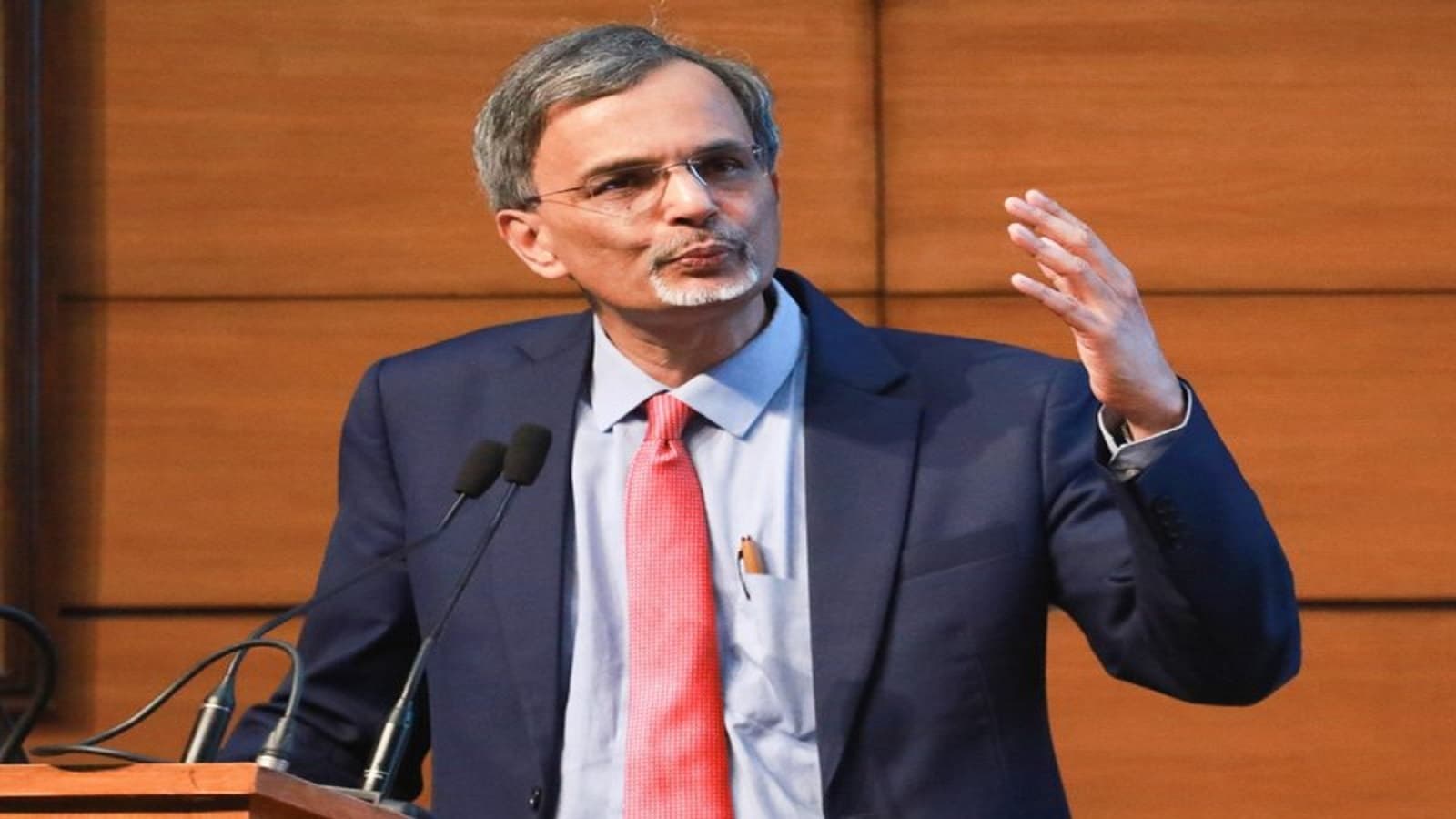
intelligence (AI) could emerge as a major challenge for management education over the next two to three decades by automating the routine and analytical tasks through which young professionals traditionally acquire experience, Chief Economic Adviser V Anantha Nageswaran said on Friday. Addressing the 16th Indian Management Conclave (IMC 2026) in Noida, Nageswaran said the rapid advancement of AI provides an opportunity to fundamentally rethink the way management education is designed and delivered. He stressed that simply introducing additional AI-related courses would not be sufficient to prepare students for a workplace where machines increasingly handle analytical and routine functions.
“Adding one AI elective will not be enough,” Nageswaran said, emphasising that management institutions need to focus more strongly on developing judgement among students. He said the ability to make sound decisions would become increasingly important as AI takes over a growing share of analytical work. “The manager's core tool is a clear and patient mind. That tool is under attack before the students even reach the campuses. So these are India's real challenges over the next 20 to 30 years,” he said. According to Nageswaran, one of the biggest implications of AI could be the disappearance of entry-level jobs that have traditionally acted as an apprenticeship for young professionals.

Routine and codified tasks are among the first areas being automated, potentially removing the early-career opportunities through which employees learn their profession. “The trouble is AI now precisely does this junior work. The bottom rungs of the ladder are being sawn off. The routine tasks that once taught the young their trade are the first to be automated,” he said. Nageswaran said that for decades, professionals developed judgement gradually through experience and on-the-job learning.
If AI eliminates a significant part of this apprenticeship process, he questioned how the next generation would acquire the ability to make complex decisions. “For a century, we learn judgement on the job, slowly through apprenticeship…and if AI removes the apprenticeship, where will the next generation of judgement be?” he said. He described this as a fundamental challenge for management education, noting that the skills AI cannot easily replicate are often the most difficult ones to teach through conventional classroom methods.
“This is not a small problem for management education, it could be the whole problem,” Nageswaran said. He added that the aspects of management that remain beyond AI's capabilities are precisely those that have traditionally been the hardest to teach in a classroom. Calling for a shift in educational priorities, Nageswaran said management institutions should teach judgement rather than focus solely on techniques. As AI becomes capable of performing analysis, managers would increasingly need to determine what questions should be asked and whether the answers generated by AI can be trusted. “First, teach judgement, not just technique,” he said, adding that judgement can be developed through the use of cases and decision-making exercises.
Disclaimer: "This story has been published from a syndicated news feed. Only the headline and subtitle have been edited by EPN."

Delhi Metro Diwali 2026 Timings: Last Train at 10 PM, Pink Magenta and Grey Lines to Start at 6 AM

New Delhi Railway Station Introduces Separate Entry and Exit Gates for Diwali, Chhath Rush; Check Gate Numbers

India Relaxes Passport and Visa Rules for Refugees, Pakistani Nationals and Foreigners: Check Eligibility
Supreme Court Flags Delhi Pollution as AQI Nears 400, Questions Vehicular Emissions

Indian Railways Plans Door-to-Door Parcel Service in 8 Cities: Check Booking, Charges and Refund Rules

‘It’s actually very cut-throat’: 13-year-old wins New Zealand spelling bee title

Schoolchildren join desperate effort to save stranded whales on New Zealand coast

New Zealand school hostel shut down after damning inspection raises concerns over student welfare
Can AI blackboards change how mathematics is taught in India? China's new technology offers glimpse

Tamil Nadu renews NEET abolition demand, seeks Class 12 marks for medical admissions

Delhi Metro Diwali 2026 Timings: Last Train at 10 PM, Pink Magenta and Grey Lines to Start at 6 AM
New Delhi Railway Station Introduces Separate Entry and Exit Gates for Diwali, Chhath Rush; Check Gate Numbers
India Relaxes Passport and Visa Rules for Refugees, Pakistani Nationals and Foreigners: Check Eligibility
Supreme Court Flags Delhi Pollution as AQI Nears 400, Questions Vehicular Emissions
Indian Railways Plans Door-to-Door Parcel Service in 8 Cities: Check Booking, Charges and Refund Rules
‘It’s actually very cut-throat’: 13-year-old wins New Zealand spelling bee title
Schoolchildren join desperate effort to save stranded whales on New Zealand coast
New Zealand school hostel shut down after damning inspection raises concerns over student welfare
Can AI blackboards change how mathematics is taught in India? China's new technology offers glimpse
Tamil Nadu renews NEET abolition demand, seeks Class 12 marks for medical admissions
Copyright© educationpost.in 2026 All Rights Reserved.