


Temporary waiver allows sale of Russian oil stranded at sea after crude prices surge past $100 per barrel amid Strait of Hormuz shutdown.
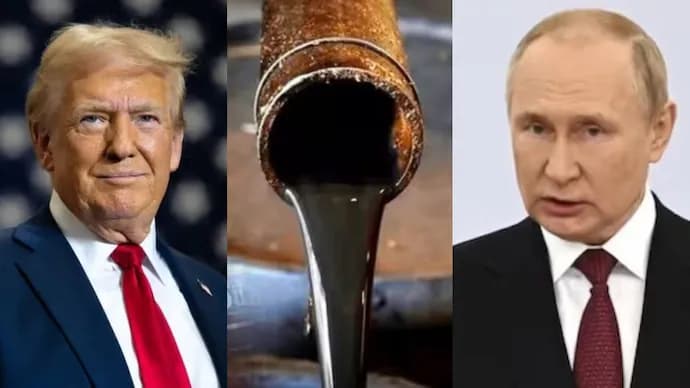
The Donald Trump administration has partially eased sanctions on Russian oil, granting a 30-day waiver that allows countries to purchase sanctioned shipments already stranded at sea, in a bid to stabilize global energy markets rattled by the ongoing war involving Iran.
The move comes after benchmark crude prices surged above $100 per barrel following severe supply disruptions triggered by the conflict and Tehran’s closure of the strategically crucial Strait of Hormuz — one of the world’s most important oil shipping lanes.

The United States Department of the Treasury said it had issued a temporary license allowing the delivery and sale of Russian crude oil and petroleum products that were already loaded on vessels as of March 12. The waiver will remain in force until midnight Washington time on April 11.
Officials estimate the licensee could unlock access to about 124–125 million barrels of Russian-origin oil currently stranded across roughly 30 locations worldwide, potentially easing immediate shortages caused by disrupted Gulf shipping routes.
The decision follows a separate 30-day waiver issued earlier this month that allowed India to purchase Russian oil cargoes already at sea, giving importers limited flexibility to secure supplies during the escalating crisis.
US Treasury Secretary Scott Bessent described the latest move as a “narrowly tailored” and short-term measure designed to address supply disruptions without delivering significant financial benefits to Russia.
Earlier this week, Trump signaled that the administration was weighing limited sanctions relief to offset the sudden loss of oil supply.
“So we have sanctions on some countries,” Trump told reporters. “We’re going to take those sanctions off until the strait is up.”
The announcement came a day after the United States Department of Energy said Washington would release 172 million barrels of crude oil from the Strategic Petroleum Reserve in an effort to contain soaring fuel prices following the outbreak of the conflict involving Iran.
The release is part of a wider coordinated response with the International Energy Agency, whose 32 member countries have pledged to release around 400 million barrels of oil to cushion global markets from what the agency has described as the largest supply disruption in history.
Oil prices have rebounded sharply since the conflict escalated. Before US-Israeli strikes on Iran began on February 28, crude traded at roughly $73–$75 per barrel. Since then, attacks on energy infrastructure and shipping across the Persian Gulf have pushed prices back above $100 per barrel.
Iran has effectively shut the Strait of Hormuz since the start of the war. The narrow maritime corridor connects the Persian Gulf with the Gulf of Oman and the Arabian Sea and typically carries around 20–25% of the world’s daily oil consumption.
At least 16 vessels have reportedly been attacked in the passage so far, with Tehran warning that more strikes could follow.
In his first public remarks after assuming office, Iran’s new Supreme Leader Mojtaba Khamenei said the strait must remain closed, signaling little prospect of an immediate restoration of normal oil flows from the Persian Gulf.

Loughborough University appoints Professor Nichola Callow as Pro Vice-Chancellor for education
From digital pets to AI robots: How Hong Kong schools are reshaping classroom learning

Why Are Nearly 2,000 MBBS Seats Still Vacant After NEET Counselling 2026?
Ghaziabad School Introduces Global Lexile Framework to Assess Reading Skills of Students

SRMIST to Host National Conference on Regenerative Biology and Bioengineering from November 3
From digital pets to AI robots: How Hong Kong schools are reshaping classroom learning
Why Are Nearly 2,000 MBBS Seats Still Vacant After NEET Counselling 2026?

King's College London, Cranfield University agree to merge in August 2027

Hong Kong plans weekly AI and coding lessons for children: Is India ready for the shift?
Who handles student discipline? Singapore schools look beyond teachers, lessons India can learn

Loughborough University appoints Professor Nichola Callow as Pro Vice-Chancellor for education
From digital pets to AI robots: How Hong Kong schools are reshaping classroom learning
Why Are Nearly 2,000 MBBS Seats Still Vacant After NEET Counselling 2026?
Ghaziabad School Introduces Global Lexile Framework to Assess Reading Skills of Students
SRMIST to Host National Conference on Regenerative Biology and Bioengineering from November 3
From digital pets to AI robots: How Hong Kong schools are reshaping classroom learning
Why Are Nearly 2,000 MBBS Seats Still Vacant After NEET Counselling 2026?
King's College London, Cranfield University agree to merge in August 2027
Hong Kong plans weekly AI and coding lessons for children: Is India ready for the shift?
Who handles student discipline? Singapore schools look beyond teachers, lessons India can learn
Copyright© educationpost.in 2026 All Rights Reserved.