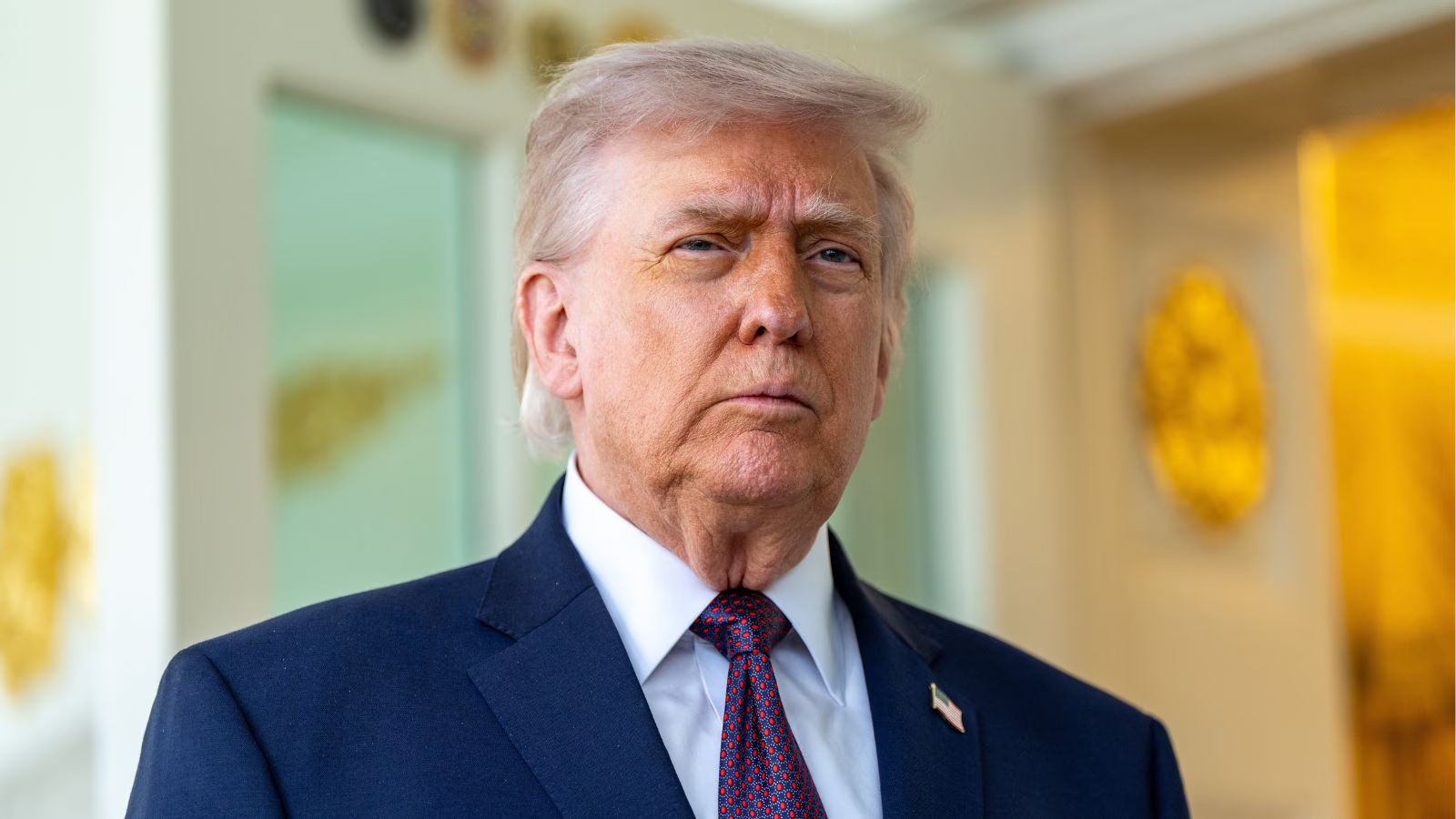
The Iran-US-Israel conflict entered a volatile new phase on April 15 as US President Donald Trump said he was “not thinking about extending” the ceasefire with Iran, even as uncertainty persisted over prospects for a broader peace agreement.
Speaking to ABC News reporter Jonathan Karl, Trump said the truce could “end either way” but added that a negotiated settlement would be preferable. “I think a deal is preferable because then they can rebuild,” he said, according to Reuters.

Earlier, Trump told Fox News that the war with Iran was “close to over,” signaling cautious optimism despite intensifying geopolitical tensions.
US Vice President JD Vance said Trump was aiming for a sweeping settlement rather than a limited understanding. “He does not want to make a small deal. He wants to make the grand bargain,” Vance said, according to Associated Press. He added that Washington had conveyed to Tehran that if it abandoned nuclear weapons ambitions, the US would support Iran’s economic revival and reintegration into the global economy.
Modi, Trump discuss West Asia tensions
Prime Minister Narendra Modi and Trump held a high-stakes 40-minute phone conversation on Tuesday, reviewing the “substantial progress” in the India-US strategic partnership amid escalating tensions in West Asia.
Both leaders stressed the urgent need to keep the Strait of Hormuz open and secure, given its critical importance to global energy supplies and trade.
Hormuz blockade under pressure
The conversation came as Trump’s newly imposed naval blockade of Iranian ports faced its first serious challenge. The blockade, enforced from Monday evening, seeks to halt all maritime traffic linked to Iran.
Despite Washington’s “zero tolerance” warning that vessels challenging the perimeter would be “immediately eliminated,” the sanctioned Chinese-owned tanker Rich Starry reportedly transited the Strait on Tuesday carrying 250,000 barrels of methanol. Its passage was widely seen as a direct challenge to US military enforcement.
However, shipping data on Wednesday showed the tanker had turned back toward the Strait after earlier exiting the Gulf, suggesting it had failed to fully break through the blockade.
US Central Command (CENTCOM) said no vessels successfully crossed in the first 24 hours of restrictions and six merchant ships were redirected to Iranian ports.
Five key developments
- Blockade tested: The Rich Starry and two other sanctioned tankers attempted to challenge US restrictions.
- Pakistan peace push: Islamabad has proposed hosting a second round of peace talks after reports of “some progress” in earlier negotiations.
- Aviation warning: Major airlines including Lufthansa and Qantas warned of a “systemic fuel shortage” as kerosene prices surged to record levels.
- Humanitarian relief: The Red Cross delivered its first emergency shipment to Iran since the conflict escalated on February 28, while South Korea pledged $2.5 million in regional aid.
- Washington diplomacy: Direct peace talks between Israel and Lebanon are scheduled in Washington despite ongoing Israeli strikes in southern Lebanon.
Global stakes rise
The Strait of Hormuz remains one of the world’s most critical maritime chokepoints, and any prolonged disruption threatens oil supplies, shipping costs and airline operations worldwide. With military pressure mounting and diplomacy hanging in the balance, the next 48 hours could prove decisive.