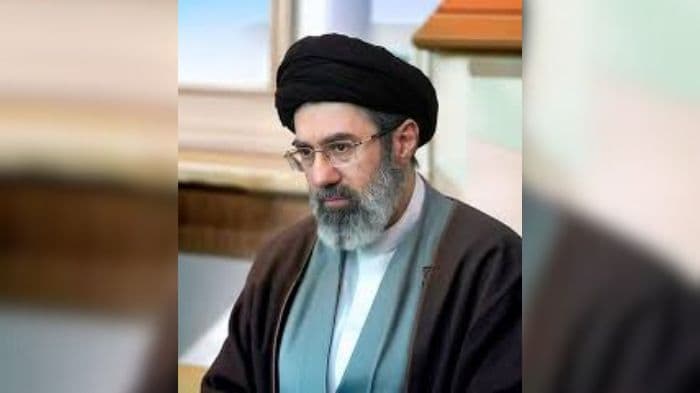
Mojtaba Khamenei, the son of Iran’s late Supreme Leader Ayatollah Ali Khamenei, has been appointed as the country’s new Supreme Leader following his father’s death, marking a historic leadership transition in the Islamic Republic.
The decision was made by Iran’s Assembly of Experts, the 88-member clerical body responsible for choosing the country’s highest authority. Mojtaba Khamenei was formally selected on March 8 after the position became vacant following the death of Ali Khamenei during the ongoing Iran-related conflict.

Ali Khamenei had ruled Iran since 1989 and held ultimate authority over the country’s political, military and religious institutions. His death created a leadership vacuum that required the Assembly of Experts to quickly appoint a successor.
Mojtaba Khamenei, a 56-year-old cleric educated in the religious seminaries of Qom, has long been viewed as a powerful figure within Iran’s ruling establishment despite rarely holding formal public office. Over the years, he built strong ties with conservative clerics and the powerful Islamic Revolutionary Guard Corps (IRGC).
His appointment is historically significant because it represents the first time since the 1979 Islamic Revolution that Iran’s supreme leadership has passed from father to son. Critics argue that the development resembles a hereditary transfer of power, which contrasts with the revolutionary principles that originally rejected monarchy.
Supporters within Iran’s political and military establishment have pledged loyalty to the new leader, saying the decision ensures continuity during a period of intense regional conflict. Analysts believe the move signals that the country’s conservative leadership intends to maintain its existing political and ideological direction.
With Mojtaba Khamenei now assuming the role of Supreme Leader, he will hold sweeping powers over Iran’s armed forces, judiciary, foreign policy and nuclear programme, making him the most influential political figure in the country.




.jpg&w=256&q=75)





.jpg&w=256&q=75)
