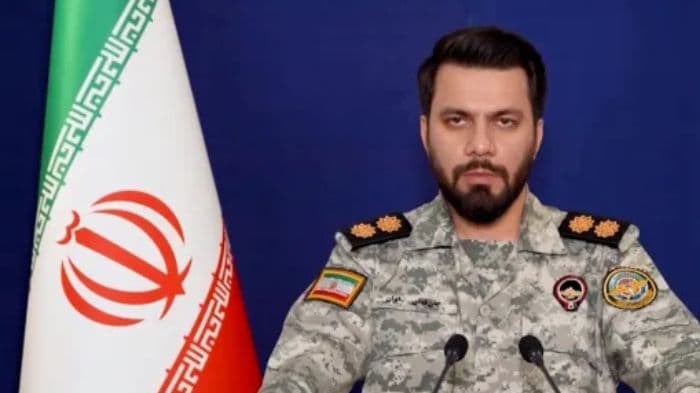
Iran’s Islamic Revolutionary Guard Corps (IRGC) has emerged as the de facto centre of power in Tehran, sidelining the civilian presidency and consolidating control over critical government functions, according to multiple sources.
This shift underscores a growing rift between the military‑security apparatus and the elected leadership amid an ongoing regional conflict.

Reports indicate that the IRGC has taken charge of sensitive decision‑making, blocked presidential appointments, and restricted the authority of Masoud Pezeshkian, leaving him in a political deadlock. The guard’s ascendancy has effectively weakened the civilian government’s ability to set policy independently.
The development follows a period of increased tension between the IRGC and the presidency. Pezeshkian had reportedly expressed concerns over the Guard’s escalation of regional hostilities, warning of negative economic consequences for Iran.
His repeated requests for meetings with Mojtaba Khamenei, Iran’s new Supreme Leader, have gone unanswered, highlighting the widening power gap.
Mojtaba Khamenei’s rise to Iran’s highest office in March followed the assassination of his father, former Supreme Leader Ali Khamenei, in a US‑ and Israeli‑linked airstrike in February.
The transition of power occurred amid war and has fuelled speculation that the IRGC—already influential and deeply embedded in Iran’s political and economic landscape—is now steering the country’s trajectory more than the civilian leadership.
Analysts say this shift reflects long‑standing trends: the IRGC’s growing influence since the 1979 revolution and its extensive control over strategic sectors, from oil and transportation to banking, have strengthened its standing as an institutional powerbroker.
The sidelining of the president and consolidation of power by the IRGC raise concerns about a further erosion of civilian governance in Iran and signal a more militarised decision‑making process at a time of intense regional conflict.



.jpg&w=256&q=75)




.jpg&w=256&q=75)
