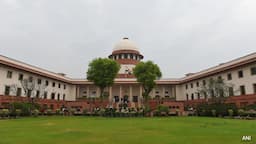
In a stinging rebuke to the Uttar Pradesh government, the Supreme Court has ordered the immediate cadre reallocation of a state employee who spent nearly three decades fighting to be posted in his preferred “hill region”, while also imposing a fine of ₹1 lakh on the state for what it termed prolonged “apathy”.
Expressing “deep anguish”, a bench of Justices Sanjay Karol and Nongmeikapam Kotiswar Singh said the man had been forced to “run from pillar to post” for years, even as his personal circumstances — particularly the need to care for his cognitively disabled son — demanded proximity to home.

“This is in no way, shape, or form anything other than apathy on the part of the state,” the court observed in its April 2026 order, noting that what the employee had opted for at the outset was being granted only now, nearly 30 years later.
A fight spanning decades
The petitioner cleared the Combined Lower Subordinate Service Examination in 1995 with high marks and opted for a posting in the hill region. However, his appointment was initially rejected on a technical ground — he had submitted his B.Ed marksheet during the interview instead of along with the application.
Challenging the decision, he moved the Allahabad High Court in 1997. In February 2004, the court ruled in his favor, rejecting a “hyper-technical” approach and directing that he be appointed from the same date as other candidates, with consequential benefits, though without arrears.
The state’s appeal against this ruling was dismissed in 2009. Yet, despite the legal clarity, the petitioner received a formal appointment only in July 2011 — a delay the Supreme Court sharply criticized.
Even after joining, his struggle continued. Beginning May 2012, he repeatedly approached authorities seeking allocation to the hill cadre he had originally chosen, citing not just merit but also pressing personal needs — his son’s cognitive disability requiring consistent family support.
‘Human cost cannot be ignored’
The Supreme Court underscored the human toll of bureaucratic delay, pointing out that the petitioner had remained away from his family since at least 2011.
“Being close to family would have been a great sense of support in raising his disabled son,” the bench noted, highlighting how administrative inaction had deep personal consequences.
The court said that even if the period prior to the High Court’s 2004 ruling were excluded, more than 22 years had elapsed without resolution.
“It is difficult to think that there are not many other cases where, on account of long pendency of service disputes, individuals approach superannuation without relief,” the bench remarked, urging systemic correction.
Court orders relief, flags wider issue
Allowing the plea, the court directed the Chief Secretary of Uttar Pradesh to facilitate the petitioner’s reallocation to Uttarakhand, observing that his case met multiple criteria under cadre allocation rules — including his original option, domicile, and exceptional circumstances linked to disability in the family.
The bench noted that policy exceptions exist for cases involving “mental illness”, including those affecting family members, and said the petitioner clearly qualified.
It also asked the Chief Justice of the High Court to assess the number of similar long-pending service matters and ensure their expedited disposal, possibly by distributing them across benches.
Transfer is not cadre change
Clarifying a key legal distinction, the Supreme Court said the High Court had erred in equating transfer with cadre change.
A transfer, it explained, merely alters the place of posting within the same service structure, without affecting seniority or status. A change in cadre, however, is a structural shift that can impact seniority, promotion prospects, and service conditions.
“Only the location changes in a transfer, not the identity of the service. A cadre change, by contrast, alters the framework governing the employee’s service,” the court said.
Accountability and closure
Closing the case, the court imposed costs of ₹1 lakh on the Uttar Pradesh government, holding it accountable for years of delay and administrative inertia.
For the petitioner, the order marks the end of a long, exhausting legal battle — and a chance, finally, to be closer to home and to a son who needed him all along.



.jpg&w=3840&q=75)