


Tehran acknowledges loss of key naval commander days after Israel claimed responsibility, marking a major escalation in targeted attacks on Iran’s military leadership.
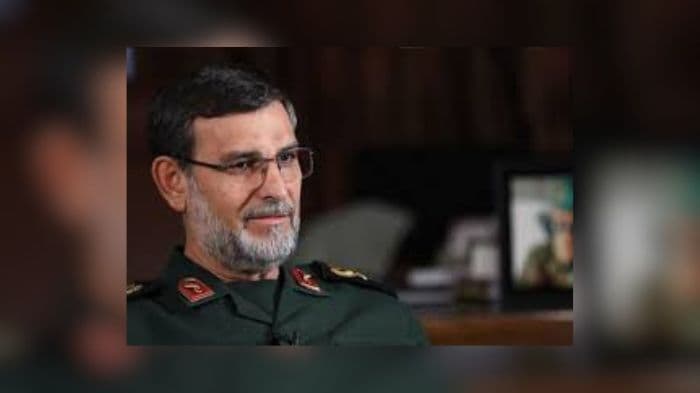
Iran on March 30 confirmed the death of Alireza Tangsiri, the commander of the Islamic Revolutionary Guard Corps (IRGC) Navy, days after Israel claimed it had killed him in a targeted strike.
According to Iranian state media, the Revolutionary Guards said Tangsiri died after sustaining severe injuries, officially acknowledging the loss of one of the country’s most senior naval commanders.

The confirmation comes after Israeli Defence Minister Israel Katz announced on March 26 that Israeli forces had carried out a “precise” operation targeting Tangsiri along with other senior naval officials.
Tangsiri, who had been leading the IRGC Navy since 2018, was a key figure in Iran’s maritime strategy and played a central role in operations in the Persian Gulf and the strategically vital Strait of Hormuz.
His reported killing had earlier been confirmed by US Central Command, which said he was eliminated in an Israeli airstrike, though Iran had not officially acknowledged the death until now.
The Strait of Hormuz, where Tangsiri oversaw operations, is one of the world’s most critical oil transit routes, carrying a significant share of global energy supplies. His role in managing naval activities in the region made him a central figure in the ongoing conflict dynamics.
The confirmation of his death marks a significant development in the escalating confrontation between Iran and Israel, which has seen a series of targeted strikes against high-ranking Iranian officials in recent weeks.
The loss of Tangsiri could impact Iran’s naval command structure, particularly at a time when maritime tensions in the Gulf remain high and global shipping routes face disruptions.
Despite the setback, Iranian authorities have not indicated any immediate change in their strategic posture in the Gulf, where tensions remain elevated amid ongoing military activity and geopolitical uncertainty.

Loughborough University appoints Professor Nichola Callow as Pro Vice-Chancellor for education

From digital pets to AI robots: How Hong Kong schools are reshaping classroom learning

Why Are Nearly 2,000 MBBS Seats Still Vacant After NEET Counselling 2026?

Ghaziabad School Introduces Global Lexile Framework to Assess Reading Skills of Students

SRMIST to Host National Conference on Regenerative Biology and Bioengineering from November 3
From digital pets to AI robots: How Hong Kong schools are reshaping classroom learning
Why Are Nearly 2,000 MBBS Seats Still Vacant After NEET Counselling 2026?

King's College London, Cranfield University agree to merge in August 2027

Hong Kong plans weekly AI and coding lessons for children: Is India ready for the shift?

Who handles student discipline? Singapore schools look beyond teachers, lessons India can learn

Loughborough University appoints Professor Nichola Callow as Pro Vice-Chancellor for education
From digital pets to AI robots: How Hong Kong schools are reshaping classroom learning
Why Are Nearly 2,000 MBBS Seats Still Vacant After NEET Counselling 2026?
Ghaziabad School Introduces Global Lexile Framework to Assess Reading Skills of Students
SRMIST to Host National Conference on Regenerative Biology and Bioengineering from November 3
From digital pets to AI robots: How Hong Kong schools are reshaping classroom learning
Why Are Nearly 2,000 MBBS Seats Still Vacant After NEET Counselling 2026?
King's College London, Cranfield University agree to merge in August 2027
Hong Kong plans weekly AI and coding lessons for children: Is India ready for the shift?
Who handles student discipline? Singapore schools look beyond teachers, lessons India can learn
Copyright© educationpost.in 2026 All Rights Reserved.