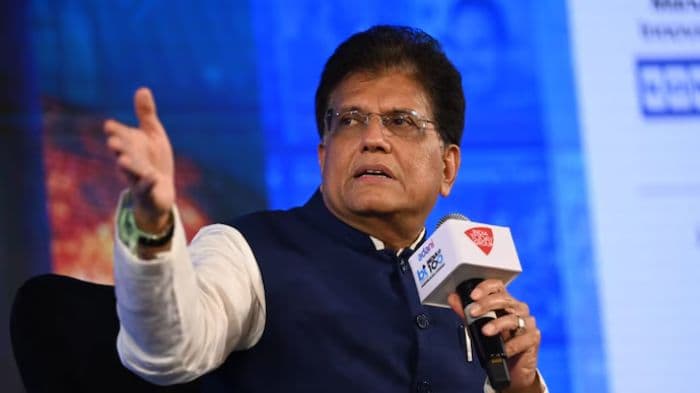
India’s Commerce & Industry Minister Piyush Goyal has stated that “progress is being made” toward finalizing the first tranche of a bilateral trade agreement with the United States, with a likely completion by November.
Goyal made the remarks while noting that the negotiations remain active despite recent tensions over US tariffs and India’s imports of Russian oil.

India has already concluded trade agreements or advanced negotiations with Mauritius, Australia, the UK, UAE, and the European Free Trade Association (EFTA) nations. Talks with the European Union and New Zealand are also ongoing.
President Donald Trump has confirmed that his administration is continuing to negotiate with India to address trade barriers, and that he expects to speak with Prime Minister Narendra Modi in the coming weeks. These comments are seen by many analysts as indicative of a reset in diplomatic tone between the two leaders.
Modi has reciprocated with remarks describing Washington and New Delhi as “close friends and natural partners.”
However, tensions between the two countries remain significant. On August 27, the US imposed 50% tariffs on certain Indian exports, citing India’s continued importation of discounted Russian oil. India has protested these tariffs, calling them unfair.
In addition, US officials have expressed that some differences — particularly over agriculture, dairy, and opening India’s markets — cannot be resolved immediately.
Market reactions reflect cautious optimism. Indian stocks rose modestly following the public statements by both Trump and Modi about resuming trade negotiations.
The Indian rupee, however, remained under pressure from uncertainty, especially from foreign investor outflows and concerns over how the tariffs affect export industries.
Among sectors impacted by the US tariffs are textiles, footwear, jewellery, and chemicals — as these are among the Indian exports most affected by the 50% duty.
To address this, the Indian government is preparing relief packages for exporters damaged by the duties. Goyal emphasized that any agreement must be “fair and balanced,” protecting both nations’ industries.
While a first-phase agreement by November remains the target, officials from both sides acknowledge that certain issues need prolonged negotiation.