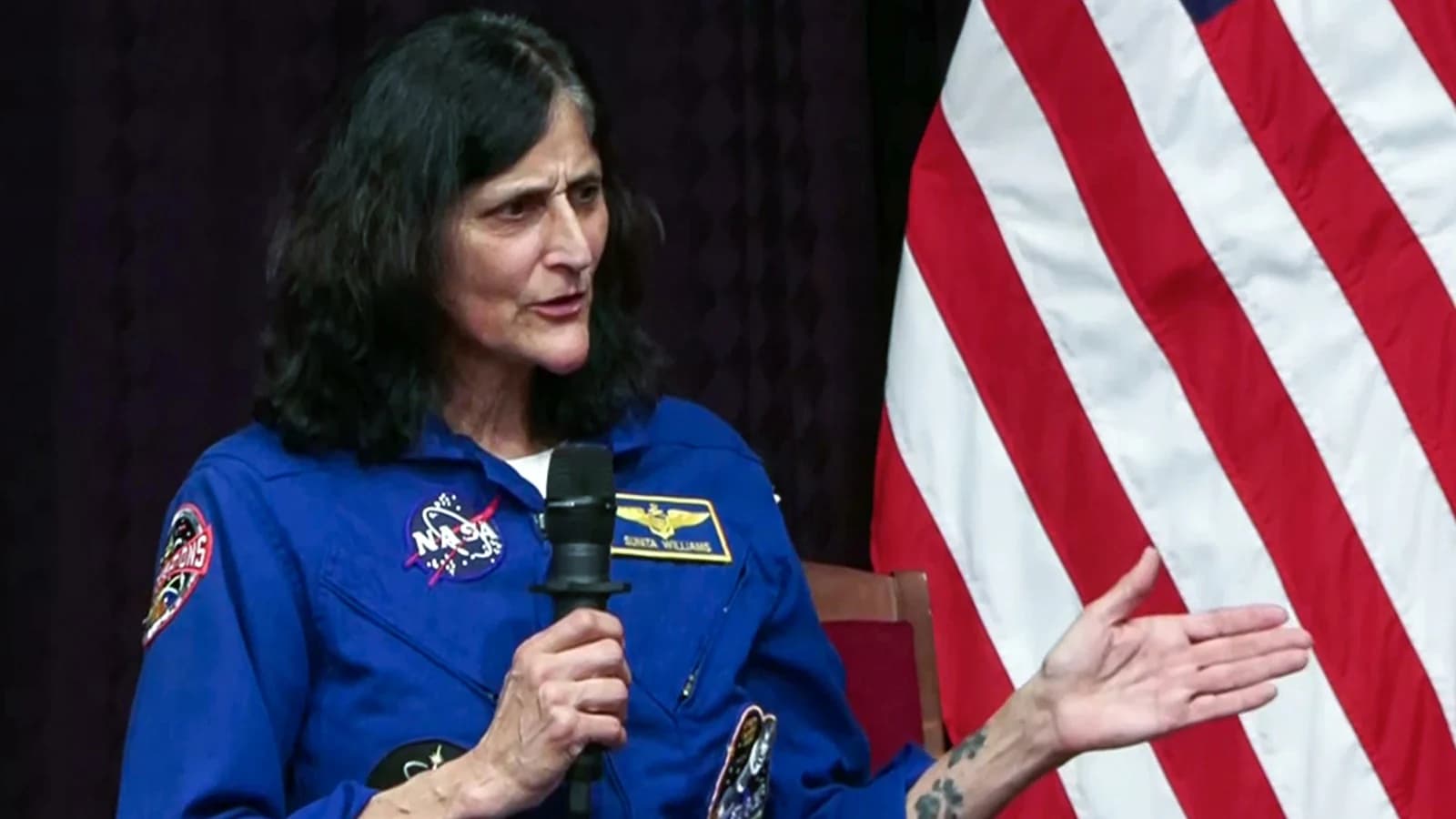
Veteran NASA astronaut Sunita Williams, one of the most recognisable faces of modern human spaceflight, has retired after a remarkable 27-year career with the US space agency. The announcement, confirmed by NASA on January 20 and reported by the Associated Press, said her retirement took effect at the end of December last year.
Williams, 60, returned to Earth in March 2025 after spending more than eight months aboard the International Space Station (ISS), alongside fellow astronaut Butch Wilmore. Their mission — launched in 2024 aboard Boeing’s long-awaited Starliner crew capsule — was initially planned to last just a week. Instead, technical issues with the spacecraft stretched the stay to over nine months, turning the mission into one of endurance and adaptability.

Wilmore left NASA last summer, according to the report.
Calling her “a trailblazer in human spaceflight,” NASA’s new administrator Jared Isaacman praised Williams’ career and contributions. “Congratulations on your well-deserved retirement,” he said in a statement.
A career written in milestones
Over nearly three decades at NASA, Williams logged an extraordinary 608 days in space across three space station missions. She also set a record for the most cumulative spacewalking time by a woman — 62 hours over nine excursions — a benchmark that underscored her role in some of the most demanding operations conducted outside the ISS.
Her journey to space began long before she became an astronaut. Born on September 19, 1965, Williams completed her schooling at Needham High School in Massachusetts before enrolling at the US Naval Academy, where she earned a bachelor’s degree in physical science in 1987. She later completed a master’s degree in engineering management from the Florida Institute of Technology in 1995.
From Navy cockpits to the cosmos
Commissioned as an Ensign in the United States Navy in 1987, Williams built an extensive aviation career before entering NASA’s astronaut programme. She qualified as a naval aviator in 1989 and flew the H-46 Sea Knight helicopter, later serving in overseas deployments across the Mediterranean, Red Sea and Persian Gulf during Operation Desert Shield and Operation Provide Comfort.
In 1992, she led helicopter relief operations during Hurricane Andrew, and in 1993 graduated from the elite United States Naval Test Pilot School. Her assignments included roles as a project officer, chase pilot and safety officer, conducting test flights on a wide range of aircraft.
Williams later returned to the Test Pilot School as an instructor and served aboard the USS Saipan as Aircraft Handler and Assistant Air Boss — it was during this deployment that she was selected for NASA’s astronaut programme.
Across her military career, she accumulated more than 3,000 flight hours in over 30 different aircraft.
A legacy beyond numbers
Sunita Williams retires not just with records and medals, but with a reputation forged in high-risk missions, technical crises and historic firsts. As NASA prepares for a new era of lunar and deep-space exploration, her career stands as a reminder of the grit, precision and resilience that define human spaceflight.