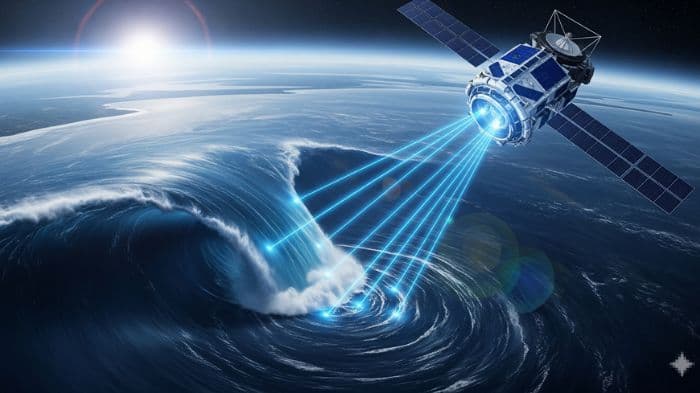
New experimental AI-powered system caught tsunami from Kamchatka quake in real time, offering valuable extra warning time.

Representative Image
A magnitude 8.8 earthquake off Russia’s Kamchatka Peninsula in late July triggered a tsunami whose advancing waves were detected by NASA’s experimental system Guardian (GNSS Upper Atmospheric Real-time Disaster Information and Alert Network).
Within about 20 minutes of the quake, the system identified atmospheric disturbances likely caused by the tsunami. It issued alerts 30 to 40 minutes before the waves made landfall in locations across the Pacific.

Guardian, developed at NASA’s Jet Propulsion Laboratory, uses a network of over 350 GNSS (Global Navigation Satellite System) stations to monitor subtle distortions in radio signals as tsunamis displace both sea and air, which then affect the upper atmosphere.
The system had recently been updated with artificial intelligence components and a messaging prototype, which helped accelerate detection and notification.
The July quake had already drawn global attention for its strength and potential to cause widespread damage. Though the actual tsunami caused minimal physical harm, experts say Guardian’s performance in this real‐world event demonstrated its potential value.
The extra minutes afforded by the system after its detection could improve warnings, allowing at-risk coastal communities to better prepare.
Guardian is designed to augment traditional early-warning systems rather than replace them. Conventional systems rely on seismic data and deep-ocean pressure sensors, but such sensors are expensive and sparse.
Guardian adds an atmospheric layer of detection, which can help fill gaps—particularly in regions without dense sensor coverage.


Why the Centre has formed a committee on ‘unnatural demographic change’ and why it matters

Fire breaks out near Kasauli Air Force Station, aerial operations launched

Bengal bans liquor shops near schools, temples; ₹5 fish meals announced

IAF introduces GATE-based entry for Technical Branch officers

Uganda returnee isolated in Bengaluru amid Ebola concerns, no case confirmed yet

Bengal bans liquor shops near schools, temples; ₹5 fish meals announced

IAF introduces GATE-based entry for Technical Branch officers

Uganda returnee isolated in Bengaluru amid Ebola concerns, no case confirmed yet

NEET UG row deepens as SC pulls up NTA over exam lapses, arrests rise to 13

CBSE OSM row explodes over hack claims, answer sheet mix-ups

Why the Centre has formed a committee on ‘unnatural demographic change’ and why it matters

Fire breaks out near Kasauli Air Force Station, aerial operations launched

Bengal bans liquor shops near schools, temples; ₹5 fish meals announced

IAF introduces GATE-based entry for Technical Branch officers

Uganda returnee isolated in Bengaluru amid Ebola concerns, no case confirmed yet

Bengal bans liquor shops near schools, temples; ₹5 fish meals announced

IAF introduces GATE-based entry for Technical Branch officers

Uganda returnee isolated in Bengaluru amid Ebola concerns, no case confirmed yet

NEET UG row deepens as SC pulls up NTA over exam lapses, arrests rise to 13

CBSE OSM row explodes over hack claims, answer sheet mix-ups
Copyright© educationpost.in 2024 All Rights Reserved.
Designed and Developed by @Pyndertech