


As India expands its semiconductor ecosystem, engineers are finding new opportunities beyond chip design, spanning fabrication, advanced packaging, materials, equipment, manufacturing and other specialised areas of the growing electronics industry.
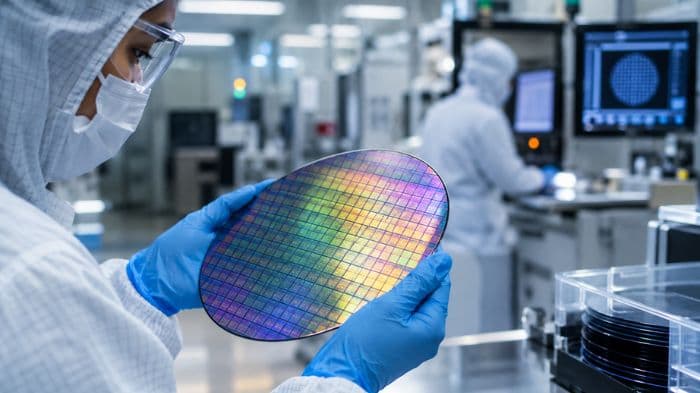
As India prepares to host SEMICON India 2026 this week, the country’s semiconductor push is opening new areas of engineering work spanning chip design, fabrication, advanced packaging, equipment, materials and research.
The government’s semiconductor programme is increasingly focused not only on building manufacturing capacity but also on developing the engineering and technical capabilities needed to support the wider ecosystem.

SEMICON India 2026 will be held from Sep 17 to 19 at Yashobhoomi in New Delhi. The event will include a dedicated workforce development pavilion along with participation from semiconductor companies, policymakers, startups and academia.
The expansion of semiconductor activity is creating demand across several specialised areas. NITI Aayog’s May 2026 roadmap on the future of India’s semiconductor industry identifies engineering capabilities related to design, manufacturing and advanced packaging as a central part of building the domestic ecosystem.
The roadmap notes that India already has a significant semiconductor design workforce, accounting for nearly one-fifth of the global semiconductor design workforce.
It also identifies design and system architecture, advanced packaging and semiconductor materials among areas where India can build greater capability.
The focus extends beyond conventional chip manufacturing. NITI Aayog’s roadmap outlines opportunities around mature-node logic, specialty analogue and mixed-signal chips, compound semiconductors such as silicon carbide and gallium nitride, as well as outsourced semiconductor assembly and testing and advanced packaging.
This broader ecosystem is reflected in the government’s Semicon 2.0 programme, approved in July 2026 with an outlay of Rs 1,27,500 crore. The programme covers chip design, semiconductor equipment and materials, fabrication facilities, advanced packaging, research and development, and talent development.
The government said in August that India had achieved its target of developing 85,000 semiconductor engineers in four years, against a 10-year target. It also said more than 68,000 students had been trained through the Chips to Startup programme, with electronic design automation tools deployed across 320 academic institutions.
The wider semiconductor programme has also moved beyond training towards projects on the ground. According to a Sep 15 PIB report, 12 semiconductor projects have been approved across six states, with investment commitments exceeding Rs 1.64 lakh crore.
The projects cover silicon and compound semiconductor fabrication, display fabrication and advanced packaging, while three facilities have started commercial production.
The same government account said that, by April 2026, 211 chips had been taped out by 75 institutions, while seven had been fabricated at different nodes. The ChipIN Centre, established under the Chips to Startup and Design Linked Incentive programmes, has extended access to chip-design facilities to more than one lakh engineers from over 500 organisations, according to the PIB feature.
NITI Aayog's roadmap places these developments within a longer-term semiconductor strategy. It sets out a 2035 vision covering domestic design, manufacturing, advanced packaging and materials, with the proposed semiconductor value chain targeted at $120-150 billion.
The emerging semiconductor ecosystem therefore represents a widening field for engineering expertise, from the design of chips and systems to fabrication, packaging, materials and manufacturing. The government’s current programmes are building both industrial projects and the technical capacity intended to support them.
As India marks Engineers' Day, the semiconductor sector offers one concrete example of how engineering requirements are extending into specialised areas linked to the country's expanding electronics and manufacturing ecosystem.

Morocco opens inclusive university for deaf and hearing students in Rabat

Kuwait University opens petroleum lab to train geology students

UP Board Extends Deadline to October 22 for 5,905 Schools to Submit Class 9, 11 Student Lists

NIOS October Exam 2026: Class 10, 12 Theory Hall Tickets Released; Download Link Here

Haryana Open School Exams 2027: BSEH Extends Application Deadline to October 31
.jpg&w=256&q=75)
From Class 8 to hospital owner: Rajasthan Police expose alleged fake doctor registration

Who will lead Keralam's universities? Government begins steps to appoint permanent VCs
%20(1)%20(1).jpeg&w=256&q=75)
Why does cracking JEE Advanced depend on coaching? IIT Kanpur Director calls for a revamp
.jpg&w=256&q=75)
NEET-PG 2026 answer key row: Supreme Court seeks NBEMS response on missing question papers
.png&w=256&q=75)
42 Iraqi universities feature in QS Arab Region University Rankings 2027

Morocco opens inclusive university for deaf and hearing students in Rabat
Kuwait University opens petroleum lab to train geology students
UP Board Extends Deadline to October 22 for 5,905 Schools to Submit Class 9, 11 Student Lists
NIOS October Exam 2026: Class 10, 12 Theory Hall Tickets Released; Download Link Here
Haryana Open School Exams 2027: BSEH Extends Application Deadline to October 31
From Class 8 to hospital owner: Rajasthan Police expose alleged fake doctor registration
Who will lead Keralam's universities? Government begins steps to appoint permanent VCs
Why does cracking JEE Advanced depend on coaching? IIT Kanpur Director calls for a revamp
NEET-PG 2026 answer key row: Supreme Court seeks NBEMS response on missing question papers
42 Iraqi universities feature in QS Arab Region University Rankings 2027
Copyright© educationpost.in 2026 All Rights Reserved.