


To help paralyzed people control devices and empower people with brain disorders to enrich their lives, Elon Musk-led startup Neuralink has revealed tiny brain “threads” in a chip which is long-lasting, usable at home and has the potential to replace cumbersome devices currently used as brain-machine interfaces.
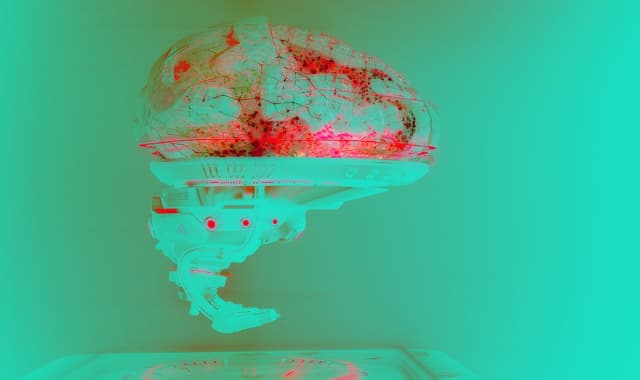
To help paralyzed people control devices and empower people with brain disorders to enrich their lives, Elon Musk-led startup Neuralink has revealed tiny brain “threads” in a chip which is long-lasting, usable at home and has the potential to replace cumbersome devices currently used as brain-machine interfaces.
The company is seeking the US Food and Drug Administration (FDA) approval to start clinical trials on humans in 2020.

The technology has a module that sits outside the head and wirelessly receives information from “threads” embedded in the brain. Controlled by an iPhone app, the chip called “N1 sensor” with just a USB port coming out can have as many as 3,072 electrodes per array distributed across 96 “threads”, each “thread” smaller than the tiniest human hair.
The chip which will be wireless in the future can read, transmit high-volume data and amplify signals from the brain. The aim is to drill four 8mm holes into patients’ skulls and insert the “threads” each of the sizes between 4 and 6 micrometers, about one-third the diameter of a human hair.
Currently, there is a robot to do the brain surgery which, according to a research paper released by Neuralink, has performed surgeries on animals and successfully placed the “threads”.
“This has the potential to solve several brain-related diseases. The idea is to understand and treat brain disorders, preserve and enhance your own brain and create a well-aligned future,” Musk told the audience at an event here late on Tuesday.
A staunch critic of Artificial Intelligence (AI), Musk said that long-term goal is to find a way to “achieve a sort of symbiosis with AI but that is not a mandatory thing. This is something you can choose to have if you want”.
“With a high-bandwidth brain-machine interface, I think we can actually help scores of patients,” said the Tesla founder who also said he is looking to hire more talent in Neuralink.
According to Max Hodak, President of Neuralink, he wasn’t originally sure “this technology was a good idea” but Musk convinced him. “We didn’t want any connectors or wires coming through the skin. It had to be something that would last for a longer period of time, not something that you’d have to take out after two-three years; it had to have practical bandwidth,” said Hodak.
Founded as a medical research company in 2016, Neuralink has hired several high-profile neuroscientists from various universities. The company is focused on creating devices resembling tiny sewing machines that can be implanted in the human brain, to improve memory or more direct interfacing with computing devices.

UNFCCC briefs stakeholders on agriculture and food security ahead of COP31

Canada youth apprenticeship programme draws 85 students as skilled trades gain appeal
Citi College challenges Ontario’s decision to suspend OSAP funding

10 IITs Offering AI Certification Courses for Graduates and Working Professionals

NMC Withdraws Medical Education Standards Rules, Removes Specific Penalties for Fake Records and Ghost Faculty

China shuts three Tibetan schools, raising fears for language and cultural identity

CCPA reports 3,940 delistings in crackdown on online sale of explosive substances

UGC seeks governors’ intervention as 82 Tamil Nadu institutions face 150 fee-refund complaints

Engineering Must Build Foundations, Not Chase Every Trend: Dr. Arya Kumar Bhattacharya

France protests escalate as Macron rejects minister’s resignation, students block Louvre

UNFCCC briefs stakeholders on agriculture and food security ahead of COP31
Canada youth apprenticeship programme draws 85 students as skilled trades gain appeal
Citi College challenges Ontario’s decision to suspend OSAP funding
10 IITs Offering AI Certification Courses for Graduates and Working Professionals
NMC Withdraws Medical Education Standards Rules, Removes Specific Penalties for Fake Records and Ghost Faculty
China shuts three Tibetan schools, raising fears for language and cultural identity
CCPA reports 3,940 delistings in crackdown on online sale of explosive substances
UGC seeks governors’ intervention as 82 Tamil Nadu institutions face 150 fee-refund complaints
Engineering Must Build Foundations, Not Chase Every Trend: Dr. Arya Kumar Bhattacharya
France protests escalate as Macron rejects minister’s resignation, students block Louvre
Copyright© educationpost.in 2026 All Rights Reserved.