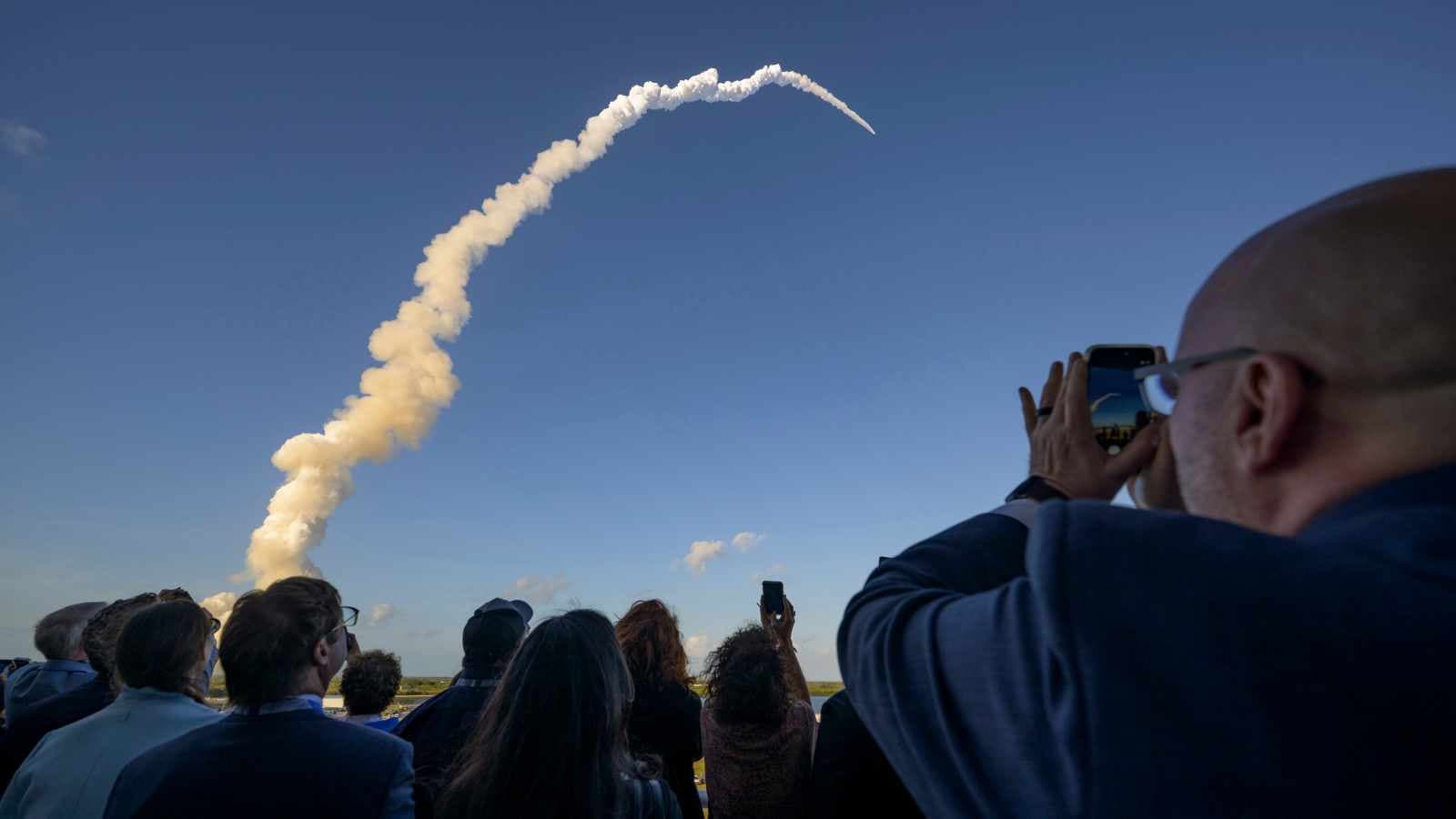
In a landmark moment for space exploration, four astronauts lifted off aboard a NASA spacecraft on April 2, embarking on a journey that will take humans farther from Earth than at any point since the Apollo program over five decades ago.
While hundreds of astronauts have travelled to space since the end of Apollo — which saw 12 humans walk on the Moon across six missions — none have ventured beyond low Earth orbit, where space stations operate at altitudes of around 400 kilometres.

Among the crew is Christina Koch, 47, who previously spent nearly a year aboard the International Space Station. She is set to become the first woman to travel to the Moon’s vicinity. Notably, all 24 astronauts who journeyed to the Moon during the Apollo era — including those who orbited and those who landed — were men.
The mission marks a critical step in NASA’s Artemis program, which aims to return humans to the Moon with a long-term vision: sustained presence, construction of a permanent base, and exploration of lunar resources to support future deep-space missions.
The Artemis programme began with an uncrewed test flight in 2022. Artemis II, launched on April 2, is a flyby mission — designed to carry astronauts close to the Moon without landing. It serves as a crucial rehearsal for a planned 2028 mission that aims to land humans on the lunar surface for the first time since Apollo 17.
Before that milestone, NASA has scheduled another mission next year to further test the hardware and systems required for a safe human landing.
This phased and methodical approach underscores a key shift from the Apollo era. Unlike the high-risk, rapid advancements of the 1960s space race, modern missions prioritize safety, precision, and sustainability — reflecting the significantly lower tolerance for technical and operational risks in today’s space exploration landscape.