Durga Puja in the serene hills of Kohima has long been marked by deep devotion and communal joy. At its heart stands the Durga Bari, a well-constructed hall with one stage dedicated to the worship of Ma Durga and another to vibrant cultural performances over four evenings. The festival extends beyond any single community: local Nagas participate enthusiastically, and the capital of Nagaland comes alive with color, music, and late-night celebration.
Traditionally, women gather to chop vegetables and fruits for the bhog (prasad). Khichdi, labra, chutney, payesh, and paanch bhaja are prepared with care and devotion, drawing people from all walks of life to share in the offerings. By evening, the hall fills with music, dance, songs, and dramas, creating a rich cultural experience that brings the community together.

In Kolkata, Durga Puja assumes a grand, metropolitan character. Pandal-hopping, festive attire, new social bonds, and late-night outings define the season. While bhog and cultural programs remain central, they become more polished and professional, retaining the festival’s spirit of celebration and togetherness.
In Pune, within the close-knit environment of the Armed Forces Medical College, Durga Puja takes on the warmth of home. Preparations begin a month in advance and are marked by shared meals—luchi, tarkari, chai, and samosas—and rehearsals in school halls that weave community and creativity together. Choreographed performances of Gurudev Rabindranath Tagore’s works such as Chandalika, Chitrangada, and Shyama sustain a rich cultural heritage and pass it to the next generation.
In Delhi Cantonment, the same participatory spirit continues. Cultural events become integral to the festivities, and from 2015 to 2019, a sustained initiative takes root: Anuranjini, the dance society of Army Public School Dhaula Kuan, performs annually during the celebrations, showcasing traditional dance dramas and preserving a living cultural narrative. What begins as guided and choreographed presentations evolves into student-led productions, as a new generation steps forward to choreograph, direct, and perform. This passing of the baton ensures that traditions are not only preserved but also reimagined to remain relevant.
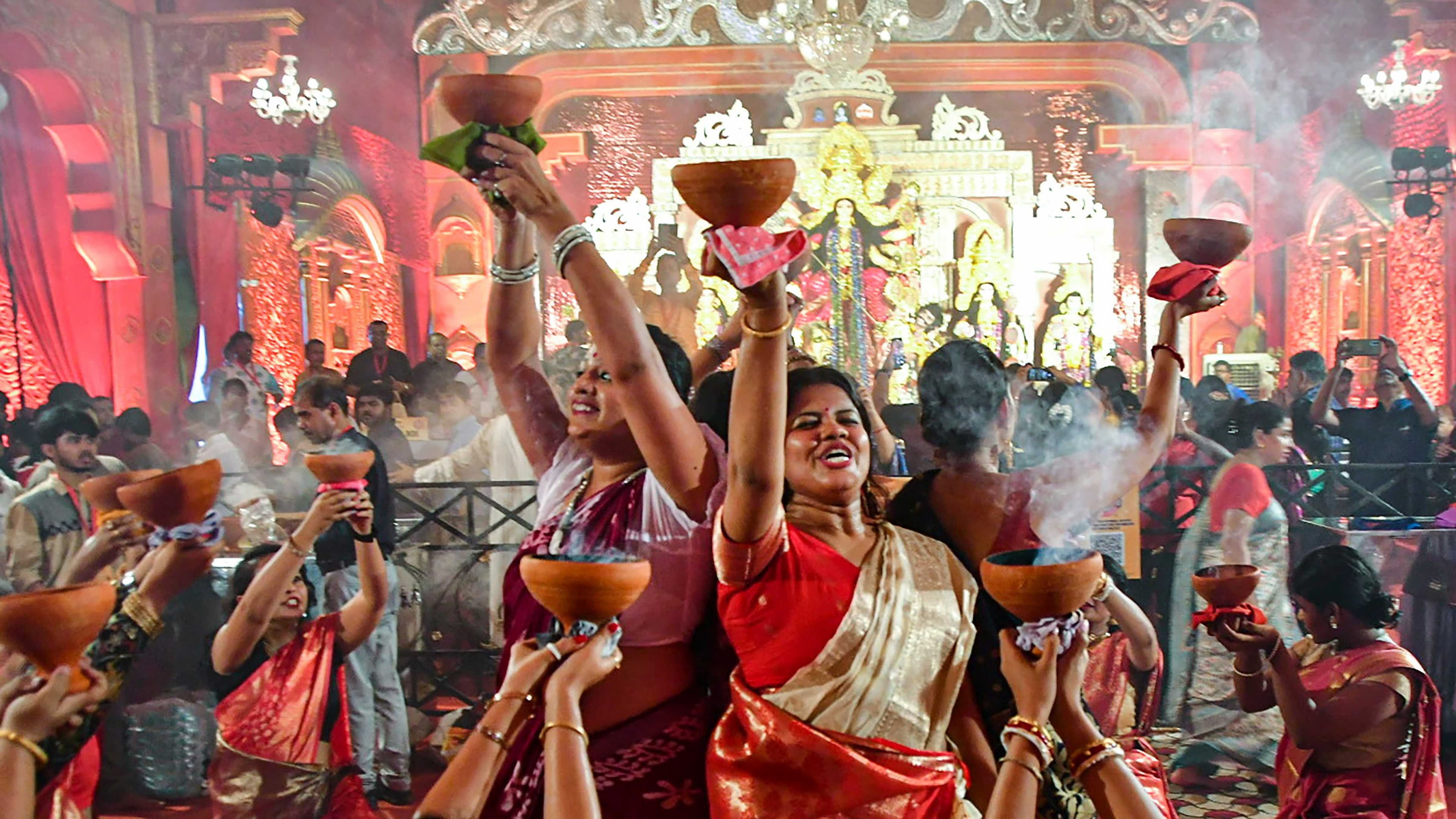
A particularly resonant highlight is the Dhunuchi dance, in which dancers move gracefully with clay pots filled with burning coconut husk to the rhythmic beat of the dhak. Performers from diverse backgrounds participate each year, underscoring the festival’s transcendence of caste, creed, and social status.
Durga Puja, therefore, functions as more than a festival. It is a collective affirmation of identity—deeply rooted in tradition yet continually evolving. As rehearsals continue, as children learn the steps of age-old dance dramas, and as new generations take the stage with confidence, the celebration weaves a timeless tapestry of shared heritage. It unites hearts and communities, ensuring that this inclusive tradition continues to flourish and inspire in the years ahead.
(This article is written by Mrs Sanghamitra Roy TGT English , Co Curricular Incharge, Army Public School , Dhaula kuan. This is an opinionated article; EPN has nothing to do with this editorial.)