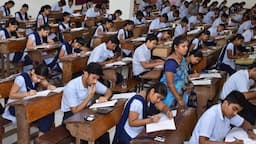
For thousands of young people who arrive in Delhi every year, education is supposed to be a route to a better life. They come for a university degree, a competitive examination, a professional course or simply the chance to move beyond the limitations of the place they grew up in.
But for too many students, the risks they encounter have little to do with their classrooms or examinations.

They live in overcrowded paying guest accommodations, study in buildings that may not have been designed for the purpose, navigate waterlogged streets and depend on civic infrastructure that can fail when they need it most. When something goes wrong, the consequences can be devastating.
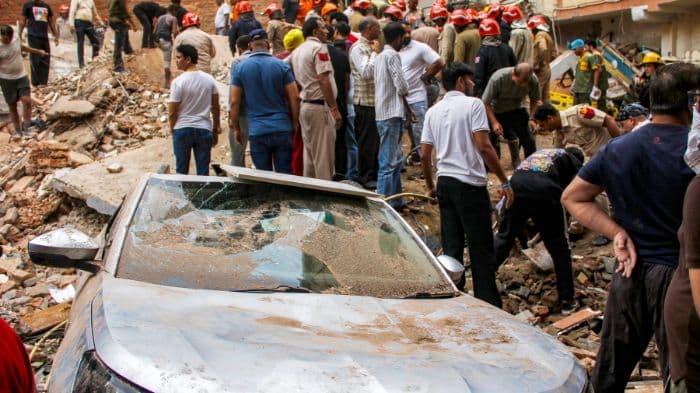
The collapse of a five-storey building in Delhi’s Satya Niketan this month, which killed seven people including five students, has once again exposed this uncomfortable reality. The building housed students of Delhi University’s South Campus colleges. Investigations have since focused on issues including unauthorised construction and work being carried out in the basement.
This was not an isolated tragedy.
In July 2024, three civil services aspirants, Tania Soni, Shreya Yadav and Navin Dalwin, died after the basement of Rau’s IAS Study Circle in Old Rajinder Nagar flooded during heavy rain. The basement was being used as a library even though the building had not been approved for that use.
A magisterial inquiry into the deaths found major lapses involving the Municipal Corporation of Delhi and the Delhi Fire Services. It said officials had been aware of violations but had failed to take appropriate action. The inquiry also pointed to problems involving stormwater drains and desilting.
The significance of these incidents goes beyond two addresses in Delhi.
They raise a more pressing question: why does a student pursuing an education so often have to bear the consequences of failures in regulation, infrastructure and enforcement?
The price of a student’s ambition
The young people who come to Delhi's education hubs are not necessarily choosing unsafe environments because they want to.
Many students depend on private accommodation because universities do not have enough hostel capacity. In areas such as Satya Niketan, the growth of private PG accommodation has followed the concentration of students around Delhi University’s South Campus. The neighbourhood has increasingly become dominated by buildings catering to student demand.
The same dynamic is visible in coaching hubs.
Students preparing for competitive examinations often spend months or years in places such as Old Rajinder Nagar, Mukherjee Nagar and other education clusters. The demand for affordable accommodation, classrooms, libraries and study spaces creates a market around them.
The problem begins when regulation does not keep pace with that market.
A basement intended for one purpose becomes a library. A residential property becomes a PG. Additional floors are added. Safety requirements become paperwork rather than conditions that are actually enforced.
The students occupying these spaces are then left to live with the consequences.
The real cost of regulatory failures
Delhi has seen several building collapses this year. The Satya Niketan incident was the fifth such collapse in the city, according to official figures cited in reports, with 16 deaths across the five incidents.
The May collapse in Saket offers another example of why the question cannot simply be reduced to bad luck or an old building.
A multi-storey commercial building housing a coaching centre, cafes and offices collapsed on May 30, killing six people, most of them students.
A magisterial inquiry later held the MCD primarily responsible, finding that illegal third and fourth floors had been added and that the civic body had failed to act on a complaint about unauthorised construction received more than two months before the collapse. The inquiry also found that officials had created records after the collapse suggesting that action had already been taken.
That distinction matters.
A building does not become dangerous only at the moment it collapses. There are usually rules governing how it can be constructed, occupied and modified. There are authorities responsible for inspections and enforcement. There are complaints, notices and procedures.
The question is whether those safeguards work before lives are lost.
Students should not have to be the warning sign
The tragedy at Rau’s IAS Study Circle showed how multiple failures can converge around students.
The basement was being used as a library. The area was vulnerable to waterlogging. The inquiry found problems involving drainage and desilting. The building had also been inspected before the incident, and the subsequent investigation examined the role of officials and the institute's management.
The Satya Niketan collapse has produced a similar cycle: tragedy, investigation, questions over construction and safety, action against officials or operators, and fresh promises of regulation.
After the Satya Niketan collapse, the Delhi government announced plans for structural audits in PG hubs and a new safety policy covering buildings used for public purposes, including PG accommodations. It has also proposed a regulatory framework requiring PGs to obtain licences and safety clearances and to be listed on a centralised portal.
Those measures may address important gaps. But the larger test is enforcement.
Students do not need another assurance after the next collapse. They need the rules to work while the building is still standing.
For a student who has moved hundreds of kilometres from home, the hostel, PG, rented room, coaching centre, library, road and public transport system are all part of the educational ecosystem.
If that ecosystem is unsafe, the promise of education is incomplete.
The three students who died in Old Rajinder Nagar were not victims of an examination failure. The students who died in Satya Niketan did not lose their lives because they chose the wrong university course. They were young people living and studying in spaces that were supposed to support their ambitions.
That is what makes these tragedies particularly difficult to dismiss as isolated accidents.
India asks its students to work harder, compete harder and dream bigger. It cannot simultaneously ask them to absorb the cost when the systems surrounding those dreams fail.
A student should be worried about clearing an examination, finishing a degree or finding a job.
They should not have to worry about whether the building in which they study or reside will stand.