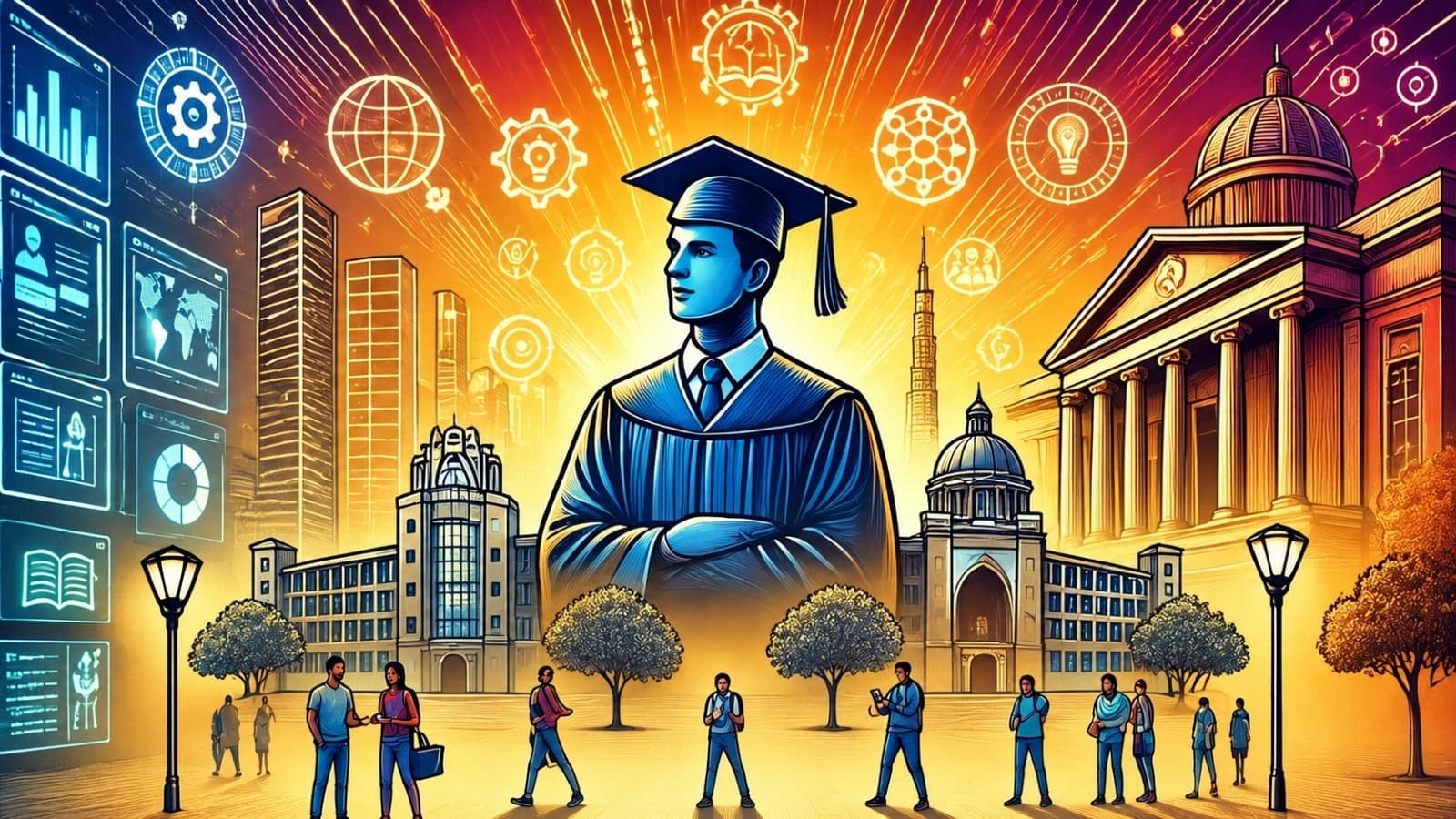
The higher education landscape in India is going through a massive transformation. The interaction of policy changes, international collaboration with universities/organizations as well as a clear global strategy has enhanced India’s position as an emerging global education destination for international students. The increase in enrollment numbers of foreign students in India is a clear signal that international students believe in the ability of India to continue moving forward with its expansion and development of global education.
However, the continued growth of the international student population cannot be sustained only by the momentum created by policy changes alone. Long-term growth for India’s global education system will be shaped by executing reforms and will happen through three key areas: quality; physical infrastructure, and employability. These factors will ultimately determine if India will be able to compete with long-standing global educational centres.

Rethink the Standard of Quality in Higher Education
The expectations for recent graduates have evolved and changed drastically from what they once were. Today, employers are increasingly demanding graduates to be both highly qualified academically and capable of adapting, working effectively collaboratively with others, and working with outside organizations to solve complex problems.
With this change in expectations from employers, the curriculum to produce competent graduates must also change. It would be necessary for institutions to not only update the syllabus but also to redesign pedagogical models, facilities, and processes to create student-centred environments that support the development of critical thinking, problem solving, and interdisciplinary learning. Similarly, the integration of companies/organizations into academia through internships, project-based learning, or other means will create strong, skilled professionals who are well prepared to enter the workforce after graduation. Without a strong alignment of employer expectations, there will continue to be large discrepancies between what employers expect from graduates and what they have experienced while in school.
Facilities and infrastructure are critical to establishing an institution's credibility and enhancing the student experience for both domestic and international students choosing to pursue their education in that country. In addition to the presence of modern classrooms, up-to-date research facilities, and state-of-the-art digital technology, the definition of infrastructure must also include high-quality, accessible student services, enhanced learning environments that support the diverse learning needs of students, and high-quality libraries.
A comprehensive approach to infrastructure development will ensure that institutions of higher education produce highly skilled, competent employees who meet the evolving needs of employers. The urban area surrounding a college is part of its educational ecosystem.
Urban infrastructure, including excellent road access, reliable 24-hour electricity, potable water, safe areas for walking and cycling, civil discipline, and cleanliness, will affect how students see their quality of life. Such elements as these are essential in how students, especially international students, see their safety, comfort, and livability.
World-class facilities may exist at a college, but when such facilities are set within a city that has no or little urban infrastructure or civic value, they detract from the overall proposition a college makes to prospective students. Whereas, showing efficient governance, sustainability, and civic discipline, college graduates from such cities will better promote the propositions of their colleges to prospective international students.
Therefore, in relation to the global educational aspirations of universities in India, the urban infrastructure and institutional infrastructure of universities must be viewed as a single value proposition.
Employability as a Primary Result
In today's outcome-based environment, employability has become the primary metric used to measure the value of an education. Increasingly, students assess universities' abilities to provide career opportunities as a basis for choosing an institution.
To accomplish this goal, universities should:
- Develop long-term partnerships with industry
- Routinely revise their programs to respond to changing market needs
- Provide a clear path to employment after completion of their program
Aligned with this vision, an education will no longer be viewed as an isolated academic experience; rather, it will be considered as structured preparation to enter into a profession or workforce
Strategic Advantages and Responsibilities of India
There are multiple opportunities for India with regard to international education, but ultimately, it will come down to whether the country can capitalize on them through the delivery of quality programmes and experiences to potential students.
With respect to international education at this time, India has many advantages due to its demographic trends, rapidly expanding economy and increased global relevance.
But at the same time, India is faced with some emerging challenges in the growing global competitive landscape for attracting international students.
Countries from all over the world are currently investing heavily in their own higher education systems to attract international students and gain access to the international education market. For this reason, the need for consistency in the delivery of quality educational products and services will become increasingly important in the near future.
The first step towards attracting international students will be establishing sufficient trust and confidence in the institution and the experiences it provides to potential students.
From Policy to Performance
The current education policy environment in India has generally been established. The remaining challenge will be successfully implementing and executing the policies on a large-scale basis in a disciplined manner.
India has a significant opportunity ahead; however, it faces a similar level of responsibility. The next few years will determine if India can successfully implement its policy vision into a globally respected and competitive education system.
This article is written by Dr Ramakrishnan Raman, Vice Chancellor, Symbiosis International (Deemed) University. The views expressed are solely those of the authors and are personal in nature. This is an opinionated article, and Education Post does not endorse or take responsibility for the opinions expressed herein.