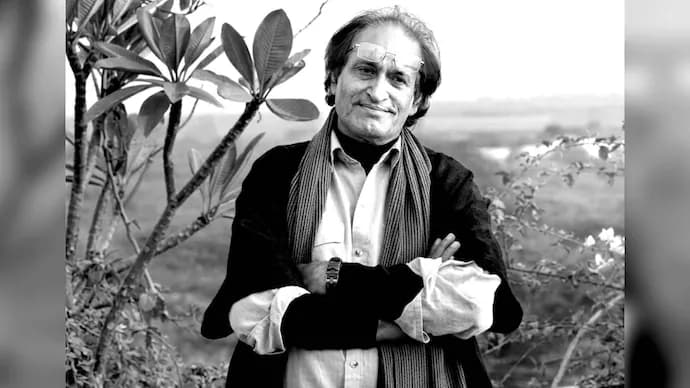
Renowned photojournalist Raghu Rai, whose evocative images shaped how India saw itself and how the world saw India, died at the age of 83 on April 25. He had been undergoing treatment at a private hospital, his family confirmed.
His son, Nitin Rai, said Rai had been battling cancer alongside age-related complications. “Dad was diagnosed with prostate cancer two years ago, but he was cured. Then it spread to the stomach, that too was cured. Recently, the cancer spread to his brain, and there were age-related issues too,” he was quoted as saying by PTI.

Rai’s passing marks the end of an era in Indian photojournalism. For decades, his camera moved across the country with rare sensitivity—capturing grief, resilience, chaos and beauty in equal measure. His work did not just document events; it revealed the emotional undercurrents of a nation in motion.
The family said his last rites will be conducted at the Lodhi Cremation Ground in New Delhi at 4 pm on April 25.
He is survived by his wife Gurmeet, son Nitin, and daughters Lagan, Avani and Purvai.
A life in frames
Rai’s journey into photography began in 1965, when he was just 23. Within a year, he joined The Statesman as chief photographer, beginning a career that would redefine visual storytelling in India. His early work stood out for its intimacy—bringing viewers face to face with the human condition.
In 1971, his photographs caught the attention of the legendary Henri Cartier-Bresson, who nominated him to Magnum Photos — a rare honor that placed Rai among the world’s finest photographers.
Recognition followed swiftly. In 1972, he was awarded the Padma Shri for his powerful coverage of the India-Pakistan War of 1971, including images that documented the suffering of Bangladeshi refugees and the decisive end of the conflict.
Defining a visual era
A new chapter unfolded in 1982 when Rai joined India Today during its formative years. As Picture Editor, visualizer and photographer, he helped shape the magazine’s visual identity.
His photo essays — bold, layered and deeply human — captured the political churn, social transitions and cultural shifts of the time. Whether documenting the corridors of power or life on the margins, Rai’s work carried a signature blend of empathy and precision.
Global recognition, enduring legacy
Rai’s work resonated far beyond India. In 1992, he was named “Photographer of the Year” in the United States for his National Geographic story on wildlife management in India—an assignment that reflected his versatility and environmental sensitivity.
In 2009, the French government honored him with the Order of Arts and Letters, recognizing his contribution to the arts.
His photographs appeared in leading global publications including Time, Life, The New York Times, Newsweek, Vogue, and The New Yorker — each frame carrying a distinct voice that was unmistakably his.
Raghu Rai did not merely take photographs; he told stories that lingered. In his images, India was never abstract—it was immediate, alive, and deeply human. With his passing, the country loses not just a photographer, but a witness who helped it see itself more clearly.