


Following a high-level meeting in New Delhi, both countries have agreed to strengthen intelligence sharing, monitor chemical supplies and coordinate action against international drug trafficking networks.
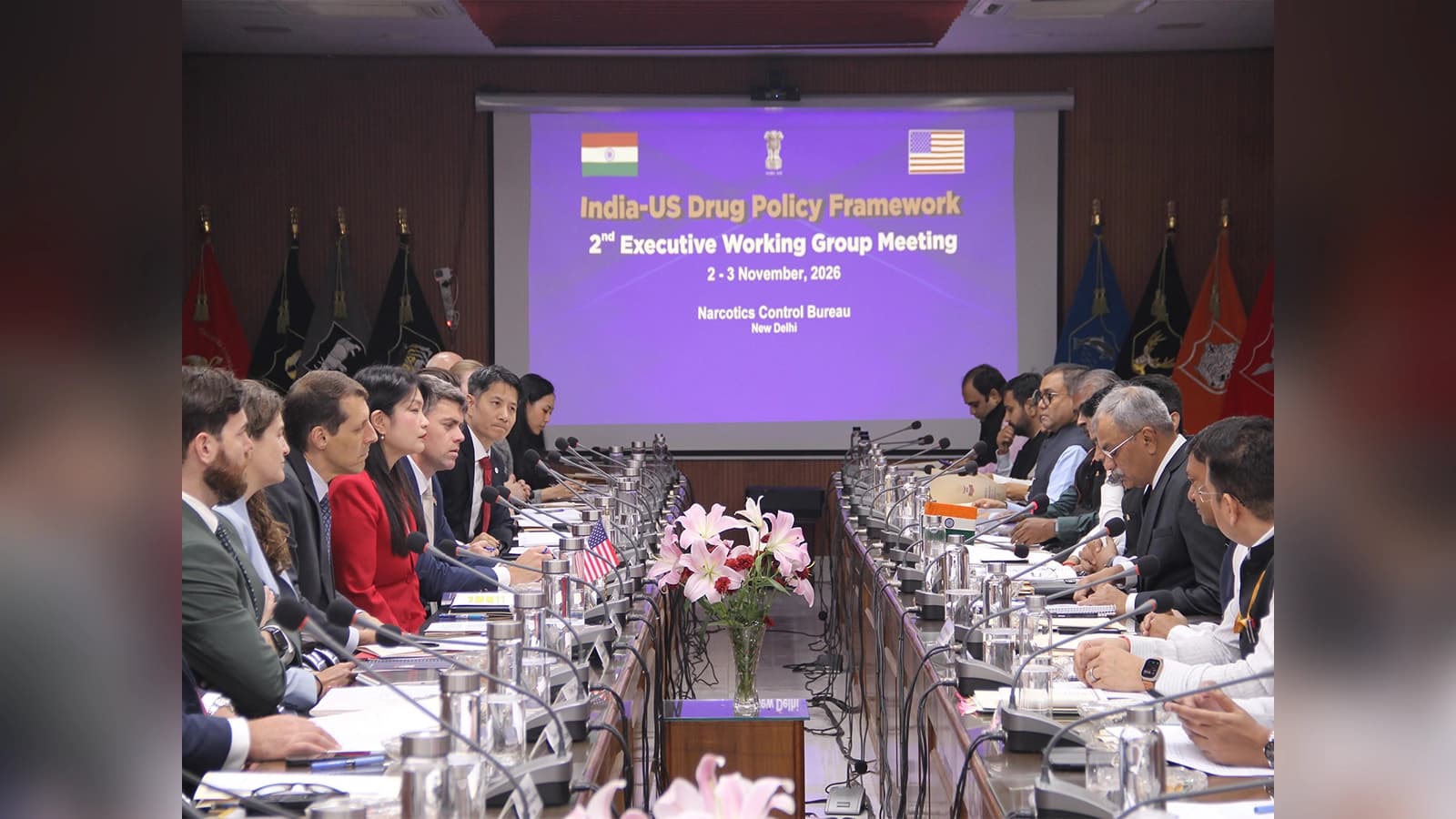
India and US join forces to combat global drug cartels and synthetic drug trafficking.
India and the United States are stepping up their cooperation to tackle international drug trafficking, with a particular focus on synthetic drugs, illegal chemical supplies and cross-border criminal networks. The two countries have agreed to strengthen intelligence sharing and coordinate enforcement efforts to prevent drug cartels from exploiting international trade and pharmaceutical supply chains. The decision follows the second India-US Drug Policy Executive Working Group meeting, held in New Delhi on November 2 and 3, 2026, and hosted by India's Narcotics Control Bureau (NCB).
The Indian delegation was led by NCB Director General Anurag Garg, while the US delegation was headed by Debbie Seguin, Acting Deputy Director of the White House Office of National Drug Control Policy (ONDCP). According to reports, discussions focused on identifying international drug trafficking networks, preventing the illegal diversion of chemicals used in synthetic drug production and strengthening cooperation between enforcement agencies.

Synthetic Drugs and Illegal Chemical Supplies Under Focus
One of the major concerns for both countries is the growing trade in synthetic drugs. Unlike traditional drugs obtained from plants, synthetic substances are manufactured using chemicals, often in illegal laboratories. Drugs such as fentanyl and methamphetamine have become significant concerns for international law enforcement agencies because of their health risks and the difficulty of tracking their production and distribution. The illegal drug trade also depends on chemicals known as precursor substances. These chemicals have legitimate industrial and pharmaceutical uses but can be diverted by criminal groups for manufacturing illegal drugs. India's large pharmaceutical and chemical manufacturing industry makes monitoring these supply chains particularly important. The challenge is to prevent illegal activities without affecting legitimate manufacturers and the supply of medicines.
Operation MedMax and Operation WIPE Among Initiatives
The November meeting also highlighted operational and regulatory initiatives aimed at disrupting drug trafficking networks. According to the report, both countries welcomed initiatives including Operation MedMax, Operation WIPE and India's Voluntary Code of Conduct to prevent the diversion of precursor chemicals used in synthetic drug manufacturing.
US Ambassador to India Sergio Gor said the partnership was helping prevent the illegal diversion of chemicals, secure commercial supply chains and disrupt international drug trafficking networks. The discussions also emphasized the importance of sharing intelligence, exchanging enforcement practices and maintaining regular cooperation to address emerging narcotics threats.
India-US Drug Policy Partnership Has Been Developing Since 2020
The latest development builds on several years of cooperation between the two countries. India and the US established the Counter Narcotics Working Group (CNWG) in 2020 to improve coordination on drug-related challenges. During Prime Minister Narendra Modi's visit to the United States in June 2023, both countries committed to developing a broader drug policy partnership.
In September 2024, India and the US signed a Memorandum of Understanding (MoU) to establish the Drug Policy Framework for the 21st Century. The agreement focuses on disrupting illegal drug production and trafficking, preventing the diversion of precursor chemicals and strengthening pharmaceutical supply chains. It also covers drug prevention, treatment and rehabilitation. The first India-US Drug Policy Executive Working Group meeting under this framework was held in Washington, DC, on January 20–21, 2026.
The international cooperation comes as India strengthens its domestic efforts against narcotics trafficking. On June 26, 2026, Union Home Minister Amit Shah unveiled the Vision Document on Drug Control (2026–2029) during the 10th Apex Level Meeting of the Narco-Coordination Centre (NCORD). The roadmap identifies four major priorities: enforcement and intelligence, control of precursor chemicals and synthetic drugs, drug prevention and rehabilitation, and improved coordination among enforcement agencies.
The government has also emphasized moving beyond individual drug seizures and arrests to identifying the entire network behind trafficking operations, including financiers, suppliers, transporters and international connections.
What Does This Mean for India?
The growing India-US partnership reflects the changing nature of international drug trafficking, where criminal networks increasingly operate across borders and exploit legitimate commercial supply chains. For India, the challenge is twofold: preventing illegal drug manufacturing and protecting its pharmaceutical industry from misuse by criminal networks.
However, intelligence sharing and coordinated enforcement alone may not be enough. Effective monitoring of chemical supplies, stronger financial investigations, public awareness and rehabilitation services will also be necessary. The latest discussions indicate a stronger commitment from both countries to address the problem together. The effectiveness of this cooperation will ultimately depend on whether these commitments translate into concrete investigations, disruption of trafficking networks and better prevention measures.

UAE science festival to feature 80 workshops in Al Ain

Facing risk of losing ancient knowledge, China establishes rare disciplines school

From smart classrooms to surveillance concerns: Why China's Nanjing University rolled back AI feature

Screen time concerns shape Japan's digital textbook policy, printed books to remain primary

Black holes: Where space, time and the laws of physics break down
Facing risk of losing ancient knowledge, China establishes rare disciplines school
From smart classrooms to surveillance concerns: Why China's Nanjing University rolled back AI feature
Screen time concerns shape Japan's digital textbook policy, printed books to remain primary

From admissions to employment, J&K brings private universities under 25% domicile quota
After NEET paper leak row, NTA moves to expand examination center network

UAE science festival to feature 80 workshops in Al Ain
Facing risk of losing ancient knowledge, China establishes rare disciplines school
From smart classrooms to surveillance concerns: Why China's Nanjing University rolled back AI feature
Screen time concerns shape Japan's digital textbook policy, printed books to remain primary
Black holes: Where space, time and the laws of physics break down
Facing risk of losing ancient knowledge, China establishes rare disciplines school
From smart classrooms to surveillance concerns: Why China's Nanjing University rolled back AI feature
Screen time concerns shape Japan's digital textbook policy, printed books to remain primary
From admissions to employment, J&K brings private universities under 25% domicile quota
After NEET paper leak row, NTA moves to expand examination center network
Copyright© educationpost.in 2026 All Rights Reserved.