


The proposed framework allows local education boards to select printed, fully digital or hybrid formats, while AI integration and health effects remain under consideration.
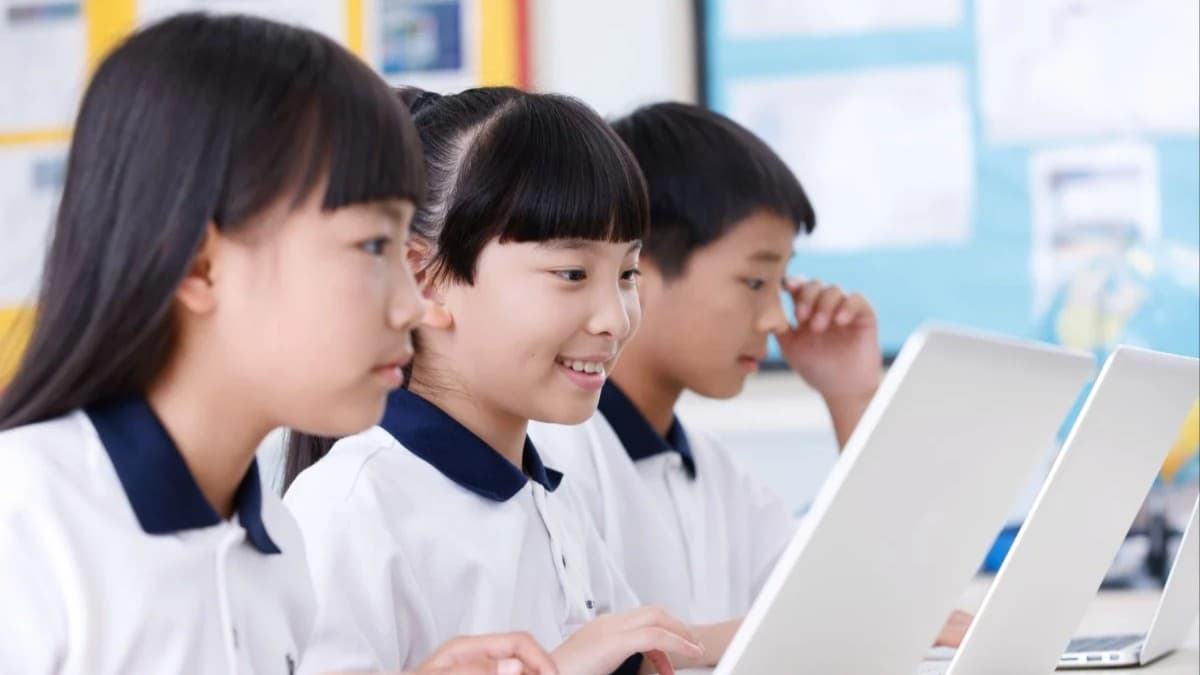
Japan's education ministry has proposed a hybrid approach to digital textbooks, with printed books remaining the primary learning resource across elementary, junior high and high schools from fiscal 2030.
Under the draft guidelines, fully digital textbooks will not be allowed for students in Grade 4 or below. Their use will be permitted only from Grade 5 onward and will be restricted to selected subjects, depending on the school level.

According to Japan's daily newspaper The Mainichi, the Ministry of Education, Culture, Sports, Science and Technology presented the draft ministerial guidelines to a panel of experts on Oct. 22.
The proposal states that digital textbooks scheduled for introduction from fiscal 2030 should primarily follow a hybrid format, combining printed textbooks with digital materials. This approach will apply across all grades and subjects.
The ministry has proposed different rules for the use of fully digital textbooks based on students' developmental stages. Under the draft, elementary school students up to Grade 4 will continue using printed textbooks as their main learning material.
Students in Grade 5 and above may use fully digital textbooks, but only in certain subjects. These include foreign languages, music and arts and crafts at the elementary level, along with music and art in junior high school.
The guidelines also clarify how digital resources should be incorporated into the hybrid model. In grades and subjects where fully digital textbooks are not permitted, printed books should remain the primary teaching and learning material.
Digital content can be included as a supplementary resource to complement printed textbooks and help students understand lessons more effectively. For students in Grade 4 and below, the proportion of printed material will be higher, with digital components playing a more limited role.
Japan considers AI integration in digital textbooks
The draft guidelines also address the possible use of artificial intelligence (AI) in digital textbooks. The ministry will consider AI integration while monitoring technological developments and the performance of AI tools specifically designed for educational purposes.
The proposal also prompted discussions among panel members about the practical implications of digital textbook use for students.
One member raised concerns about access to digital learning materials after graduation, asking, "If a student takes an extra year to prepare for entrance exams, how long after graduation can they use digital textbook content?"
Panel members also highlighted the need to conduct surveys on students' screen time and examine the possible relationship between digital textbook use and health effects.
Another member emphasized the importance of involving families as students increasingly use digital devices for learning.
The member said, "With textbooks becoming hybrid, students may have to bring digital devices home. It would be good to also consider informing and coordinating with families to prevent a negative cycle in which the devices are used differently at home, such as for entertainment."
Japan to introduce digital textbooks from fiscal 2030
Japan plans to gradually introduce digital textbooks in elementary, junior high and high schools from fiscal 2030. Local education boards will be able to select from three formats for their schools.
These options include printed textbooks only, fully digital textbooks or a hybrid system combining printed and digital materials.
The proposed ministerial guidelines will establish a basic framework for implementing the new system. They will also serve as a reference for textbook publishers and local education boards when selecting and preparing learning materials.
The ministry has indicated that the guidelines will not remain fixed and may be revised as necessary. Future changes will take into account research findings on learning outcomes, health effects and other concerns associated with the use of digital tools in education.

Facing risk of losing ancient knowledge, China establishes rare disciplines school
From smart classrooms to surveillance concerns: Why China's Nanjing University rolled back AI feature
Screen time concerns shape Japan's digital textbook policy, printed books to remain primary

Black holes: Where space, time and the laws of physics break down

Santa Barbara City College in US sees sharp fall in international student enrolment
Facing risk of losing ancient knowledge, China establishes rare disciplines school
From smart classrooms to surveillance concerns: Why China's Nanjing University rolled back AI feature
Screen time concerns shape Japan's digital textbook policy, printed books to remain primary

From admissions to employment, J&K brings private universities under 25% domicile quota

After NEET paper leak row, NTA moves to expand examination center network

Facing risk of losing ancient knowledge, China establishes rare disciplines school
From smart classrooms to surveillance concerns: Why China's Nanjing University rolled back AI feature
Screen time concerns shape Japan's digital textbook policy, printed books to remain primary
Black holes: Where space, time and the laws of physics break down
Santa Barbara City College in US sees sharp fall in international student enrolment
Facing risk of losing ancient knowledge, China establishes rare disciplines school
From smart classrooms to surveillance concerns: Why China's Nanjing University rolled back AI feature
Screen time concerns shape Japan's digital textbook policy, printed books to remain primary
From admissions to employment, J&K brings private universities under 25% domicile quota
After NEET paper leak row, NTA moves to expand examination center network
Copyright© educationpost.in 2026 All Rights Reserved.