


A dedicated portal and mobile apps for both phases—house listing and population enumeration—will significantly speed up data collection, improve accuracy, and ensure early release of Census 2027 results.
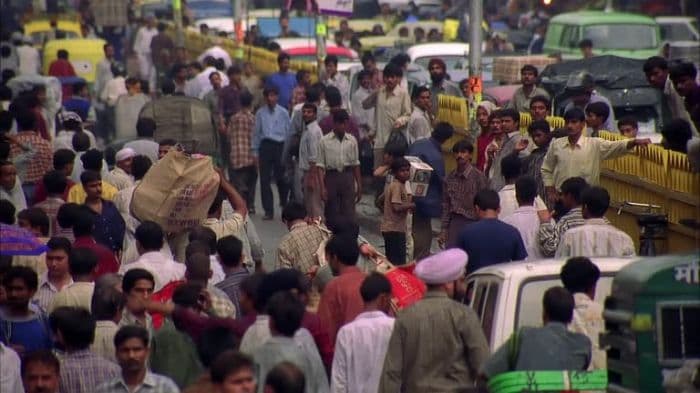
India is set to conduct its first-ever fully digital census in 2026–27, enabling citizens to self-enumerate via a secure web portal for both the house-listing (starting April 1, 2026) and population enumeration (from February 1, 2027) phases—a transformative shift in data collection.
Enumerators will use Android and Apple mobile apps to record data directly into a central server, ensuring faster processing and higher reliability compared to traditional paper forms.

The portal’s self-enumeration option allows households to submit information at their convenience, reducing the enumeration burden and potentially improving participation .
The Registrar General’s office has introduced a three-tier training structure (national → master → field trainers) to prepare an estimated 34 lakh enumerators and supervisors.
Administrative boundaries will be finalized by December 31, 2025, after which enumeration blocks will be assigned to each enumerator to avoid overlap.
Security is a top priority: officials have confirmed stringent data protection measures at every step—collection, transmission, and storage—to safeguard citizens’ information.
Preliminary data analysts say the digital-first approach, including real-time app uploads in 16 languages and automated processing, could deliver census results within nine months of enumeration—far faster than previous exercises.
The official Gazette notification for Census 2027, marking it as the 16th Census of India, was issued in June 2025, confirming inclusion of caste enumeration—the first time since 1931.
The reference dates are March 1, 2027 (rest of India) and October 1, 2026 (snowbound regions like Ladakh, J&K, Himachal, Uttarakhand).
Union Home Minister Amit Shah recently reviewed census preparedness, emphasising data security and digital readiness as central to the success of the initiative.

University of Saarland loses students as HTW Saarland enrolment rises

‘Dear Italy, how much do you cost us?’ Students pitch tents over soaring rents

Kuwait University showcases academic programmes at international education exhibition

Pakistan HEC makes prior approval mandatory for sharing biological samples and health data abroad

Australia passes bill to expand university access and support disadvantaged students
‘Dear Italy, how much do you cost us?’ Students pitch tents over soaring rents
Australia passes bill to expand university access and support disadvantaged students

HBKU’s PlasmaPure advances to semifinals in global water desalination competition
Karnataka student elections return after 37 years: Why political restrictions and university polls remain contentious

Global education is shifting from simply going abroad to creating more flexible routes to opportunity

University of Saarland loses students as HTW Saarland enrolment rises
‘Dear Italy, how much do you cost us?’ Students pitch tents over soaring rents
Kuwait University showcases academic programmes at international education exhibition
Pakistan HEC makes prior approval mandatory for sharing biological samples and health data abroad
Australia passes bill to expand university access and support disadvantaged students
‘Dear Italy, how much do you cost us?’ Students pitch tents over soaring rents
Australia passes bill to expand university access and support disadvantaged students
HBKU’s PlasmaPure advances to semifinals in global water desalination competition
Karnataka student elections return after 37 years: Why political restrictions and university polls remain contentious
Global education is shifting from simply going abroad to creating more flexible routes to opportunity
Copyright© educationpost.in 2026 All Rights Reserved.