


Stockholm International Peace Research Institute warns of new regional flashpoints as India’s growing triad, advanced canister missiles, and sea-based deterrence mark shift towards more operational nuclear posture.
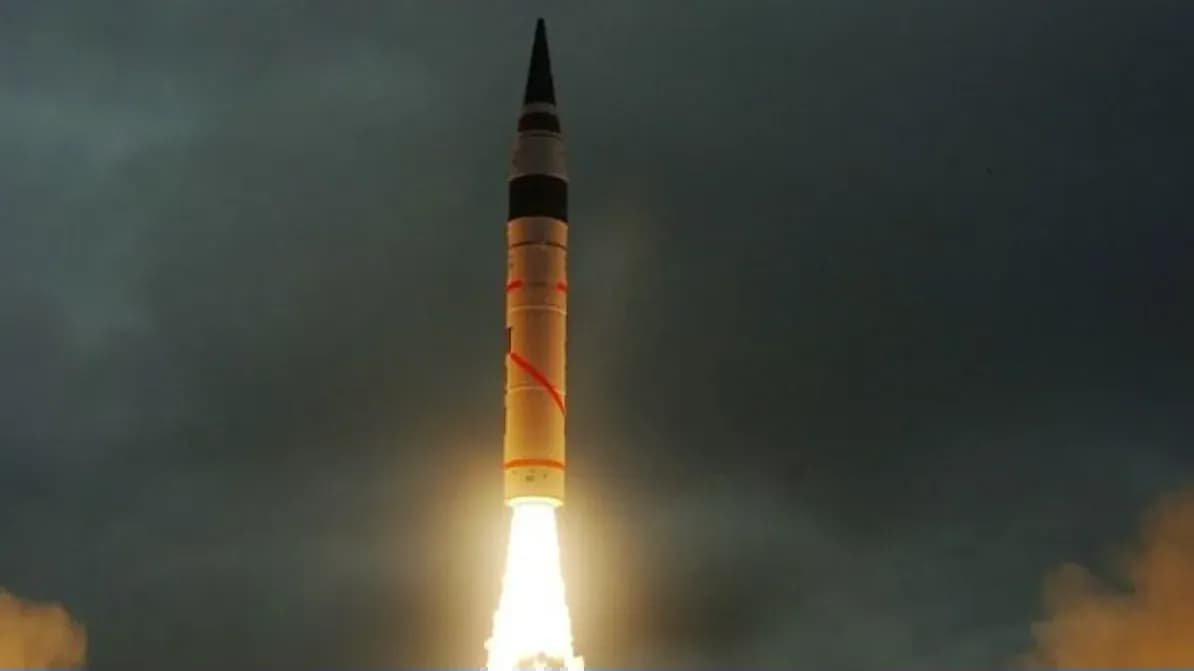
India has surpassed Pakistan in the size of its nuclear arsenal, while China continues to surge far ahead, according to the latest yearbook released by the Stockholm International Peace Research Institute (SIPRI) on June 16. The findings underline a shifting strategic landscape in Asia, with growing risks of escalation amid advancing technologies.
As of January 2025, India is estimated to possess 180 nuclear warheads, slightly ahead of Pakistan’s 170, SIPRI reported. China’s stockpile, however, dwarfs both South Asian rivals, reaching 600 warheads, with 24 of them deployed on missiles or based with operational forces.

The report highlights India’s continued expansion of its nuclear capabilities throughout 2024, including significant strides in its delivery systems. Of particular note is India’s development of canisterized missiles, which allow warheads to be stored ready-to-launch — a potential shift away from its long-standing policy of keeping warheads and delivery systems separate during peacetime. This capability, once fully operational, could enable India to field missiles carrying multiple warheads, enhancing both its first-strike and retaliatory options.
“India’s recent moves towards canisterisation and sea-based deterrence patrols suggest a possible shift towards mating some warheads with launchers even during peacetime,” SIPRI observed, referring to the growing maturity of India’s nuclear triad comprising air, land, and sea-based platforms.
While Pakistan continues to accumulate fissile material and develop new delivery systems, SIPRI suggests that India may now be placing greater strategic emphasis on long-range weapons capable of reaching deep into Chinese territory — potentially recalibrating the traditional Pakistan-centric focus of India’s nuclear deterrent.
The report also touched on India’s recent military campaign, Operation Sindoor, noting that its strikes on nuclear-related military infrastructure carried a serious risk of triggering a broader nuclear crisis amid rampant disinformation campaigns.
Globally, Russia and the United States continue to hold the world’s largest nuclear stockpiles, with 5,459 and 5,177 warheads respectively, though these numbers include retired warheads. China, Russia, India, Pakistan, and North Korea are all actively modernizing their arsenals, including development of missiles capable of carrying multiple warheads — a capability once limited to only a handful of Western powers.
Beyond nuclear developments, SIPRI’s report pointed to rising global arms imports. Between 2020 and 2024, 162 countries imported major arms, with Ukraine, India, Qatar, Saudi Arabia, and Pakistan accounting for 35% of all such transfers — underscoring the continuing arms race amid growing geopolitical tensions.

Hunter of Underwater Threats: Why INS Mangrol Is Important for the Indian Navy
Delhi Protests Renew Debate Over Constitutional Right to Peaceful Assembly

Household Inflation Rises to 5.54% in September as Price Pressures Spread
Delhi High Court Allows Urgent Hearing on Protest Site Guidelines
India Rejects China’s Objection to Standardised Names of Places in Ladakh
Karnataka student elections return after 37 years: Why political restrictions and university polls remain contentious

Global education is shifting from simply going abroad to creating more flexible routes to opportunity

Delhi Police files FIR against Congress MP Bimol Akoijam over JNU sexual harassment allegations

Utkal University tightens security after late-night explosions ahead of student polls

IET India Scholarship Award 2026: DTU’s Kush Garg wins top honor for AI device for neurodivergent children

Hunter of Underwater Threats: Why INS Mangrol Is Important for the Indian Navy
Delhi Protests Renew Debate Over Constitutional Right to Peaceful Assembly
Household Inflation Rises to 5.54% in September as Price Pressures Spread
Delhi High Court Allows Urgent Hearing on Protest Site Guidelines
India Rejects China’s Objection to Standardised Names of Places in Ladakh
Karnataka student elections return after 37 years: Why political restrictions and university polls remain contentious
Global education is shifting from simply going abroad to creating more flexible routes to opportunity
Delhi Police files FIR against Congress MP Bimol Akoijam over JNU sexual harassment allegations
Utkal University tightens security after late-night explosions ahead of student polls
IET India Scholarship Award 2026: DTU’s Kush Garg wins top honor for AI device for neurodivergent children
Copyright© educationpost.in 2026 All Rights Reserved.