The owner of a meat processing and exporting unit in Uttar Pradesh's Dasna town, along with his wife and three managers, was arrested on June 1 for allegedly employing children trafficked from villages in Bengal and Bihar at his abattoir.
The minors, hailing mostly from West Bengal and Bihar, were found working at the slaughterhouse of International Agro Foods, situated in Ghaziabad district.

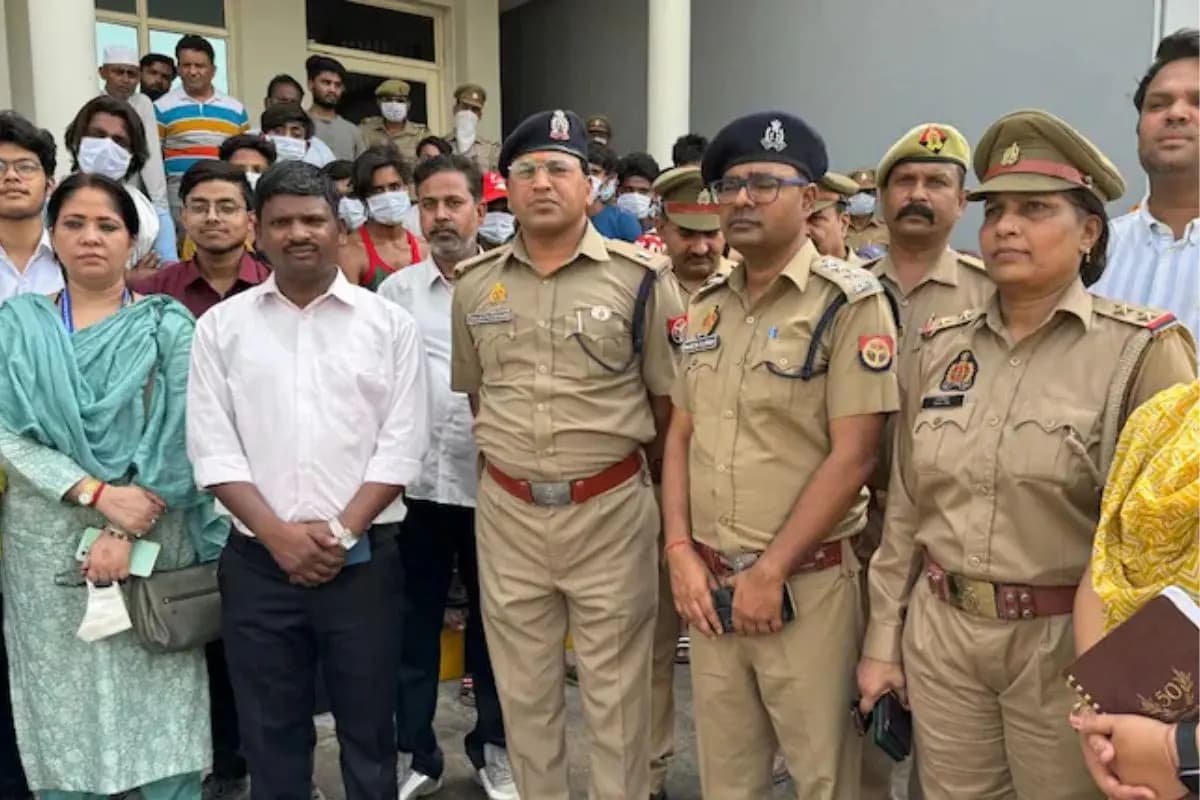
The joint operation, conducted by the Ghaziabad police, the non-profit Mission Mukti Foundation, and officials from the National Commission for Protection of Child Rights (NCPCR), took place on May 29.
A total of 57 workers, including 22 minors, were involved in meat slicing, packaging, and weighing processes.
Also Read: 57 minors rescued from Ghaziabad slaughterhouse, no FIR till now
The arrested individuals include Yaseen Qureshi (owner of Agro Foods), Tasleen (one of the company directors), and general managers Aarif, Manjoor Hasan, and Hasan Ali. They have been sent to judicial custody.
Charges have been filed under the Child Labour (Prohibition and Regulation) Act, 1986, and for human trafficking based on a complaint submitted by District Child Protection Officer Jitendra Kumar.
Documents recovered from the factory included 40 Aadhaar Cards, indicating that at least 20 of the rescued workers were minors. Medical tests are being conducted to verify the age of the remaining 15 individuals.
The children received monthly payments ranging from Rs 8,000 to Rs 12,000, significantly less than what adult laborers earn in abattoirs. The factory predominantly hired minors due to their availability as cheap labor.
Labor contractors were paid between Rs 15,000 and Rs 20,000 per child. The children worked in two shifts, performing hazardous tasks such as skinning animals and slicing meat. Some were also involved in packaging and weighing meat products. Living conditions for the rescued minors were deplorable.
Also Read: Education News
They were accommodated in a makeshift "hostel" within the factory's abattoir, with no fans or beds—only 25 mattresses for all of them. Permission was required to leave the slaughterhouse, and outings were limited to 5 hours.
A security guard monitored the minors after their work hours. The investigation is ongoing, and authorities are actively tracing the labor contractors responsible for bringing the minors to the factory.
The rescued children have been taken to the child welfare committee and subsequently to assigned shelter homes after medical examinations.




.jpg&w=256&q=75)





.jpg&w=256&q=75)
