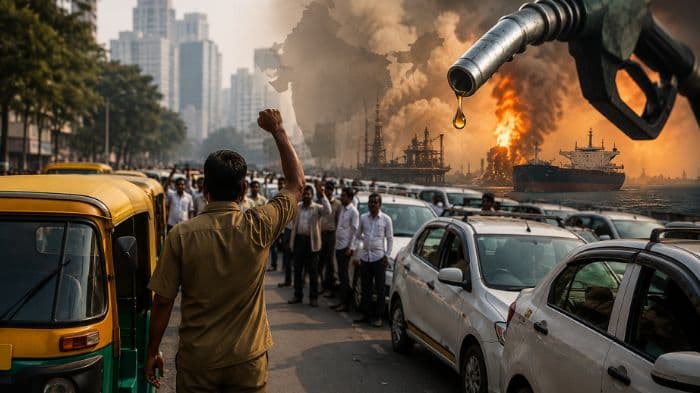
Thousands of cab, auto and commercial vehicle drivers across Delhi-NCR began a three-day strike starting May 21, affecting transport services in parts of Delhi, Noida, Gurugram and Ghaziabad.
The protest, called by several transport unions, is being driven by a combination of rising fuel prices, stagnant fares and increasing operational expenses. But behind the local transport disruption lies a much larger global factor: the ongoing Iran conflict and its impact on international oil prices.

According to transport unions, fares for autos and taxis in Delhi-NCR have not been revised adequately for years despite repeated increases in petrol, diesel and CNG prices. Drivers say their daily earnings have sharply declined as fuel costs continue rising while app commissions, maintenance expenses, permit fees and vehicle EMIs remain high.
The strike has been supported by sections of unions affiliated with the All India Motor Transport Congress (AIMTC), which has demanded an immediate fare revision and relief measures for commercial drivers. Unions have also opposed higher Environment Compensation Charges (ECC) and restrictions affecting older commercial vehicles entering Delhi-NCR.
The immediate trigger for the protest has been the recent spike in fuel prices.
Over the past week, petrol, diesel and especially CNG prices in Delhi have risen sharply. Delhi’s transport system depends heavily on CNG-powered autos and taxis, meaning any increase directly affects driver income. In recent days, CNG prices in the capital crossed ₹80 per kilogram after multiple revisions within a short period.
The fuel price surge is closely linked to tensions in the Middle East.
The ongoing conflict involving Iran and instability around the Strait of Hormuz — one of the world’s most important oil shipping routes — have disrupted global energy markets and increased fears of supply shortages. Nearly 20% of global oil trade passes through the Strait of Hormuz, making the region critical for countries like India that rely heavily on imported crude oil.
As global crude prices climbed, Indian fuel retailers increased petrol and diesel prices for the first time in several years, citing rising international oil costs.
That increase eventually filtered down to local transport workers in Delhi-NCR, many of whom say they are no longer able to operate profitably under the current fare structure.
App-based cab drivers say the situation has become especially difficult because aggregator commissions charged by ride-hailing platforms further reduce earnings. Several drivers claimed that after deducting fuel expenses and platform commissions, daily take-home income has fallen significantly despite working long hours.
The strike has affected sections of auto-rickshaw services, app-based cabs, black-and-yellow taxis and some goods transport vehicles across NCR cities. However, the scale of disruption varies because not all unions are participating fully in the protest. Some operators continue to run services partially.
Commuters across Delhi-NCR reported difficulties booking rides, increased waiting times and higher surge pricing on ride-hailing apps after the strike began. Office commuters, airport travellers and daily passengers relying on autos are expected to face the biggest impact if the protest continues through the weekend.
The strike also reflects how global geopolitical conflicts are increasingly affecting everyday life in India. A war thousands of kilometres away has contributed to rising oil prices, which are now impacting urban transport costs, inflation and household budgets in Indian cities.
Experts warn that if instability in the Gulf region continues and oil supply routes remain vulnerable, fuel prices could remain volatile in the coming weeks.
For Delhi’s transport workers, however, the issue is immediate: without fare hikes or relief measures, many drivers say rising fuel costs have made daily operations financially unsustainable.





.png&w=256&q=75)