


The proposed amendments sought to introduce significant changes to the Advocates Act of 1961, including provisions allowing government-nominated members on the BCI, regulatory powers over foreign lawyers and firms.
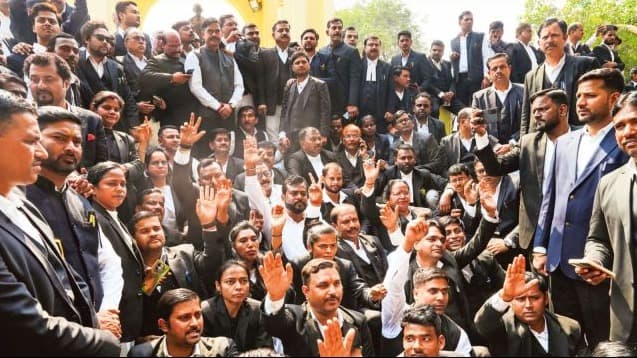
In the wake of strong opposition from the Bar Council of India (BCI) and widespread protests by lawyers, the Union Law and Justice Ministry on Feb 22 withdrew the draft Advocates (Amendment) Bill, 2025.
The proposed amendments, published on Feb 13 and open for public consultation until Feb 28, had sparked concerns over government interference in the legal profession.

In a statement, the Ministry said the draft Bill was initially released on the Department of Legal Affairs website as part of an effort to maintain transparency and encourage stakeholder engagement. However, citing the volume of objections and suggestions received, the government decided to halt the consultation process and revise the Bill for further discussion.
The draft amendments sought to introduce significant changes to the Advocates Act, 1961, including provisions allowing government-nominated members on the BCI, regulatory powers over foreign lawyers and firms, and an expanded definition of "legal practitioner" to include those working with foreign entities. A controversial clause also proposed banning lawyer strikes and court boycotts.
The BCI, led by chairperson and BJP Member of Parliament Manan Kumar Mishra, strongly opposed the Bill, arguing it threatened the autonomy of the legal profession. In a letter to Union Law Minister Arjun Ram Meghwal, Mishra warned that the amendments could undermine the independence of the BCI and restrict lawyers' rights.
The Ministry had initially defended the Bill, stating it aimed to modernize the legal profession, enhance legal education, and align the sector with global best practices. However, amid mounting resistance, the government has now pledged to reconsider the amendments and reinitiate discussions with stakeholders.
CBSE Board Exams 2027: When Will the Date Sheet Be Released and What Are the Exam Rules?

AI should support clinical reasoning, not replace the physician’s judgment: Dr Gaurov Dayal

NEET UG 2026 Stray Vacancy Round Explained: Who Is Eligible and How Does Counselling Work?
Global education is shifting from simply going abroad to creating more flexible routes to opportunity
IIT Bombay invites applications for 30 counsellor posts to expand student mental health support
Global education is shifting from simply going abroad to creating more flexible routes to opportunity

Delhi Police files FIR against Congress MP Bimol Akoijam over JNU sexual harassment allegations
Utkal University tightens security after late-night explosions ahead of student polls

IET India Scholarship Award 2026: DTU’s Kush Garg wins top honor for AI device for neurodivergent children

Erasmus Days 2026 celebrates international learning and skills for the future

CBSE Board Exams 2027: When Will the Date Sheet Be Released and What Are the Exam Rules?
AI should support clinical reasoning, not replace the physician’s judgment: Dr Gaurov Dayal
NEET UG 2026 Stray Vacancy Round Explained: Who Is Eligible and How Does Counselling Work?
Global education is shifting from simply going abroad to creating more flexible routes to opportunity
IIT Bombay invites applications for 30 counsellor posts to expand student mental health support
Global education is shifting from simply going abroad to creating more flexible routes to opportunity
Delhi Police files FIR against Congress MP Bimol Akoijam over JNU sexual harassment allegations
Utkal University tightens security after late-night explosions ahead of student polls
IET India Scholarship Award 2026: DTU’s Kush Garg wins top honor for AI device for neurodivergent children
Erasmus Days 2026 celebrates international learning and skills for the future
Copyright© educationpost.in 2026 All Rights Reserved.