


The Pakistani-origin former army doctor, extradited from the US after 16 years just days ago, made the unusual request during his first appearance before the NIA special court following his formal arrest.
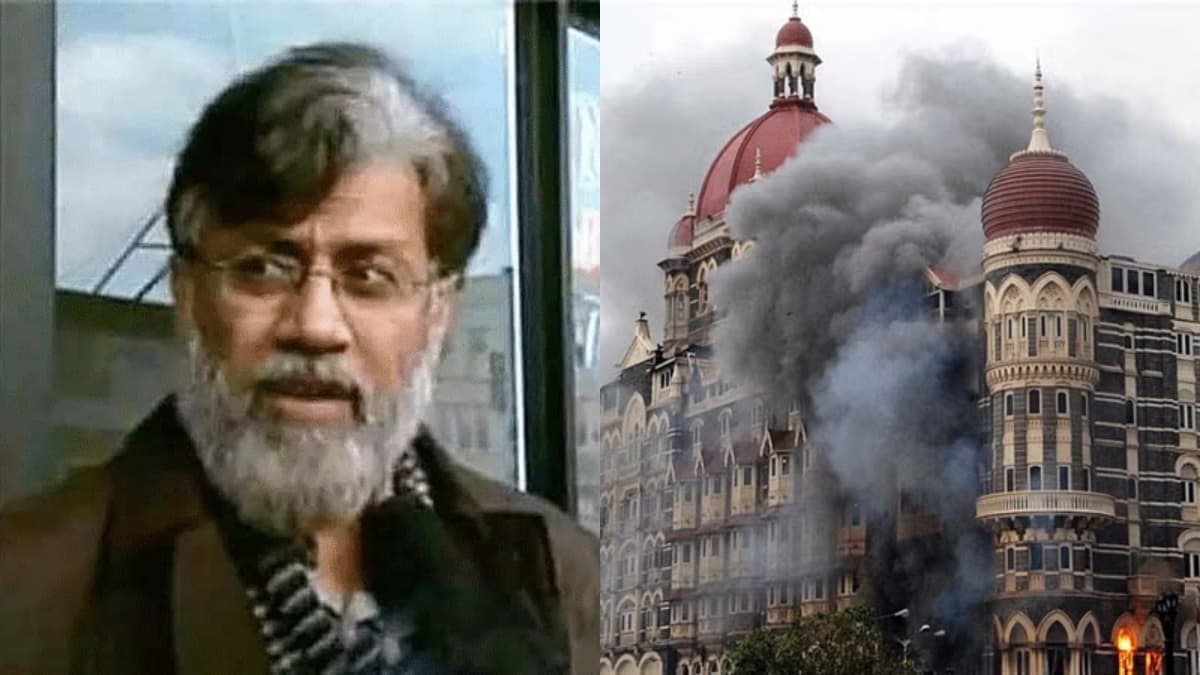
Tahawwur Rana, a key conspirator in the 2008 Mumbai terror attacks, told a Delhi court that he does not want any lawyer who seeks “name and fame” through his high-profile case.
The Pakistani-origin former army doctor, extradited from the US just days ago, made the unusual request during his first appearance before the NIA Special Court following his formal arrest.

Rana, 64, stands accused of facilitating reconnaissance missions for the Lashkar-e-Taiba (LeT) by aiding his childhood friend David Coleman Headley — the operative who scouted targets for the deadly assault that killed over 170 people in Mumbai.
Sixteen years after the attacks, Rana was handed over to Indian authorities and taken into custody at 10 pm on April 10.
The National Investigation Agency (NIA) sought 20 days of custodial interrogation. Additional Sessions Judge (NIA) Chander Jit Singh granted 18, and upheld Rana’s demand for discretion in legal representation.
“The accused has submitted that there should not be any counsel who may appear to earn name and fame through him,” the judge noted in his order. “Though Legal Service Counsels are present under the Legal Services Authority Act, 1987, the request of the accused is accepted.”
In a stern directive aimed at preserving the integrity and privacy of legal proceedings, the court barred Legal Services Counsel from speaking to the media in any form. “If their identities are not already known to the press, they shall not be disclosed,” the order added.
The court further directed that Rana be given a soft-tip writing instrument and paper to communicate instructions to his counsel, acknowledging a late-night oral hearing that concluded at 11:50 pm on April 10, with the written order signed off around 2 am on April 11.
Rana is being held in a fortified, centrally air-conditioned cell at the NIA headquarters in the CGO Complex, the same high-security zone where gangster Lawrence Bishnoi was previously incarcerated.
His ground-floor lock-up is under 24×7 surveillance by CISF personnel and NIA officers. Officials confirmed that basic amenities, including meals from the agency canteen, are being provided.
Rana was initially arrested in Chicago in October 2009, nearly a year after the Mumbai carnage. The US Department of Justice (DoJ), in a statement released on April 11, outlined India’s allegations stating that Rana enabled Headley to pose as an immigration consultant by setting up a sham branch office in Mumbai.
This front allowed Headley to conduct detailed reconnaissance of targets while evading Indian scrutiny.
“On two separate occasions, Rana allegedly helped Headley prepare and submit visa applications to Indian authorities that contained information he knew to be false,” the DoJ said, adding that documents used to establish the fake business were funneled through an unwitting business associate of Rana.
As Rana’s trial inches closer, Indian authorities are walking a tightrope between securing justice for one of the country’s darkest terror chapters and navigating the legal sensitivities of a case under global scrutiny.
Hunter of Underwater Threats: Why INS Mangrol Is Important for the Indian Navy
Delhi Protests Renew Debate Over Constitutional Right to Peaceful Assembly

Household Inflation Rises to 5.54% in September as Price Pressures Spread
Delhi High Court Allows Urgent Hearing on Protest Site Guidelines
India Rejects China’s Objection to Standardised Names of Places in Ladakh
Karnataka student elections return after 37 years: Why political restrictions and university polls remain contentious
Global education is shifting from simply going abroad to creating more flexible routes to opportunity
Delhi Police files FIR against Congress MP Bimol Akoijam over JNU sexual harassment allegations
Utkal University tightens security after late-night explosions ahead of student polls
IET India Scholarship Award 2026: DTU’s Kush Garg wins top honor for AI device for neurodivergent children

Hunter of Underwater Threats: Why INS Mangrol Is Important for the Indian Navy
Delhi Protests Renew Debate Over Constitutional Right to Peaceful Assembly
Household Inflation Rises to 5.54% in September as Price Pressures Spread
Delhi High Court Allows Urgent Hearing on Protest Site Guidelines
India Rejects China’s Objection to Standardised Names of Places in Ladakh
Karnataka student elections return after 37 years: Why political restrictions and university polls remain contentious
Global education is shifting from simply going abroad to creating more flexible routes to opportunity
Delhi Police files FIR against Congress MP Bimol Akoijam over JNU sexual harassment allegations
Utkal University tightens security after late-night explosions ahead of student polls
IET India Scholarship Award 2026: DTU’s Kush Garg wins top honor for AI device for neurodivergent children
Copyright© educationpost.in 2026 All Rights Reserved.