


The Mumbai launch brings mentors from academia, business, governance and social impact together to support young leaders through a decade-long nation-building initiative.
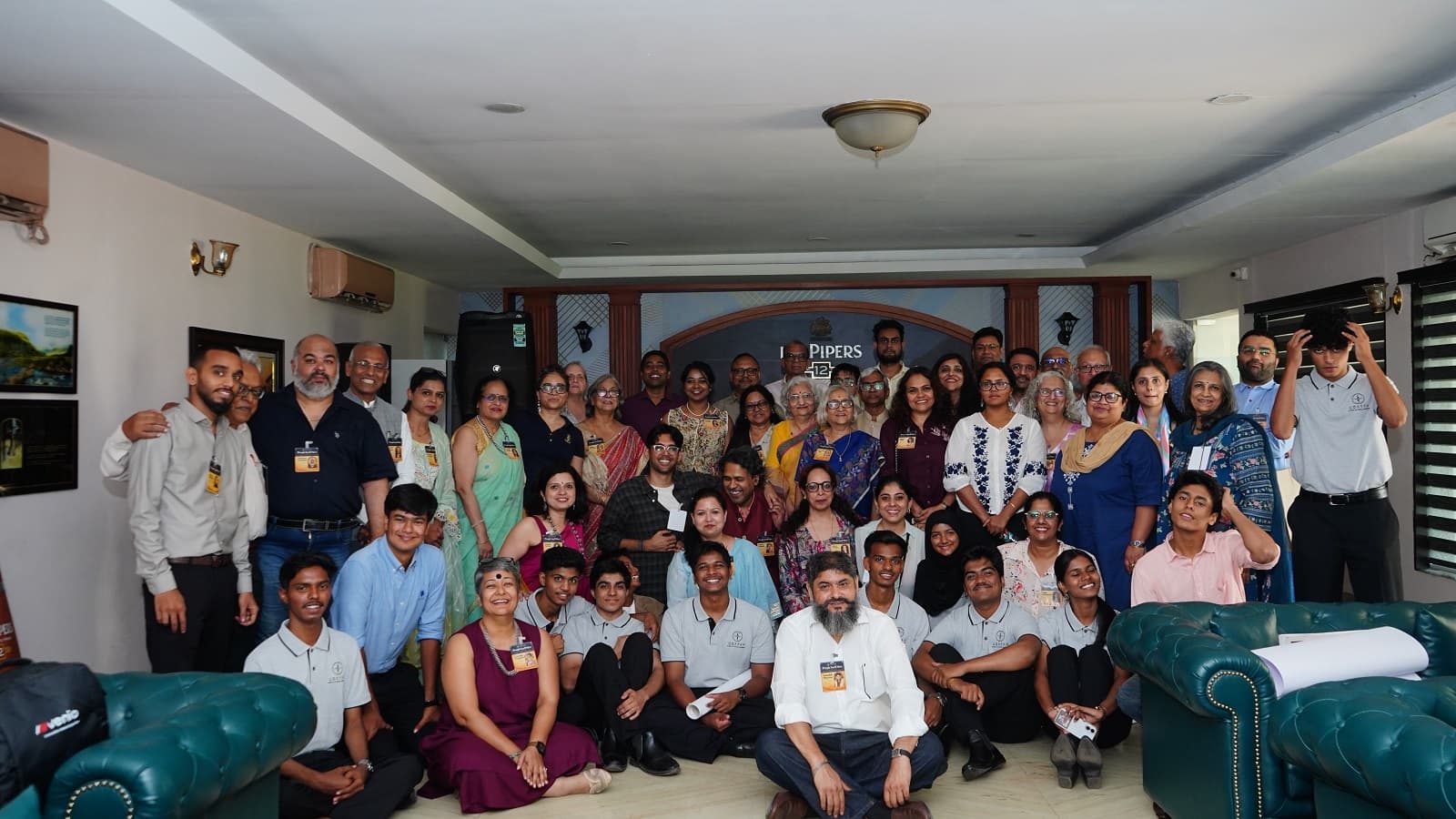
The Udayan Movement has been launched as a ten-year initiative to develop 1,000 young institution builders who can create enterprises, establish organisations and contribute to India's development goals under the vision of Viksit Bharat 2047.
The initiative was introduced at a gathering in Mumbai on October 10, 2026, bringing together university leaders, entrepreneurs, corporate leadership mentors, lawyers, administrators and social-sector professionals alongside students from the first cohort of the Udayan School of Social Leadership (USSL).

The movement aims to create a support network in which experienced professionals guide young people beyond conventional classroom education. Its approach emphasises character development, practical problem-solving, ethical leadership and the ability to build institutions that generate employment and deliver lasting social impact.
According to the organisers, the initiative draws inspiration from India's traditional gurukul system, in which the development of a leader was supported by an entire community rather than a single teacher or institution.
The movement is built around the principle that nation-building begins with the development of individuals. It seeks to bring together people at different stages of life to help young leaders acquire the judgement, experience and relationships needed to build sustainable organisations.
The movement's central programme is the Udayan School of Social Leadership, based in Pune. The school's official website describes USSL as a selective leadership-development programme that combines practical work experience, mentorship and academic qualifications
According to the press release, the programme is designed for students after Class 10 and runs for five years, combining junior college and degree-level education. The school also describes an entry pathway for students after Class 12.
Its educational philosophy draws on Kautilya's Arthashastra, Nyaya Darshan and the traditional gurukul model. Rather than focusing exclusively on academic performance, the programme aims to develop judgement, self-discipline, ethical decision-making and the ability to solve real-world problems.
The Udayan School forms part of the Wonder School Learning Collective and builds on work undertaken by the Potters Earth Foundation. The organisers say the foundation's initiatives have reached approximately two lakh students and 50,000 teachers over 15 years; these figures are based on the supplied press release.
The Udayan Movement has set a ten-year target of developing 1,000 young institution builders. It also aims to mentor an additional 5,000 founders within their communities.
These are targets announced by the organisers, rather than independently verified outcomes.
The initiative's underlying argument is that improving employability requires more than preparing young people to fill existing vacancies. It also requires supporting entrepreneurs and leaders who can establish enterprises, build institutions and create jobs for others.
The press release cites an estimate that approximately 14.58 crore children and young people in India today will be seeking work by 2046, referencing the United Nations' World Population Prospects 2024, the Ministry of Statistics and Programme Implementation's Periodic Labour Force Survey 2023–24, and a NITI Aayog report on skilling for Viksit Bharat 2047.
However, the precise figure and its methodology could not be independently confirmed from the cited material. It should therefore be attributed to the organisers' calculation rather than presented as an independently established forecast.
The first USSL cohort has been working on potential enterprise models after studying policy documents related to Viksit Bharat 2047, attending sessions on governance and law, learning from industry professionals and conducting field research.
The press release highlights five proposed projects:
AnnaGati: A model to redirect surplus food to nutritionally vulnerable urban communities while creating income opportunities for local women.
BeejSwaraj: An initiative focused on agricultural value chains and helping farmers retain a greater share of the value they generate.
DishaSetu: A youth guidance concept aimed at connecting career direction, practical skills and financial awareness.
FishLoops: A circular-economy project exploring ways to recover value from fish-market waste in Pune.
Voice of Cashew: A proposal to transform discarded cashew apples and shells into useful products while supporting women's skills, safety and economic participation.
These concepts remain proposed enterprise ideas, according to the supplied release. The organisers say the next stage will involve working with mentors to develop them into viable social enterprises.
Each project is expected to undergo three tests: whether it meets ethical standards, whether its financial model is sustainable, and whether it operates legally and treats stakeholders fairly.
The founding circle is expected to remain involved as the students refine their projects. The initiative brings together professionals with experience in corporate leadership, entrepreneurship, education, governance and social impact.
Leadership mentor Rajesh Kamath highlighted the importance of self-discipline before assuming responsibility for others. Drawing on Kautilya's Arthashastra, he said the programme encourages students to evaluate their ideas through questions of ethical conduct, financial feasibility and their impact on the wider community.
The organisers view this combination of practical experience and values-based leadership as central to developing young people who can establish institutions capable of operating beyond the life of a single programme or funding cycle.
The Udayan Movement positions its work within the broader national ambition of building a developed India by 2047. The Government of India has also articulated the Viksit Bharat 2047 vision and outlined priority areas for national development, including manufacturing, agriculture and food production.
The movement's contribution, as described by its organisers, is to focus on the people and institutions needed to turn long-term ambitions into practical initiatives.
Whether it achieves its stated targets will depend on the development of its student cohort, the viability of its proposed enterprises, the quality of its mentorship network and the ability of the resulting institutions to sustain their work over time.
.jpg&w=256&q=75)
From Class 8 to hospital owner: Rajasthan Police expose alleged fake doctor registration

ENTOD Pharmaceuticals Partners with DPGU and BNCP to Advance Pharmaceutical Research

IIT Kanpur Concludes Samanvay 2026, Announces Gates Foundation Partnership on Affordable Diagnostics

Who will lead Keralam's universities? Government begins steps to appoint permanent VCs

OILF, Rangeet Expand SEEK Curriculum to 180 Schools Across Mumbai
From Class 8 to hospital owner: Rajasthan Police expose alleged fake doctor registration
Who will lead Keralam's universities? Government begins steps to appoint permanent VCs
%20(1)%20(1).jpeg&w=256&q=75)
Why does cracking JEE Advanced depend on coaching? IIT Kanpur Director calls for a revamp
.jpg&w=256&q=75)
NEET-PG 2026 answer key row: Supreme Court seeks NBEMS response on missing question papers
.png&w=256&q=75)
42 Iraqi universities feature in QS Arab Region University Rankings 2027

From Class 8 to hospital owner: Rajasthan Police expose alleged fake doctor registration
ENTOD Pharmaceuticals Partners with DPGU and BNCP to Advance Pharmaceutical Research
IIT Kanpur Concludes Samanvay 2026, Announces Gates Foundation Partnership on Affordable Diagnostics
Who will lead Keralam's universities? Government begins steps to appoint permanent VCs
OILF, Rangeet Expand SEEK Curriculum to 180 Schools Across Mumbai
From Class 8 to hospital owner: Rajasthan Police expose alleged fake doctor registration
Who will lead Keralam's universities? Government begins steps to appoint permanent VCs
Why does cracking JEE Advanced depend on coaching? IIT Kanpur Director calls for a revamp
NEET-PG 2026 answer key row: Supreme Court seeks NBEMS response on missing question papers
42 Iraqi universities feature in QS Arab Region University Rankings 2027
Copyright© educationpost.in 2026 All Rights Reserved.