


The four-day national competitions witnessed participation from 76 student teams, with launch numbers increasing significantly from last year as young innovators showcased their space engineering skills.
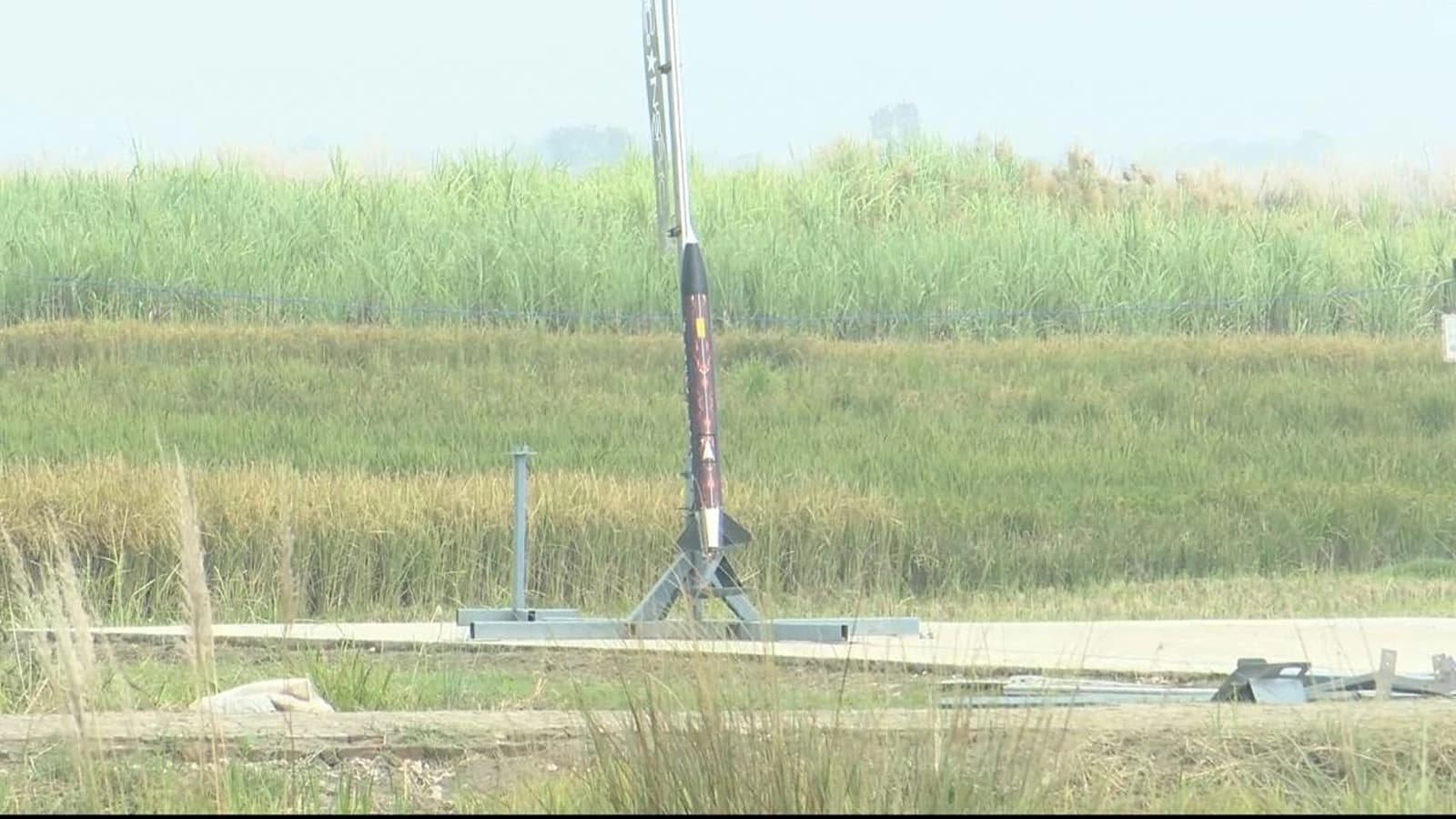
Student participation in India's space technology and rocketry competitions has increased, with teams launching 43 CanSats and 18 model rockets at the national-level student competitions organised by the Indian National Space Promotion and Authorisation Centre (IN-SPACe) in Kushinagar, Uttar Pradesh.
A total of 76 student teams from across the country participated in the four-day event, held from October 31 to November 3, 2026. The competitions recorded a notable increase compared with the previous edition, when students launched 24 CanSats and 13 model rockets.

The event featured the third CAN-7USAT India Student Competition and the second National Model Rocketry India Student Competition, known as the IN-SPACe Narayani Rocketry Cup 2026.
Participants were required to design, develop, assemble and test their own space-related hardware. Their projects were assessed by expert panels comprising representatives from the Indian Space Research Organisation (ISRO), Defence Research and Development Organisation (DRDO), IN-SPACe, industry and academic institutions.
The competitions aimed to provide students with practical exposure to space engineering and encourage innovation beyond conventional educational settings. Hosting the event in Kushinagar also brought national-level scientific and technological activities to a predominantly rural region of eastern Uttar Pradesh.
Shashank Mani Tripathi, Member of Parliament from Deoria, highlighted the importance of taking scientific opportunities to rural communities and encouraging students to apply their technical knowledge to real-world challenges.
He expressed his ambition to establish a permanent space experimentation centre in the region, which would allow young people to participate in rocketry, scientific experiments and other space-related activities throughout the year.
Tripathi said that technology should benefit ordinary citizens and that such competitions could help connect scientific innovation with local communities. He also emphasised the role of young people in driving innovation, entrepreneurship and nation-building.
The CanSat projects were designed around a 7U satellite-bus configuration, giving participating teams the opportunity to integrate payloads and Guidance, Navigation and Control (GNC) systems into their experimental models.
The student-built systems carried sensors to collect important flight data, including temperature and atmospheric pressure. Several teams also incorporated cameras to capture photographs and videos of the surrounding terrain and designated landing areas.
Some participants explored additional applications, including the use of aerial imagery for vegetation monitoring. These experiments gave students practical exposure to satellite instrumentation, data collection and potential applications of space technology.
The model rocketry category featured 18 student-developed rockets. Participants were evaluated on different aspects of rocket engineering, including conceptual design, development, testing, innovation, flight precision and overall system performance.
The competition provided an opportunity for students to understand the engineering challenges involved in developing and launching rockets, while applying their classroom knowledge to practical projects.
Dr Vinod Kumar, Director of the Promotion Directorate at IN-SPACe, said the students' sustained efforts and preparation had contributed to the successful completion of the competitions.
He noted that the latest edition recorded 43 CanSat launches and 18 model rocket flights, compared with 24 CanSats and 13 rockets in the previous year. He added that such initiatives help students evaluate their technical abilities, gain hands-on experience and contribute to India's expanding space ecosystem.
Several educational institutions secured top positions in the two national competitions. The winners were announced in the CanSat and model rocketry categories.
The third edition of the CAN-7USAT India Student Competition recognised the following institutions:
| Position / Award | Winning institution |
|---|---|
| First place | Dr M.G.R. Educational and Research Institute, Chennai |
| Second place | C.V. Raman Global University, Bhubaneswar |
| Third place | BMS College of Engineering, Bengaluru |
| Best Team Award | Central University of Jammu |
| Best Design Award | BITS Pilani, Hyderabad Campus |
In the second National Model Rocketry India Student Competition, the results were as follows:
| Position / Award | Winning institution |
|---|---|
| First place | Nirma University, Ahmedabad |
| Second place | Karunya Institute of Technology and Sciences, Coimbatore |
| Third place | Delhi Technological University, Delhi |
| Best Team Award | Dwarkadas J. Sanghvi College of Engineering, Mumbai |
| Best Design Award | Pimpri Chinchwad College of Engineering, Pune |
The first-ranked teams in both competitions received cash prizes of ₹10,000 each. The awards were supported by EV Society Bengaluru, while iTelematics Software Private Limited participated as the industry partner.
The Indian National Space Promotion and Authorisation Centre (IN-SPACe) is an autonomous agency under the Department of Space, Government of India. Established on June 24, 2020, it facilitates and promotes the participation of non-government entities in India's space sector.
Its responsibilities include authorising and supporting private organisations involved in satellite and launch vehicle manufacturing, space-based services, ground station development and the use of space infrastructure.
Headquartered in Ahmedabad, IN-SPACe works through specialised directorates covering promotion, technical activities, programme management and authorisation. Its initiatives aim to expand private-sector participation and strengthen India's space ecosystem.
HABIT Foundation Hosts INNOVATE 2026 in Mumbai to Showcase Student Innovations and Prototypes

Want to prepare for married life? Goa college introduces a certificate course on relationships
Vedanta Power Wins Two India CSR Awards 2026 for Healthcare and Agricultural Development

University of Cumbria appoints Susan Foyle as honorary Professor of Practice

NCTE forms panel to include ITEP graduates in CTET, STET eligibility criteria
Want to prepare for married life? Goa college introduces a certificate course on relationships
NCTE forms panel to include ITEP graduates in CTET, STET eligibility criteria

Australia to introduce Holocaust and Jewish history lessons in 2027 curriculum overhaul

India Launches Three Homegrown AI Models; Dhīr 2B and 5B Can Work Without Internet
IIT Delhi announces new measures to strengthen student mental health support system

HABIT Foundation Hosts INNOVATE 2026 in Mumbai to Showcase Student Innovations and Prototypes
Want to prepare for married life? Goa college introduces a certificate course on relationships
Vedanta Power Wins Two India CSR Awards 2026 for Healthcare and Agricultural Development
University of Cumbria appoints Susan Foyle as honorary Professor of Practice
NCTE forms panel to include ITEP graduates in CTET, STET eligibility criteria
Want to prepare for married life? Goa college introduces a certificate course on relationships
NCTE forms panel to include ITEP graduates in CTET, STET eligibility criteria
Australia to introduce Holocaust and Jewish history lessons in 2027 curriculum overhaul
India Launches Three Homegrown AI Models; Dhīr 2B and 5B Can Work Without Internet
IIT Delhi announces new measures to strengthen student mental health support system
Copyright© educationpost.in 2026 All Rights Reserved.