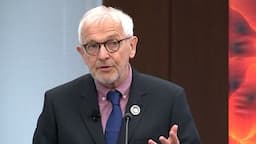
Billionaire philanthropist and Microsoft co-founder Bill Gates has expressed optimism about the future of Alzheimer’s research, saying the world is entering a “golden age” in the fight against the disease as advances in diagnostics, treatments and artificial intelligence transform the field.
In a recent post on his Gates Notes platform and LinkedIn, Gates reflected on his personal connection to the disease, recalling the impact of Alzheimer’s on his father, who died in 2020. He said recent scientific progress has given researchers and families reasons for hope after decades of limited breakthroughs.

According to Gates, one of the most significant developments has been the emergence of simple blood tests that can help identify Alzheimer’s disease. These tests are expected to make diagnosis easier and faster compared to traditional methods such as PET scans and spinal taps, which have historically been expensive and time-consuming.
He also pointed to improvements in clinical trial recruitment. Gates noted that new diagnostic tools are enabling researchers to identify potential participants more efficiently, allowing trials to enrol larger numbers of patients and potentially speed up the development of new therapies.
Another milestone highlighted by Gates is the approval of the first treatments shown to modestly slow the progression of Alzheimer’s disease. While not a cure, these therapies represent an important step forward in managing the condition, particularly when administered in its early stages.
Gates also underscored the growing role of artificial intelligence in medical research. He said AI tools are helping scientists analyse vast datasets, uncover patterns and accelerate research workflows, potentially leading to faster discoveries in Alzheimer’s and other neurodegenerative diseases.
The philanthropist said he is closely watching ongoing clinical trials exploring whether existing Alzheimer’s drugs could significantly delay or even prevent the onset of the disease when used early. Positive results from such studies, he suggested, could fundamentally change how Alzheimer’s is treated in the future.
Alzheimer’s disease remains one of the world’s most pressing public health challenges. Gates noted that the number of people living with the disease in the United States has risen substantially in recent years, underscoring the need for continued investment in research and innovation.
Despite the challenges ahead, Gates said he has never been more optimistic about the prospects for Alzheimer’s research, citing advances in science, data sharing and AI-driven discovery as key drivers of future progress.






.jpg&w=256&q=75)