


The initiative combines research partnerships, specialized degree programs and government support, highlighting how bilateral academic institutions can strengthen scientific collaboration, diplomatic relations and international student exchanges.
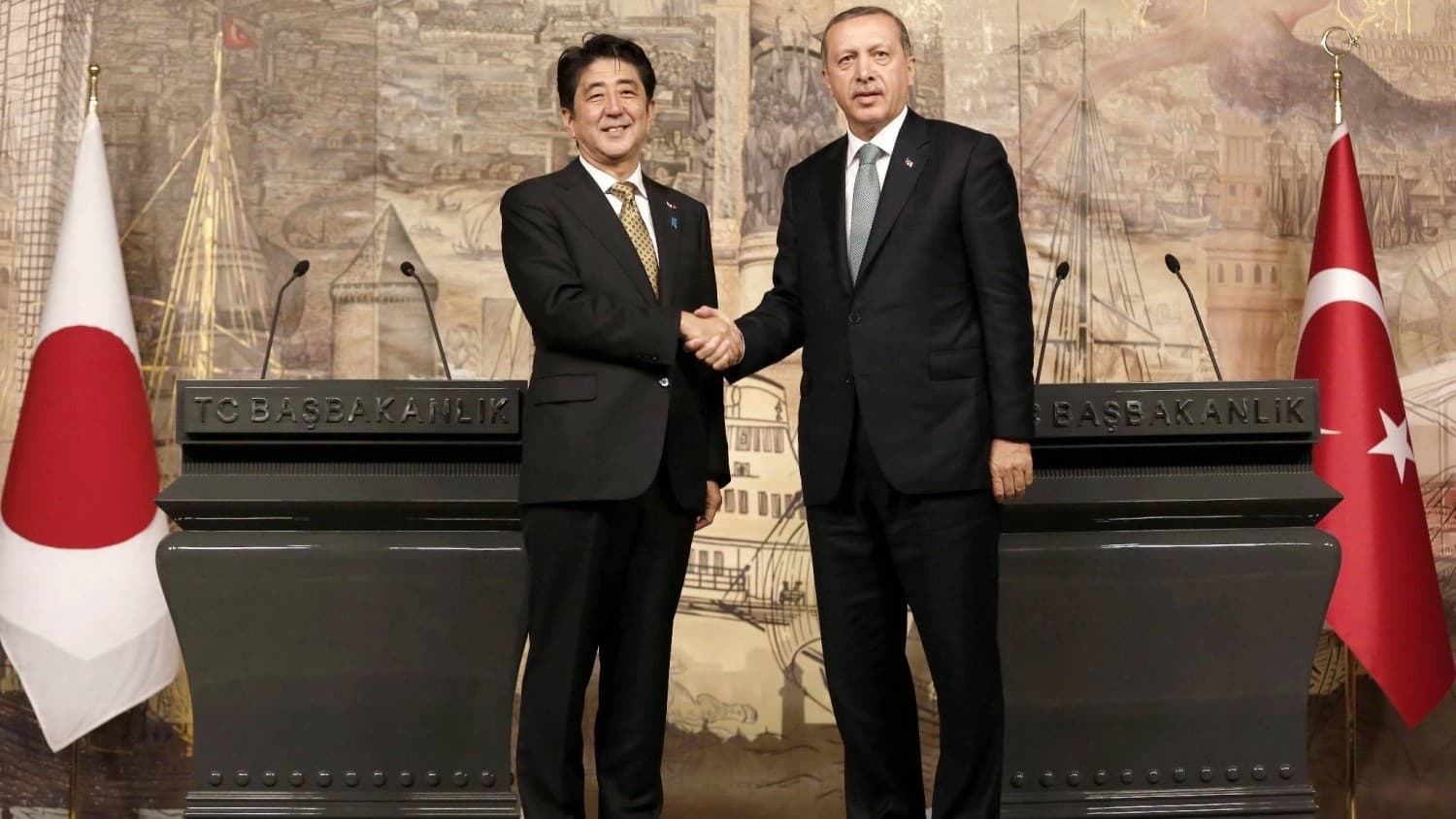
The Turkish-Japanese Science and Technology University has officially opened in Ankara, Turkey, marking the launch of a bilateral higher education initiative focused on artificial intelligence (AI), earthquake science, engineering, and other technological fields.
Established jointly by the Japanese and Turkish governments, the university held its opening ceremony on Oct 14.

Around 100 Turkish students will study at the institution during its initial phase, with Japan providing support that includes research equipment and other resources to strengthen its academic and research capabilities.
Yasutaka Nakasone, Japan's state minister for foreign affairs, attended the ceremony and highlighted Turkey's growing international presence as a member of both the Group of 20 (G20) and the North Atlantic Treaty Organization (NATO).
Nakasone expressed hope that the new institution would serve as a bridge connecting Japan, Turkey, and the wider world, strengthening cooperation between the two countries through education, scientific research, and technological development.
The university's opening follows a 13-year period of planning and delays linked to issues concerning its location and research focus. Its establishment was agreed upon in 2013 by then-Japanese Prime Minister Shinzo Abe and then-Turkish Prime Minister Recep Tayyip Erdogan, who is now Turkey's president.
University to offer doctoral programs in AI and earthquake science
During its first year, the Turkish-Japanese Science and Technology University will introduce doctoral programs in AI digital technology and earthquake disaster science.
The programs are intended to develop advanced expertise in emerging technologies and scientific fields relevant to technological innovation and disaster research.
Alongside its doctoral offerings, the university will provide four-year undergraduate engineering programs covering disciplines such as environmental science and materials science.
The combination of undergraduate engineering education and doctoral-level research is expected to establish an academic foundation for the institution's future development.
Its initial programs will focus on technology and scientific disciplines, with Japanese government assistance supporting research activities and the provision of equipment.
The university is also expected to undertake joint research projects with the Institute of Science Tokyo, creating an additional channel for academic and scientific collaboration between the two countries.
Japan and Turkey strengthen academic and research cooperation
The establishment of the university reflects a bilateral effort by Japan and Turkey to expand cooperation in higher education, scientific research, and technological development.
By supporting Turkish students in fields such as artificial intelligence, earthquake science, environmental science, and materials science, the institution aims to bring education and research together within a shared academic framework.
Japan's provision of research equipment and its planned collaboration with the Institute of Science Tokyo will support the university's research activities as it begins operations.
The opening also advances a project that took more than a decade to move from an agreement between the two countries' leaders to the launch of an operating institution. Although the university was agreed upon in 2013, concerns involving its location and academic focus delayed its opening for 13 years.
With its initial student intake, doctoral courses, undergraduate engineering programs, and joint research plans, the Turkish-Japanese Science and Technology University begins operations as a new platform for educational and scientific cooperation between Japan and Turkey.
Japan's soft-power strategy: Could India-Japan cooperation follow?
The opening highlights Japan's use of higher education and scientific research to strengthen international ties.
The Ankara campus also raises the possibility of deeper India-Japan collaboration through joint research centers, specialized academic programs, and university partnerships in artificial intelligence, engineering, and disaster science.
Turkish-Japanese Science and Technology University opens in Ankara after 13-year wait

SRH University Begins Winter Semester 2026-27, Welcomes Indian Students to Germany
.jpg&w=256&q=75)
Western Australia weighs merger of three major universities as Curtin objects
Keralam to Decide on PM SHRI Scheme After Sub-Committee Report, Says Education Minister

UNESCO, Lebanon move to revive public libraries as community learning hubs
Turkish-Japanese Science and Technology University opens in Ankara after 13-year wait
China races to place graduates as it readies its 2027 jobs plan
.jpg&w=256&q=75)
Irish university strikes force class cancellations across the country
Philippines audit agency flags lapses in CHEd scholarship programs
Singapore Management University’s Executive MBA enters global top 50 in Financial Times ranking

Turkish-Japanese Science and Technology University opens in Ankara after 13-year wait
SRH University Begins Winter Semester 2026-27, Welcomes Indian Students to Germany
Western Australia weighs merger of three major universities as Curtin objects
Keralam to Decide on PM SHRI Scheme After Sub-Committee Report, Says Education Minister
UNESCO, Lebanon move to revive public libraries as community learning hubs
Turkish-Japanese Science and Technology University opens in Ankara after 13-year wait
China races to place graduates as it readies its 2027 jobs plan
Irish university strikes force class cancellations across the country
Philippines audit agency flags lapses in CHEd scholarship programs
Singapore Management University’s Executive MBA enters global top 50 in Financial Times ranking
Copyright© educationpost.in 2026 All Rights Reserved.