


Russia is preparing new legislative measures to tighten oversight of private universities, with the Ministry of Science and Higher Education and the Federal Service for Supervision in Education and Science (Rosobrnadzor) working on proposals to address concerns about education quality.
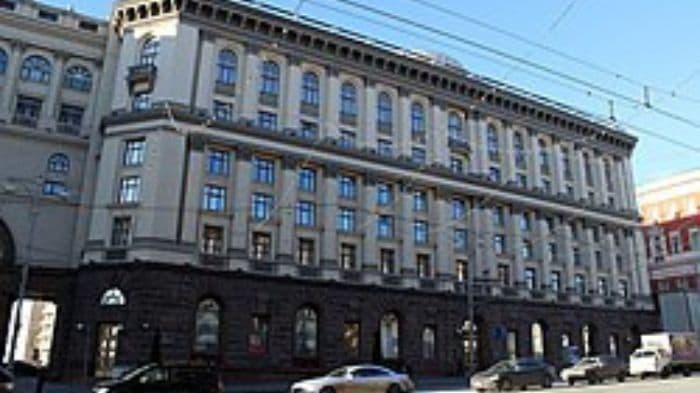
Russia is preparing a package of legislative measures to strengthen oversight of private universities following a sharp increase in the number of institutions receiving licences and programme accreditation, officials said on Oct 14.
The proposed measures are being developed by the Ministry of Science and Higher Education and the Federal Service for Supervision in Education and Science, known as Rosobrnadzor.

Rosobrnadzor head Anzor Muzaev announced the plans during a government hour at Russia’s Federation Council, the upper house of parliament. He said the authorities intended to put several draft laws forward for public discussion.
According to Muzaev, the number of private educational organisations receiving licences increased by 15% between 2021 and 2025. The number of private institutions obtaining accreditation for at least one programme rose by 39% over the same period.
He attributed the growth partly to changes in the licensing process, which he said had made it easier for institutions to enter the sector.
Russia has 345 private universities
Science and Higher Education Minister Valery Falkov said Russia currently has 345 private universities, comprising 245 main institutions and 100 branches.
Falkov acknowledged that some private universities provide high-quality education but raised concerns about standards across the sector. He said the average Unified State Exam (EGE) score of students entering private universities in 2026 was seven points lower than that of students entering state universities.
The EGE is Russia’s standardised examination used for university admissions.
Falkov also pointed to existing restrictions on paid admissions. Authorities can limit or prohibit fee-paying enrolment at institutions and in programmes where admission scores are low or graduate employment outcomes raise concerns.
He said these restrictions alone were insufficient and that the government was developing a broader roadmap to address quality issues.
Bill proposes independent assessment of students
Muzaev said a bill introducing independent assessments of students’ learning outcomes had already passed its first reading in the State Duma, Russia’s lower house of parliament.
The proposed mechanism would allow regions to assess what students retain from their studies and use the results to inform decisions about educational quality.
Muzaev expressed hope that the bill would be adopted before the end of 2026. However, it had not completed the legislative process at the time of his announcement.
Further legislative proposals are expected to address the regulation of private universities, although officials have not yet provided a complete list of the planned measures.
Federation Council speaker calls for licensing pause
Separately, Federation Council speaker Valentina Matviyenko urged the government to temporarily suspend the licensing of new higher education institutions until the regulatory framework is reviewed and order is restored to the sector.
Matviyenko criticised what she described as an overly simplified licensing process and argued that it had allowed institutions offering inadequate education to enter the market.
She said experts consulted on the issue had identified only 10 institutions among approximately 350 private universities that they considered to meet the standards expected of higher education institutions.
Her call is a recommendation to the government, not an announced nationwide suspension of university licensing.
The proposals come as Russian authorities seek to tighten oversight of private higher education while distinguishing institutions with weak academic standards from private universities that provide recognised, high-quality programmes.

UAE trains university faculty to bring AI applications into classrooms
Russia extends higher education reform pilot to 2030, expands it to 17 universities
Russia prepares stricter rules for private universities amid quality concerns

Philippines audit agency flags lapses in CHEd scholarship programs

Singapore Management University’s Executive MBA enters global top 50 in Financial Times ranking
Philippines audit agency flags lapses in CHEd scholarship programs
Singapore Management University’s Executive MBA enters global top 50 in Financial Times ranking

NUS launches clinical psychology program to expand Singapore’s mental healthcare workforce
Wits researchers develop light-powered neural network to decode complex signals
How China is expanding vocational education through undergraduate degrees, industry partnerships and financial aid

UAE trains university faculty to bring AI applications into classrooms
Russia extends higher education reform pilot to 2030, expands it to 17 universities
Russia prepares stricter rules for private universities amid quality concerns
Philippines audit agency flags lapses in CHEd scholarship programs
Singapore Management University’s Executive MBA enters global top 50 in Financial Times ranking
Philippines audit agency flags lapses in CHEd scholarship programs
Singapore Management University’s Executive MBA enters global top 50 in Financial Times ranking
NUS launches clinical psychology program to expand Singapore’s mental healthcare workforce
Wits researchers develop light-powered neural network to decode complex signals
How China is expanding vocational education through undergraduate degrees, industry partnerships and financial aid
Copyright© educationpost.in 2026 All Rights Reserved.