


Around 8,000 university and polytechnic employees are taking coordinated industrial action, calling for better pay, greater job security and a long-term funding plan ahead of the November 7 general election.
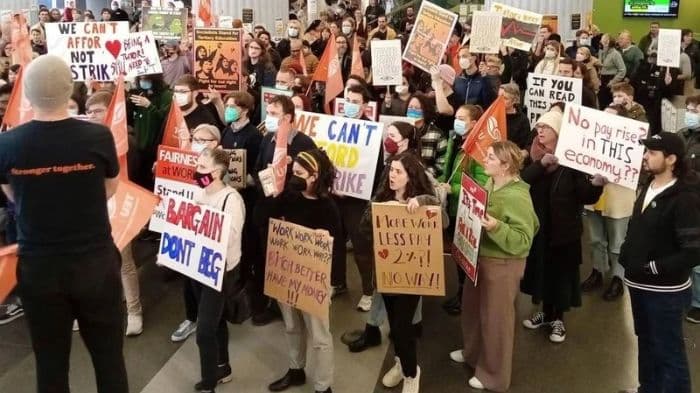
Thousands of university and polytechnic staff across New Zealand are taking strike action on Oct 21 over pay and working conditions, putting pressure on political parties to address concerns about funding and employment security in the tertiary education sector ahead of next month's general election.
The Tertiary Education Union (TEU) estimates that around 8,000 members will participate in the half-day strike, scheduled from 1.15 pm to 5 pm local time. It is the first time university and polytechnic staff in the country have coordinated strike action together.

The union said pay offers across the sector have failed to keep pace with the rising cost of living. It has also raised concerns about insecure employment, particularly fixed-term and casual contracts, and called for a comprehensive, long-term investment plan for tertiary education.
TEU national secretary Amy Ross said universities needed to address employment conditions to sustain teaching and research. The union is urging political parties to commit to better funding for the sector as they set out their positions before the Nov 7 election.
Parties outline different approaches to higher education
The strike comes as education funding and student debt feature in election proposals, although several parties have yet to publish their full policies on higher education.
The Opportunity Party has proposed a 10-year plan for education and health. Its candidate Ben Wylie-van Eerd said the party would seek an additional NZ$400 million a year in government research and development spending, with the aim of raising it to 0.6% of gross domestic product.
The proposal includes additional baseline and competitive funding, with potential benefits for tertiary institutions and early-career researchers.
The Green Party has pledged to increase reliable research funding to above the Organisation for Economic Co-operation and Development (OECD) average as a share of GDP. Its proposals also include changes to tertiary funding to support course availability, teaching quality, student services, staff pay and conditions, and participation by disabled students.
Other proposals include a universal student income and working towards fee-free tertiary education and student debt write-off.
The opposition Labour Party has proposed reducing student loan balances by 10% and restoring eligibility for grants for humanities and social science research. Its education spokesperson, Shanan Halbert, has also pledged to revive a review of higher education funding.
Prime Minister Christopher Luxon has said the National Party would reduce the student loan repayment rate from 12% to 10% if it remains in government. He has also indicated plans for stronger enforcement against New Zealand expatriates who fail to repay student loans.
The National Party did not participate in the TEU's election forum.
Job security remains a concern
Alongside pay, the union has highlighted the prevalence of temporary employment in universities. TEU president-tiriti Ti Lamusse said the lack of secure roles was affecting staff and called for improved sector funding.
Earlier this month, the union said about 9,500 members involved in collective agreement negotiations had voted in favour of strike action. The current action involves approximately 8,000 members, according to the union.
The dispute comes amid broader debate over the resources available to New Zealand's tertiary institutions and the terms under which they employ academic and professional staff.
The election gives unions and university employees an opportunity to press parties on whether their proposed funding plans would provide more stable jobs and support teaching and research.
The Nov 7 vote will determine the next government and the direction of its education and research policies. The strike itself, however, does not establish whether any party's proposals would resolve the union's concerns.

How penguin droppings could be changing Antarctica’s snowy landscape, study finds

Housing costs, education and austerity fuel protests across Europe

Hundreds of websites go offline as critical PHP flaws trigger global cyber alert

Anti-Putin cyberattack disrupts nationwide school assessments in Russia

SRH University begins 2026–27 winter semester with Indian students across German campuses
How penguin droppings could be changing Antarctica’s snowy landscape, study finds

Delhi Police may seek further custody of CJP leaders Saurav Das, Ashutosh Ranka

SBI probes data leak after personal details in 3,897 customer records surface on dark web

Sharjah schools set boundaries for AI use in homework and exams

Former MIT scientist wins $6 million defamation verdict in misconduct dispute

How penguin droppings could be changing Antarctica’s snowy landscape, study finds
Housing costs, education and austerity fuel protests across Europe
Hundreds of websites go offline as critical PHP flaws trigger global cyber alert
Anti-Putin cyberattack disrupts nationwide school assessments in Russia
SRH University begins 2026–27 winter semester with Indian students across German campuses
How penguin droppings could be changing Antarctica’s snowy landscape, study finds
Delhi Police may seek further custody of CJP leaders Saurav Das, Ashutosh Ranka
SBI probes data leak after personal details in 3,897 customer records surface on dark web
Sharjah schools set boundaries for AI use in homework and exams
Former MIT scientist wins $6 million defamation verdict in misconduct dispute
Copyright© educationpost.in 2026 All Rights Reserved.