


Universities Australia has warned that proposed changes to the country's higher education regulatory framework could undermine institutional autonomy by giving the national regulator greater authority to investigate institutions, issue binding directions and impose financial penalties.

Universities in Australia have raised concerns over proposed legislation that would significantly expand the powers of the country's higher education regulator, warning that the changes could give it excessive control over institutional decisions.
Universities Australia (UA), the peak body representing Australian universities, has described the proposed amendments to the Tertiary Education Quality and Standards Agency (TEQSA) Act as a potential threat to institutional autonomy. The organisation has urged the federal government to provide universities with more time to examine the proposals and suggest safeguards before introducing the legislation.

Under the proposed changes, TEQSA would receive broader powers to investigate systemic risks across universities, including governance failures, racism and campus safety concerns. It could also issue legally enforceable directions requiring institutions to take specific steps to address regulatory breaches.
The proposals are intended to allow the regulator to respond to problems before they develop into wider institutional failures. However, universities have questioned whether the expanded authority could interfere with decisions that institutions should be able to make independently.
TEQSA could receive wider investigative and enforcement powers
The proposed amendments would allow TEQSA to take a more proactive approach to monitoring higher education institutions. The regulator could require universities and their staff to provide information about issues that may develop into systemic risks.
Currently, TEQSA assesses institutions against national higher education standards and conducts risk assessments to identify potential compliance problems. Its existing enforcement mechanisms include civil penalties, enforceable undertakings, injunctions and restrictions on provider registration or course accreditation.
The proposed changes would add powers to issue immediate directions requiring institutions to correct regulatory breaches. TEQSA would also receive enhanced authority to publicly identify institutions and individuals accused of non-compliance.
Another significant change concerns financial penalties. The maximum penalty for breaches would increase tenfold to A$436,800. Under a proposed corporate multiplier provision, courts could increase the amount fivefold, taking the maximum penalty for statutory corporations to A$2.184 million.
The proposals would also require institutions to maintain compliance with higher education standards continuously, rather than primarily demonstrating compliance during registration and re-registration assessments.
Universities question impact on institutional autonomy
Universities Australia's concerns centre on the distinction between ensuring that institutions meet national standards and allowing a regulator to dictate how they make decisions.
In a letter to federal Education Minister Jason Clare, UA chief executive Luke Sheehy argued that the proposed directions could amount to an unjustified restriction on institutional autonomy.
The organisation has called for the government to release the proposed legislation through a formal exposure draft process, allowing universities sufficient time to examine its provisions and recommend safeguards.
The Regional Universities Network has also criticised the consultation process, saying institutions were given limited time to respond to proposals with significant implications for the sector.
The Group of Eight, representing Australia's leading research-intensive universities, has similarly cautioned that strengthening the regulator should not automatically result in more intrusive oversight or additional compliance requirements.
Student representatives have offered a different perspective on some aspects of the proposed reforms. The Council of Australian Postgraduate Associations has supported stronger regulatory oversight in areas such as university governance, campus safety and the handling of racism complaints, while questioning how far the regulator's authority should extend.
Government plans to introduce amendments in November
The Australian government began considering changes to TEQSA's regulatory powers in 2025, when it launched a consultation on modernising the legislation.
The Department of Education subsequently developed proposals intended to help the regulator address systemic risks, improve institutional accountability and respond more quickly to serious compliance concerns.
The government intends to introduce the proposed amendments during the final parliamentary sitting week beginning Nov 23.
The changes have not yet become law. The extent of TEQSA's future authority will depend on the legislation introduced in Parliament and its subsequent passage.

Karnataka plans English-medium sections in all govt schools while retaining Kannada classes

Australian universities oppose proposed expansion of higher education regulator's powers

Odisha Schools Reopen After 23 Days in Flood-Hit Ganjam; Six Government Schools Remain Closed
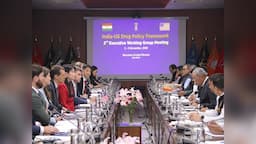
India-US Plan Joint Crackdown on Global Drug Cartels: Synthetic Drugs and Chemical Supply Chains in Focus

NCERT, SCERT Organise 5-Day NISHTHA Training Programme for Teachers and School Heads
Karnataka plans English-medium sections in all govt schools while retaining Kannada classes
India-US Plan Joint Crackdown on Global Drug Cartels: Synthetic Drugs and Chemical Supply Chains in Focus

Facing risk of losing ancient knowledge, China establishes rare disciplines school

From smart classrooms to surveillance concerns: Why China's Nanjing University rolled back AI feature

Screen time concerns shape Japan's digital textbook policy, printed books to remain primary

Karnataka plans English-medium sections in all govt schools while retaining Kannada classes
Australian universities oppose proposed expansion of higher education regulator's powers
Odisha Schools Reopen After 23 Days in Flood-Hit Ganjam; Six Government Schools Remain Closed
India-US Plan Joint Crackdown on Global Drug Cartels: Synthetic Drugs and Chemical Supply Chains in Focus
NCERT, SCERT Organise 5-Day NISHTHA Training Programme for Teachers and School Heads
Karnataka plans English-medium sections in all govt schools while retaining Kannada classes
India-US Plan Joint Crackdown on Global Drug Cartels: Synthetic Drugs and Chemical Supply Chains in Focus
Facing risk of losing ancient knowledge, China establishes rare disciplines school
From smart classrooms to surveillance concerns: Why China's Nanjing University rolled back AI feature
Screen time concerns shape Japan's digital textbook policy, printed books to remain primary
Copyright© educationpost.in 2026 All Rights Reserved.